
Why sustainability matters in bus rentals for events
TL;DR:
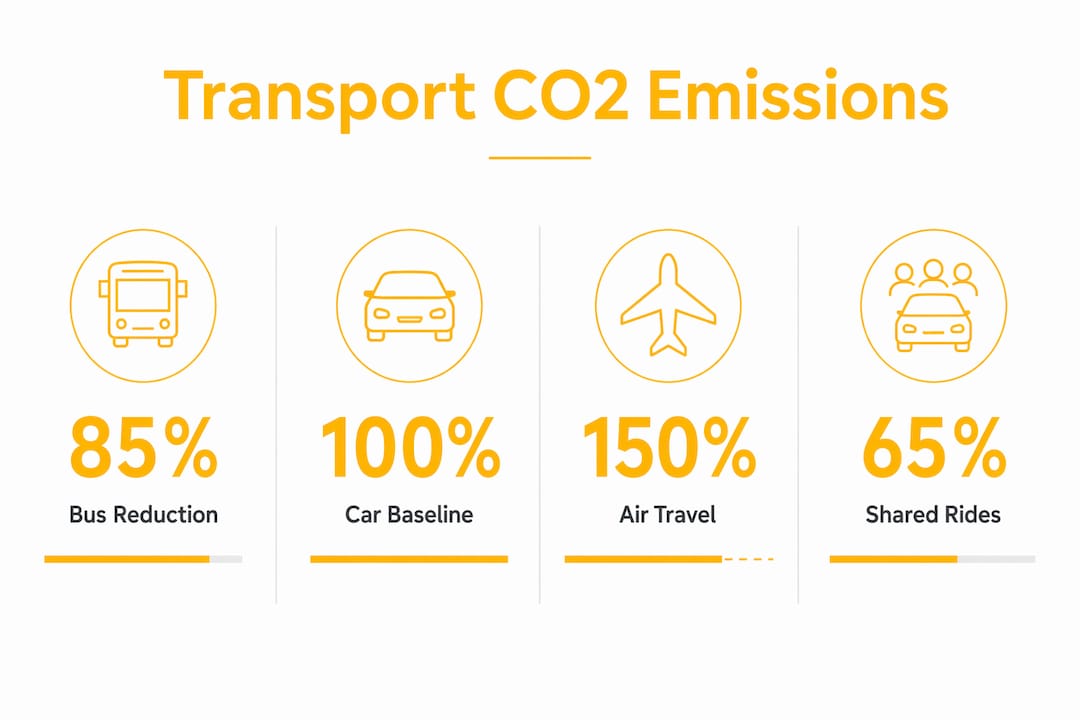
- Sustainable bus rentals can cut per-passenger CO2 emissions by up to 85%, making them highly effective for event sustainability. They reduce traffic congestion, parking demand, and overall environmental impact by replacing multiple cars with coordinated group transport. Early planning and verified emissions reporting are essential for maximizing environmental benefits and demonstrating true sustainability commitment.
Sustainable bus rentals reduce per-passenger CO2 emissions by up to 85% compared to single-occupancy vehicles, making them one of the most effective tools available to event planners aiming to cut their carbon footprint. Transportation accounts for 23% of Canada’s greenhouse gas emissions, and for most large events, it is the single largest contributor to the total carbon count. Understanding why sustainability matters in bus rentals is not an abstract exercise. It is a practical, measurable decision that shapes your event’s environmental impact before a single attendee walks through the door. The shift toward eco-friendly group transport is no longer a nice-to-have. It is a core part of responsible event planning in 2026.
Why sustainability matters in bus rentals: the core environmental case
The efficiency gap between motorcoaches and cars is significant. A single motorcoach achieves up to 250 passenger miles per gallon of fuel. That figure makes motorcoaches roughly seven times more fuel-efficient than a car carrying one or two passengers.
The CO2 reduction follows directly from that efficiency. When you replace 40 or 50 individual car trips with a single well-loaded motorcoach, the emissions per person drop dramatically. The 85% reduction figure is not a best-case estimate. It reflects the real-world difference between coordinated group transport and the default of everyone driving separately.
Air travel performs even worse on a per-passenger basis for short-to-medium distances. A group flying between Toronto and a regional venue generates far more emissions than the same group travelling by motorcoach. For event planners routing attendees from a central hub to a venue within a few hundred kilometres, the motorcoach is the lowest-carbon option available.
Vehicle technology has also improved the picture considerably. Modern low-emission engines, aerodynamic coach designs, and cleaner diesel formulations have all reduced the emissions intensity of motorcoach travel over the past decade. The combination of inherent passenger-sharing efficiency and better engine technology makes today’s motorcoaches a genuinely strong choice for sustainable transport solutions.
Pro Tip: When comparing transport options for your event, calculate emissions per passenger rather than total vehicle emissions. A full motorcoach will almost always outperform a fleet of cars or a short-haul flight on that metric.
| Transport mode | Relative CO2 per passenger |
|---|---|
| Single-occupancy car | Highest |
| Shared ride (2-3 passengers) | High |
| Short-haul flight | High to very high |
| Full motorcoach | Lowest |
What environmental benefits do sustainable bus rentals bring to large events?
Replacing multiple cars with a single motorcoach reduces fuel consumption, carbon emissions, traffic congestion, and parking demand simultaneously. Each of those outcomes matters independently, and together they represent a meaningful shift in how an event affects its surrounding environment.

Traffic congestion is a direct environmental cost. Idling vehicles in congested traffic burn fuel without moving anyone. A motorcoach carrying 50 attendees removes roughly 40 to 50 cars from that congestion. The reduction in vehicle kilometres travelled around the venue lowers both emissions and the wear on local road infrastructure.
Parking demand reduction is an underappreciated benefit. Surface parking lots consume land, generate heat, and produce runoff. When attendees arrive by motorcoach rather than personal vehicle, the event’s physical footprint shrinks. For urban venues in Toronto, where parking is already constrained, this is a practical advantage as much as an environmental one.
Corporate event planners face growing pressure to report on emissions. Choosing bus services with trip reporting capabilities supports sustainability audits by enabling transportation emissions to be integrated directly into corporate carbon budgets. That reporting capability turns a transport decision into a documented sustainability gain.
The benefits of green bus services for large events include:
- Measurable reduction in total vehicle kilometres travelled to and from the venue
- Lower parking demand, reducing land use and surface runoff at event sites
- Documented emissions data that feeds directly into corporate sustainability reports
- Reduced traffic congestion around the venue, lowering idling-related emissions
- A consistent, on-time attendee experience that reduces last-minute individual car trips
Transparency through independently verified CO2-equivalent reports is the standard for demonstrating genuine commitment to sustainability. Vague claims about “green transport” no longer satisfy stakeholders, auditors, or informed attendees.
Which sustainable transport features should event planners prioritise?
Not every bus rental delivers the same environmental performance. Planners need to assess specific features rather than accept general claims about being “eco-friendly.”
Verify fleet emission standards. Ask the provider which engine generation their coaches run. Newer engines meet stricter emission standards and burn fuel more cleanly than older models. A provider that cannot answer this question clearly is not a credible sustainability partner.
Request trip-level emissions reporting. Corporations are focusing on immediate, reportable emissions reductions in transportation. Your provider should be able to supply a CO2-equivalent figure for each trip, not just a general estimate. That data feeds your post-event sustainability report.
Assess route coordination capability. A provider that can consolidate multiple pick-up points into a single optimised route reduces total kilometres driven. Fewer kilometres means lower emissions. This is a logistics question, but it has a direct environmental outcome.
Prioritise load factor. A half-empty motorcoach is less efficient per passenger than a full one. Work with your provider to match vehicle capacity to confirmed attendee numbers. Right-sizing the vehicle to the group is one of the simplest ways to keep per-passenger emissions low.
Look for transparent sustainability documentation. Sustainability reporting is evolving from vague claims toward requiring independently verified emissions data. Providers who offer documented, verifiable figures are the ones worth working with.
Pro Tip: Ask your bus provider for a sample post-trip emissions report before you book. If they cannot produce one, factor that gap into your sustainability assessment.
Organisations that want to understand sustainable transport solutions more broadly will find that the same principles apply across logistics: consolidation, route efficiency, and verified reporting are the three pillars of credible green transport.
How can sustainable bus rentals be integrated into event planning for maximum impact?
Transportation is often the single largest contributor to an event’s carbon footprint and must be addressed early in planning. Pre-planning logistics decisions lock in emissions long before the event takes place. Treating transport as an afterthought means the biggest lever for emissions reduction goes unused.
The most effective integration approach involves the following steps:
- Start transport planning at the same time as venue selection. The venue’s location determines how far attendees must travel. Choosing a venue accessible by a single motorcoach route from a central hub is a transport decision made at the venue stage.
- Coordinate with stakeholders to consolidate pick-up points. Fewer stops mean shorter routes and lower fuel consumption. Work with your venue, hotel partners, and corporate clients to identify the two or three locations where the majority of attendees will originate.
- Use verified emissions data to track progress across events. A single event’s transport data is useful. A series of events with consistent reporting reveals trends and justifies investment in greener options over time.
- Address accessibility and attendee experience directly. Coordinated group travel on charter buses improves safety, schedule adherence, and the overall attendee experience. Sustainability and comfort are not in conflict here. A well-run motorcoach service is often more reliable than asking 50 people to navigate individually.
- Build transport into your event’s sustainability narrative. Attendees notice when transport is organised and environmentally considered. Communicating the emissions savings from group travel adds credibility to your event’s broader green commitments.
The biggest environmental impacts in events come from upstream logistics and procurement decisions made well before the event site is set up. Transport sits squarely in that upstream category. Getting it right early is the highest-return sustainability decision most event planners can make.
Transportation is one of the few operational areas where companies can make immediate, reportable sustainability gains without increasing operational complexity. That combination of measurability and low disruption makes it the obvious starting point for any organisation building a credible sustainability programme.
Key takeaways
Sustainable bus rentals deliver the largest, most measurable emissions reductions available to event planners, making transport the first and most important sustainability decision in any event plan.
| Point | Details |
|---|---|
| Motorcoaches cut emissions sharply | Bus travel reduces per-passenger CO2 by up to 85% compared to single-occupancy vehicles. |
| Transport drives event carbon footprint | Transportation is typically the single largest emissions source at any large event. |
| Early planning locks in the gains | Transport decisions made at the venue-selection stage have the greatest impact on total emissions. |
| Verified reporting is now the standard | Providers should supply independently verified CO2-equivalent data for each trip. |
| Load factor and route efficiency matter | Right-sizing vehicles and consolidating pick-up points keeps per-passenger emissions as low as possible. |
Transport sustainability: what I’ve learned from watching planners get it wrong
Event planners consistently underestimate transportation’s share of their event’s carbon footprint. I have seen organisations spend months refining their catering sourcing and printed materials, then book a fleet of individual taxis for 200 attendees without a second thought. The emissions from that single transport decision outweigh every other sustainability effort combined.
The uncomfortable truth is that event planners often overlook transportation as a design decision, treating it as a secondary constraint rather than a primary lever. That framing is backwards. Transport is where the numbers are. It is where the measurable gains live.
The cost objection comes up every time. Coordinated motorcoach transport does require upfront planning and sometimes a higher line-item cost than telling attendees to find their own way. But the total cost calculation changes when you factor in parking logistics, traffic management, and the value of documented emissions reductions for corporate sustainability reporting.
My advice is direct: treat transport as the first sustainability decision you make, not the last. Choose a provider who can give you verified emissions data, right-size the vehicle to your group, and build the carbon savings into your post-event report. That approach turns a logistical necessity into a genuine, provable contribution to your organisation’s sustainability goals. The benefits of group transport for events go well beyond convenience. They are the foundation of a credible green event strategy.
— Firoz
Torontobusrentals: group transport built for sustainable events
Torontobusrentals operates a fleet of modern motorcoaches designed for exactly the kind of coordinated, emissions-conscious group transport described in this article. Each vehicle is matched to your group size to keep load factors high and per-passenger emissions low.

For event planners in Toronto who need efficient group transport solutions with route coordination and documented trip data, Torontobusrentals provides the logistics support to make sustainable transport a real part of your event plan. The team handles pick-up consolidation, scheduling, and capacity matching so you can focus on the event itself. Explore the full range of group transportation options or contact Torontobusrentals directly to discuss your next event’s transport requirements.
FAQ
How much do bus rentals reduce CO2 emissions per passenger?
Bus travel reduces per-passenger CO2 emissions by up to 85% compared to single-occupancy vehicles, and a motorcoach achieves up to 250 passenger miles per gallon of fuel.
Why does transport matter so much for event sustainability?
Transportation is typically the single largest contributor to an event’s carbon footprint, making it the highest-impact sustainability decision a planner can make.
What should I ask a bus provider about sustainability?
Ask for trip-level CO2-equivalent reporting, confirmation of engine emission standards, and evidence of route optimisation capability before booking.
How does group bus travel reduce traffic and parking problems?
Replacing 40 to 50 individual cars with a single motorcoach reduces vehicle kilometres travelled, lowers congestion around the venue, and cuts parking demand significantly.
When should transport planning start for a sustainable event?
Transport planning should begin at the same time as venue selection, since logistics decisions made early lock in the majority of an event’s transport-related emissions.
Recommended
- Sustainable transportation for events: a 2026 planner’s guide
- Top benefits of bus rentals for Toronto events in 2026
- Master bus rentals for seamless event transport in Toronto
- How to assess bus rental quality: a planner’s guide