
Why rent a bus for field trips: safe, reliable group travel
TL;DR:
- Renting a licensed school bus in Toronto ensures the highest safety standards and compliance.
- Buses simplify supervision, route planning, and reduce logistical risks during field trips.
- Proper bus rentals support more frequent, smooth, and well-managed school excursions.
Planning a school field trip in Toronto involves far more than booking a venue and collecting permission slips. The transport decision alone carries real legal weight, supervision demands, and safety obligations that can make or break the entire excursion. Many administrators default to whatever is cheapest or most familiar, often without realising that over 833,000 students are transported safely by school buses across Ontario every single day. That scale of daily operation reflects a deeply regulated, evidence-backed system. This guide breaks down why renting a bus is not just a convenient choice for Toronto field trips, but the smartest, most responsible one available.
Table of Contents
- Why safety makes renting a bus essential
- Comparing group transport options for field trips
- Policies, planning, and Toronto-specific regulations you must know
- Logistics made easy: practical benefits for educators
- A perspective you won’t hear at staff meetings
- Get your field trip rolling with the right bus rental partner
- Frequently asked questions
Key Takeaways
| Point | Details |
|---|---|
| Bus rental safety | School buses provide unmatched safety records compared to other group travel methods. |
| Policy compliance made easy | Renting a licensed bus ensures excursions meet Toronto and Ontario school regulations. |
| Streamlined logistics | Bus rentals reduce supervision hassles and keep field trips running on time. |
| Cost and liability balance | While cost is a factor, rental supports risk management and better outcomes for schools. |
Why safety makes renting a bus essential
With the high stakes around student safety, it is vital to understand what makes bus travel stand out from every other option on the road.
Bus travel is not simply popular by tradition. It is popular because the evidence strongly supports it. Ontario school buses transport over 833,000 students daily, covering 1.9 million kilometres across the province. That volume of daily movement, sustained over decades, has produced a safety record that no other mode of student transport can match. When you consider the alternatives, the gap becomes even clearer.
“The school bus remains the safest vehicle on the road for transporting children, not because accidents never happen, but because the system is engineered to minimise harm at every step.”
One important nuance that many educators miss: most risks occur outside the bus, during loading and unloading, rather than while the vehicle is in motion. Transport Canada data from 1995 to 2004 confirmed this pattern in Ontario, showing that while collisions did cause injuries, the overall safety record remained strong. This means that a well-organised boarding and disembarking process is just as critical as the vehicle itself.
Here is what makes licensed bus rentals stand apart from a safety standpoint:
- Structural design: Buses are built with compartmentalisation that absorbs impact, protecting occupants even without seatbelts in every seat.
- Driver qualifications: Commercial drivers hold Class B or higher licences and undergo regular safety training.
- Vehicle inspections: Rental fleets must meet provincial inspection standards before operating.
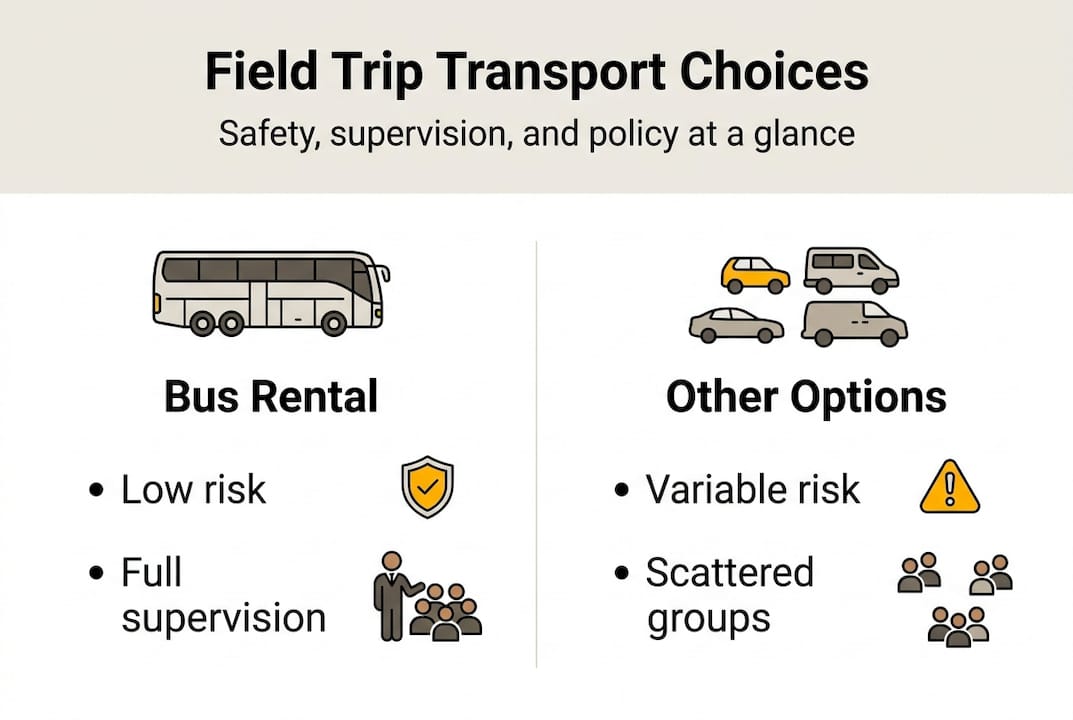
- Supervision capacity: A single bus keeps all students together, making headcounts and supervision far simpler than scattered vehicles.
- Route planning: Professional operators know Toronto traffic patterns and can adapt to delays without putting students at risk.
For educators exploring bus safety in Toronto, the takeaway is straightforward. Renting a licensed bus is not just a policy checkbox. It is a genuine best practice that reflects what the data actually shows about keeping students safe from the moment they leave school until the moment they return.
If you are in the early stages of planning, the school trip bus rental guide covers the foundational steps in detail.
Comparing group transport options for field trips
Now that safety is clear, how do other group transportation choices really stack up in practice?
Many schools explore several options before committing to a bus rental. Each comes with trade-offs that are worth examining honestly.
| Transport option | Cost per student | Supervision strength | Policy compliance | Risk level |
|---|---|---|---|---|
| Licensed bus rental | Moderate | High | Easiest | Low |
| Public transit | Low | Weak | Difficult | Moderate |
| Private carpool | Variable | Very weak | Complex | High |
| School van | Low to moderate | Moderate | Moderate | Moderate |
The table tells a clear story. Public transit may look affordable, but managing 25 or more students across multiple subway cars or bus routes in downtown Toronto is genuinely difficult. Students scatter, headcounts become unreliable, and one missed stop can turn a field trip into a crisis. Carpools introduce a patchwork of insurance liabilities and inconsistent driver vetting that most board policies simply do not allow.
Here is a practical breakdown of what to weigh when choosing your transport:
- Supervision ratio: A single bus means all students are in one place, reducing the staff needed to maintain order.
- Insurance and liability: Licensed rental companies carry commercial insurance that protects the school in ways that personal vehicle coverage does not.
- Accessibility: Rental companies can provide accessible vehicles, something carpools and public transit cannot guarantee.
- Timing control: You set the departure and return schedule, not the TTC.
- Documentation: Rental agreements create a paper trail that satisfies most board approval processes.
Pro Tip: Book your bus at least three to four weeks ahead of the trip date. Toronto rental availability tightens significantly during spring and autumn, which are peak field trip seasons. Waiting until the last minute often forces schools into less suitable group transport alternatives that create more problems than they solve.
For schools considering larger groups or multi-day excursions, reviewing motor coach options can open up additional capacity and comfort features worth knowing about. A TDSB excursion policy review found that declining field trips due to costs and liability concerns highlights exactly why thorough planning and policy adherence matter so much from the start.
Policies, planning, and Toronto-specific regulations you must know
Understanding your bus options is only the beginning. Legal and policy details make a big difference for schools.
Toronto schools, particularly those within the TDSB, operate under detailed excursion policies that govern every aspect of offsite student travel. Ignoring these requirements does not just create paperwork headaches. It can result in cancelled trips, personal liability for staff, and reputational damage for the school. The TDSB policy review found that concerns around costs and liability are among the top reasons field trips get declined, which makes getting the compliance piece right from the beginning absolutely essential.
Here is what most Toronto school boards require for any offsite student excursion involving rented transport:
- Licensed and insured vehicles: The rental company must carry commercial liability insurance and operate vehicles that meet provincial standards.
- Vetted drivers: Drivers must hold the appropriate licence class and have undergone criminal background checks.
- Written rental agreement: Documentation of the vehicle, driver, route, and insurance must be submitted with the trip approval form.
- Accessibility provisions: If any student requires accessible transport, the vehicle must accommodate this without segregating the student from peers.
- Supervision ratios: Most boards specify a minimum number of adult chaperones per student group, regardless of transport type.
| Compliance item | Required by most boards | Notes |
|---|---|---|
| Commercial insurance certificate | Yes | Must name the school board |
| Driver licence class verification | Yes | Class B minimum for student transport |
| Vehicle inspection record | Yes | Within 12 months |
| Accessible vehicle option | Situational | Required if any student needs it |
| Signed rental agreement | Yes | Keep on file post-trip |
Pro Tip: When submitting your trip approval, attach the rental company’s insurance certificate and driver credentials directly to the application. Administrators who do this consistently report faster approvals and fewer follow-up requests from their board office.
For trips that include students with mobility needs, reviewing inclusive bus rentals ahead of time ensures no student is left behind or accommodated as an afterthought. Using a structured bus rental checklist also keeps the planning process organised and audit-ready.
Logistics made easy: practical benefits for educators
With official policies pointing to rentals, what about the day-to-day reality for educators?
Even the most carefully planned field trip can unravel quickly if the transport logistics are not solid. Toronto’s traffic is notoriously unpredictable, and coordinating a group of students through the city on public transit or in multiple private vehicles adds layers of stress that most teachers simply do not need on top of their existing responsibilities.
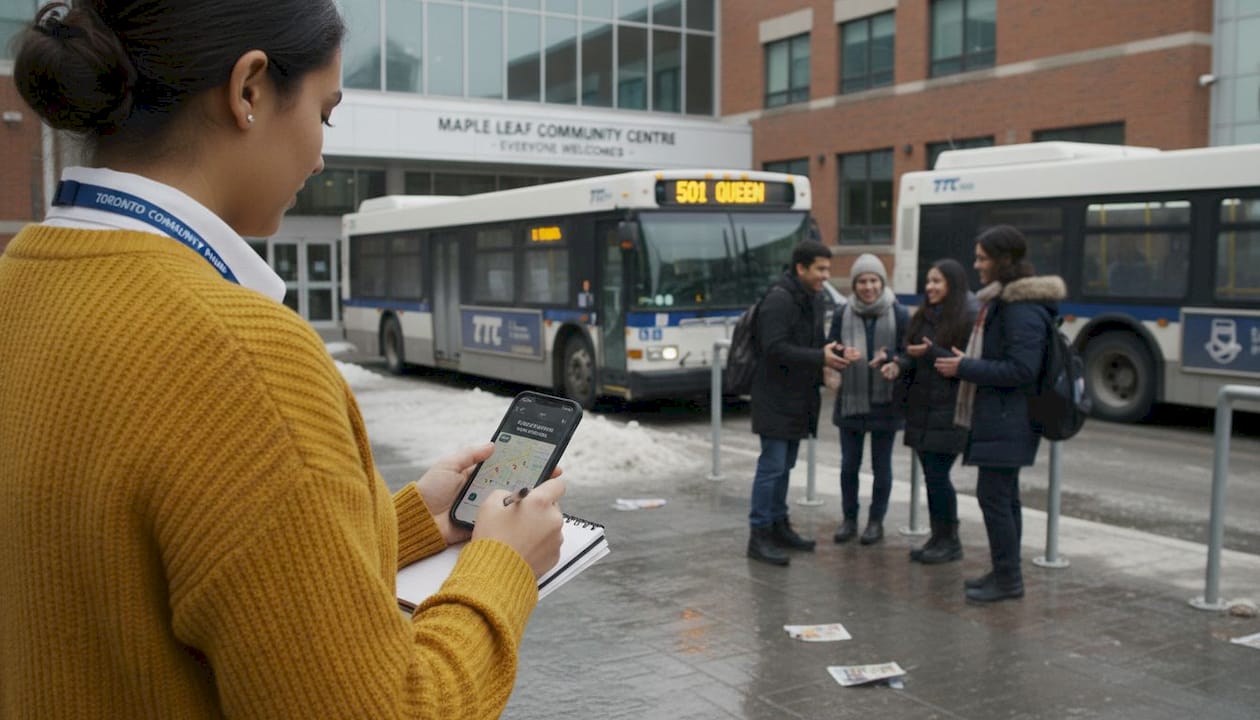
A dedicated rental bus changes the entire day-of experience. Consider what actually happens when things go wrong without one: a carpool driver gets stuck in traffic on the Gardiner, students on the subway miss a stop and end up two stations away, or a school van breaks down with no backup plan. These are not hypothetical situations. They happen, and they put educators in an extremely difficult position.
Here are the core day-of advantages that bus rental delivers for teachers and chaperones:
- Single departure point: Everyone boards at school, together, on time. No coordinating multiple pickup locations.
- Consistent headcounts: One vehicle means one count. You always know exactly where every student is.
- Reduced paperwork scatter: Permission slips, medical forms, and emergency contacts stay with the group leader, not distributed across five different drivers.
- On-site flexibility: If the schedule changes, the bus adapts. Public transit does not.
- Calmer students on arrival: Students who travel together arrive in a settled, group-focused mindset rather than scattered and overstimulated from navigating the city independently.
The 833,000 students transported safely across Ontario daily are a reminder that this system works precisely because it is designed for group cohesion and accountability.
Pro Tip: Designate one staff member as the bus captain before departure. This person manages the manifest, communicates with the driver, and is the single point of contact for any issues during transit. It sounds simple, but it eliminates the confusion that comes from multiple adults trying to make decisions at once.
For a step-by-step overview of the booking process, the bus booking steps page walks you through exactly what to expect. And if you are still in the planning phase, the school bus rental planning resource covers timelines, group size considerations, and cost factors in practical detail.
A perspective you won’t hear at staff meetings
After covering logistics, it is time for straight talk about what actually works in busy, budget-conscious Toronto schools.
Here is something that rarely gets said plainly: schools that consistently invest in proper, licensed bus transport for field trips tend to run more field trips overall. Why? Because when a trip goes smoothly and safely, principals approve the next one faster. When something goes wrong, even something minor, the entire programme gets scrutinised. The reputational and legal cost of one poorly managed transport situation far outweighs the savings from cutting corners on the bus.
There is also a false economy at play when schools try to piece together cheaper alternatives. The staff time spent coordinating carpools, managing liability waivers, and chasing insurance confirmations from parent volunteers often costs more in labour hours than the rental itself would have.
Toronto’s liability climate, combined with parental expectations that have shifted significantly in recent years, means that administrators who document a clear, professional transport decision are in a much stronger position if anything is ever questioned. Visiting the Toronto school trip perspectives section can offer additional real-world context from others navigating the same decisions. A field trip that students actually reach, safely and together, is always worth the added planning.
Get your field trip rolling with the right bus rental partner
For those ready to put these strategies into action, specialised rental partners are just a click away.
Planning a field trip in Toronto does not have to feel overwhelming. With the right bus rental partner, you get more than just a vehicle. You get a structured, policy-compliant solution that handles the transport piece so your team can focus on the educational experience itself.

Explore Toronto group transport options to find the right fleet size and vehicle type for your group. Use the bus rental checklist to make sure every compliance requirement is covered before your trip approval goes in. And if any of your students have accessibility needs, the accessible bus rental guide ensures no one is left out of the experience. Toronto Bus Rentals is here to make your next school excursion the smoothest one yet.
Frequently asked questions
Is renting a bus for a school field trip really safer than other options?
Yes. Ontario school buses are among the safest group transport options available, backed by strict provincial regulations and a strong long-term safety record that no other student transport mode can match.
What should school administrators look for in a Toronto bus rental for field trips?
Prioritise providers with licensed and insured buses, experienced drivers who hold the appropriate licence class, and clear documentation of their safety and compliance credentials before signing any agreement.
Are there special policies Toronto schools must follow for bus rentals?
Yes. Most boards, including the TDSB, have strict requirements around permits, insurance, and driver vetting for all offsite student travel, and declining field trips due to unmet policy requirements is a documented concern across the board.
How does bus rental help with field trip logistics in Toronto?
It simplifies route planning, keeps the entire group together for consistent supervision, and eliminates the risk of students arriving late or getting separated that comes with public transit or carpool arrangements.
Recommended
- Why rent buses in Toronto for smoother group travel
- School Trip Bus Rental Guide for Safe Group Travel
- Bus Rental for Tourists: Safe and Flexible Group Travel
- School bus rental in Toronto: how to choose the right option
- Exclusive Benefits of Booking an Orlando Luxury Car Service for Group Travel