
Why prioritize comfort in bus rentals for group travel
TL;DR:
- Prioritizing measurable comfort features in bus rentals ensures passengers experience less fatigue, perceived crowding, and stress. Clear specifications on seat pitch, climate control, and amenities directly influence group satisfaction, repeat bookings, and overall event success. Establishing these standards early prevents disappointment and guarantees a smoother, more enjoyable journey for all travelers.
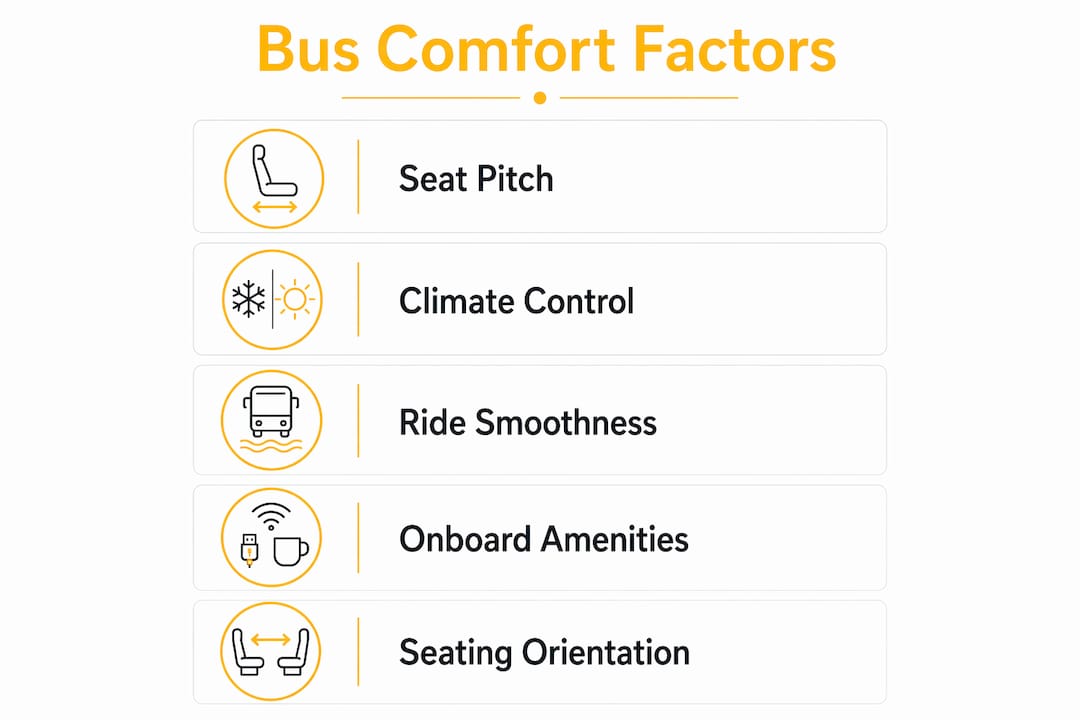
Comfort in bus rentals is defined as the combination of seating geometry, climate control, ride smoothness, and onboard amenities that determine how passengers feel throughout a journey. For event planners and group leaders, understanding why prioritize comfort in bus rentals is not a preference question. It is a performance question. Research confirms that measurable comfort factors directly affect passenger fatigue, perceived crowding, group mood, and the likelihood of rebooking. Torontobusrentals builds every fleet recommendation around these standards because the difference between a great group experience and a frustrating one often comes down to seat pitch and a working air conditioning unit.
Why prioritize comfort in bus rentals: the core factors
Passenger comfort in a rental coach is not a single feature. It is a system of interdependent design and operational elements, each of which can be measured and specified before you sign a contract.
Seating geometry is the most impactful factor. A 2026 experimental study using a full-scale bus mock-up with 25 participants found that seat pitch and orientation dramatically affect comfort ratings, with a 45 cm pitch providing near-universal comfort compared to cramped 20 cm spacing. That is not a marginal difference. It is the gap between passengers arriving refreshed and passengers arriving stiff and irritable.
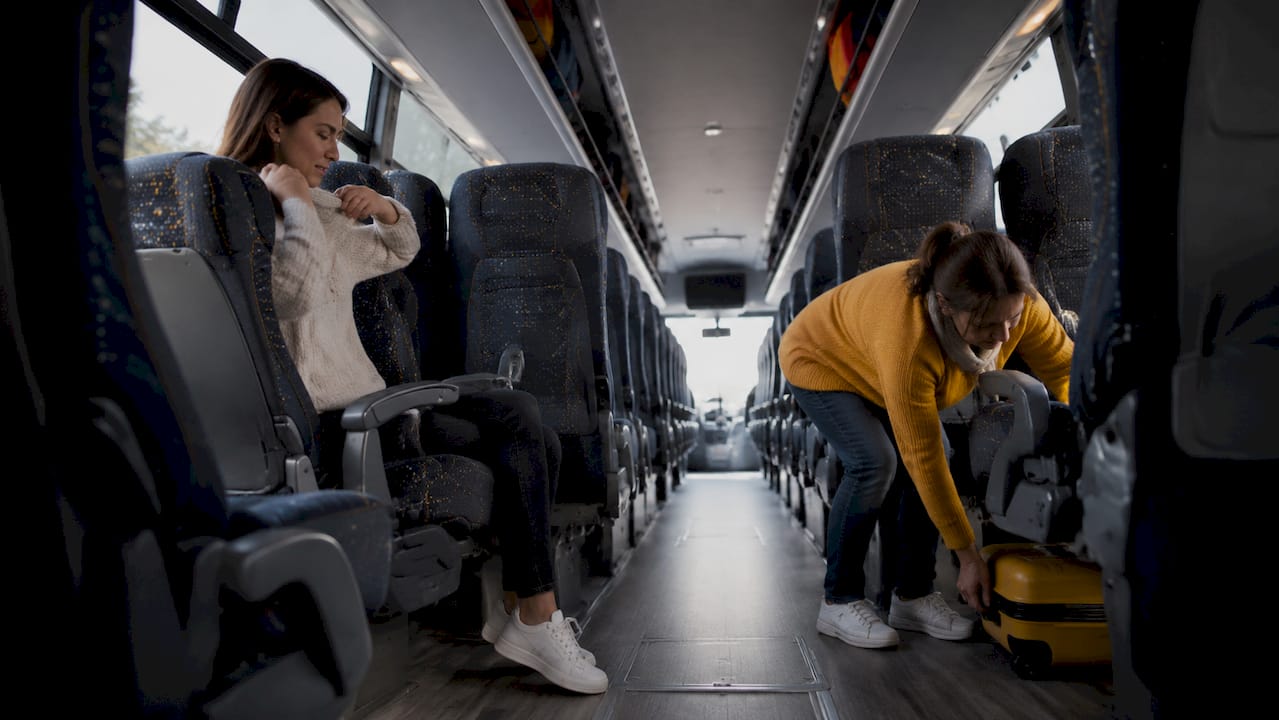
Ride smoothness is the second major variable. ISO 8608:2016-based research confirms that ride smoothness thresholds are directly tied to vehicle speed and road quality. A coach operating within appropriate speed limits on well-maintained roads delivers a materially better passenger experience than one pushed beyond those thresholds. This means vehicle type and route planning both belong in your comfort conversation with a provider.
Climate control and amenities complete the picture. Temperature uniformity across the cabin prevents the hot-at-the-back, cold-at-the-front problem that plagues older vehicles. Amenities such as reclining seats with approximately 3–4 inches of recline, onboard restrooms, WiFi, and USB charging ports are not luxuries for longer trips. They are functional requirements that allow passengers to work, rest, or simply stay comfortable. You can review the full breakdown of motor coach amenities that matter most for group travel.
- Seat pitch of 45 cm or more is the measurable standard for comfortable group seating
- Seat orientation (forward-facing versus angled) affects both comfort and perceived space
- HVAC systems should maintain uniform temperature throughout the cabin, not just at the front
- Reclining seats, restrooms, WiFi, and charging ports are standard expectations on quality coaches
- Vehicle suspension quality and route speed management directly influence ride smoothness
Pro Tip: Ask your provider to confirm seat pitch in centimetres, not just describe seats as “spacious.” A number is a commitment. A description is not.
How does comfort affect passenger satisfaction and group dynamics?
The benefits of bus comfort extend well beyond physical ease. Comfort shapes how passengers perceive the entire trip, including how crowded the vehicle feels, how stressed they arrive, and whether they would choose the same service again.
A 2026 survey of 1,318 passengers on urban bus lines found a significant correlation between lower comfort levels and higher perceived crowding, even when actual occupancy was identical. This is a critical insight for event planners. A group of 40 people in a well-configured coach with proper seat pitch will feel less crowded than the same group in a vehicle with tighter spacing. Perceived crowding increases stress and reduces group cohesion, which matters enormously when you are transporting a corporate team to a retreat or wedding guests to a venue.
“Comfort directly shapes passengers’ emotional and behavioural responses during trips, influencing group mood and event outcomes.” — Passenger Perception Research, 2026
The connection between comfort and rebooking is equally direct. A survey of 385 bus passengers found that service quality, including comfort-related attributes, positively affects both passenger satisfaction and intention to reuse the service at the 0.01 significance level. For organisations that run recurring events, this means investing in comfortable group travel is not just good hospitality. It is a retention strategy.
Comfort-related service quality also drives repeat bookings, making it a smart planning decision for any organisation that moves groups regularly. Passengers who arrive relaxed are more engaged, more positive, and more likely to associate that good feeling with the event itself. The bus ride is part of the event experience, not a separate logistical footnote.
Travel fatigue is the third dimension. Industry guidance on motorcoach travel consistently identifies reclining seats and effective climate control as the two features most responsible for reducing fatigue on longer trips. Groups that arrive rested perform better at conferences, enjoy weddings more fully, and return from tours with better memories.
How to evaluate comfort when renting a bus for events
Specifying comfort before you book is the single most effective way to avoid disappointment. Vague promises from providers are not enough. You need numbers and confirmed features in writing.
Here is a practical process for assessing comfort needs before committing to a rental:
- Specify seat pitch in centimetres. Request a minimum of 45 cm based on the research standard for near-universal comfort. Do not accept “roomy seating” as an answer.
- Confirm seat orientation. Forward-facing seats consistently outperform angled or sideways configurations for longer trips. Ask specifically.
- Verify climate control reliability. Ask whether the HVAC system maintains uniform temperature throughout the cabin. Older vehicles often heat or cool unevenly.
- Check restroom availability for trips over two hours. An onboard restroom eliminates the need for unscheduled stops and keeps the group on schedule.
- Match amenities to your group’s profile. A corporate group travelling to a conference needs charging ports and WiFi. A school group needs a PA system and clear sightlines. A wedding party needs space for attire and a smooth ride.
- Ask about vehicle suspension and route suitability. Ride smoothness research confirms that vehicle type and operating speed on specific road types determine vibration levels. A coach suited for highway travel may not be ideal for urban stop-and-go routes.
| Comfort Feature | What to Ask the Provider |
|---|---|
| Seat pitch | Minimum pitch in centimetres for your booking |
| Climate control | Uniform cabin temperature, not just front-of-bus cooling |
| Restrooms | Confirmed availability and serviced condition |
| Amenities | WiFi, USB charging, reclining seats, PA system |
| Ride quality | Vehicle type and suspension suitability for your route |
Pro Tip: Build a one-page comfort specification sheet and send it to providers before requesting a quote. Providers who respond with specific answers are the ones worth booking.
Understanding modern motor coach features helps you ask better questions and recognise which providers are genuinely equipped to meet your standards.
What are the biggest misconceptions about bus comfort?
The importance of comfort in rentals is frequently misunderstood, and those misunderstandings lead to poor booking decisions. Clearing them up before you book saves money and frustration.
Misconception 1: Comfort is purely subjective. Comfort is multidimensional but measurable. Academic research identifies three distinct domains: physical comfort (absence of fatigue and pain), psychological comfort (feelings of safety and control), and functional comfort (ability to work, rest, or communicate onboard). All three can be assessed through specific vehicle features. Seat pitch addresses physical comfort. A reliable driver and clear communication address psychological comfort. WiFi and charging address functional comfort.
Misconception 2: Soft seats equal comfortable seats. Cushion softness is one variable among many. A soft seat with inadequate pitch still causes leg fatigue on a two-hour trip. Seat orientation, recline angle, and lumbar support matter as much as padding.
Misconception 3: Ride smoothness is fixed. Ride smoothness is actively manageable through vehicle selection, route planning, and speed management. Choosing a coach with quality suspension and planning routes that avoid heavily degraded roads produces a measurably better passenger experience.
- Comfort has three measurable dimensions: physical, psychological, and functional
- Small geometry changes, such as a 10 cm increase in seat pitch, produce large comfort differences
- Perceived crowding increases when comfort is low, even at identical occupancy levels
- Ignoring comfort specifications increases the risk of dissatisfied groups and negative event associations
- Addressing comfort early in the planning process reduces on-trip issues and improves group behaviour
For events where group energy and cohesion matter, such as corporate retreats, sports trips, or school outings, the impact of comfort on journeys is a direct input to event success.
Key takeaways
Prioritising measurable comfort features in bus rentals is the most reliable way to reduce passenger fatigue, prevent perceived crowding, and improve group satisfaction and rebooking rates.
| Point | Details |
|---|---|
| Seat pitch is the top comfort driver | Specify a minimum of 45 cm pitch in writing before confirming any booking. |
| Comfort affects perceived crowding | Lower comfort increases how crowded passengers feel, even at identical occupancy. |
| Three comfort dimensions matter | Physical, psychological, and functional comfort all require specific features to address. |
| Ride smoothness is manageable | Vehicle type, suspension quality, and route planning directly control vibration and ride quality. |
| Comfort drives repeat bookings | Service quality including comfort attributes significantly increases passenger reuse intention. |
Comfort specs are the conversation most planners skip
I have seen event planners spend weeks on catering, décor, and venue logistics, then book a bus in ten minutes based on price alone. The bus ride is where the event actually begins for most attendees. If people arrive cramped, overheated, or irritable, that mood carries into the room.
The most common mistake is treating comfort as a soft preference rather than a hard specification. Providers respond to numbers. When you ask for “a comfortable bus,” you get whatever they have available. When you ask for a minimum 45 cm seat pitch, a functioning HVAC system, and confirmed restroom access, you get a different conversation and a better vehicle.
I also think the cost-versus-comfort framing is a false choice most of the time. The price difference between a basic coach and a well-specified one is often smaller than planners expect, especially when you factor in the cost of a group that arrives exhausted or dissatisfied. Comfort is not a premium add-on. It is the baseline for doing the job properly.
For recurring events, the return on investing in passenger comfort shows up in repeat bookings and positive word of mouth. Groups that travel well together come back together. That is not sentiment. That is what the satisfaction and reuse research actually shows.
— Firoz
How Torontobusrentals delivers measurable comfort for your group
Torontobusrentals provides group transportation solutions built around the comfort specifications that actually matter: verified seat pitch, reliable climate control, onboard restrooms, WiFi, and charging on coaches suited to your route and group size.

Whether you are coordinating a corporate outing, a school trip, or a wedding, Torontobusrentals matches your group to the right vehicle based on trip length, passenger needs, and comfort priorities. Every booking includes a clear conversation about features, not just price. Explore the full range of group transportation solutions available in Toronto, or check out the 36-passenger coach options for mid-size groups that need both space and amenities. Contact Torontobusrentals to request a comfort-specified quote for your next event.
FAQ
What does comfort mean in a bus rental context?
Comfort in bus rentals refers to seat pitch, seat orientation, climate control, ride smoothness, and onboard amenities. Research identifies three measurable dimensions: physical, psychological, and functional comfort.
What seat pitch should i request for comfortable group travel?
Request a minimum seat pitch of 45 cm. A 2026 experimental study found this measurement provides near-universal comfort across passenger groups, compared to cramped configurations below 30 cm.
Does comfort affect how crowded a bus feels?
Yes. A 2026 survey of 1,318 passengers confirmed that lower comfort levels increase perceived crowding even when actual occupancy is unchanged. Better-specified vehicles feel less crowded at the same capacity.
How does bus comfort affect event outcomes?
Passengers who travel comfortably arrive with lower fatigue and better mood, which directly influences group cohesion and engagement at events. Comfort shapes emotional and behavioural responses throughout the trip.
Should i include comfort specs in my rental contract?
Yes. Specify seat pitch in centimetres, HVAC effectiveness, restroom availability, and amenities in writing before signing. Vague descriptions do not protect you if the vehicle delivered falls short of expectations.
Recommended
- Top benefits of bus rentals for Toronto events in 2026
- Bus rentals for Toronto events: Cost, comfort, reliability
- Must-have motor coach amenities for group travel