
What is event transportation: a planner’s guide
TL;DR:
- Effective event transportation involves comprehensive planning of attendee movement systems beyond just booking vehicles. It requires detailed manifests, designated drivers, real-time tracking, and contingency protocols to ensure seamless arrivals and departures. Properly managed transportation enhances attendee experience, minimizes delays, and relies on structured coordination and transparent contracting.
Planning a group event and assuming transportation means simply booking a few vehicles is where most organizers go wrong. What is event transportation, really? It is the complete system of moving attendees before, during, and after an event, covering everything from airport transfers and shuttle loops to VIP coaches and contingency vehicles. Event transportation covers shuttle services, VIP transport, airport transfers, and ride coordination across every phase of your event day. Get it right and your attendees arrive relaxed and on schedule. Get it wrong and you are fielding complaints before the opening keynote.
Table of Contents
- Key takeaways
- Types of event transportation
- Planning event transportation step by step
- Budgeting for event transportation
- Best practices for event transportation operations
- My take on why structured planning changes everything
- Group transportation in Toronto, handled properly
- FAQ
Key takeaways
| Point | Details |
|---|---|
| Transportation is a full system | Event transportation includes every attendee movement phase, not just a single vehicle booking. |
| Named drivers and vehicles matter | Contracts without named assignments create event-day confusion and unexpected costs. |
| Manifests drive precision | Grouping attendees by arrival window and terminal with live dashboards prevents routing errors. |
| Hidden fees inflate budgets | Per-person pricing often excludes gratuity, fuel surcharges, and backup vehicle costs. |
| Post-event data sharpens performance | Reviewing utilisation and on-time rates after each event builds stronger protocols for the next one. |
Types of event transportation
Understanding the full range of options puts you in a far stronger position when scoping out your event logistics. Most planners default to one or two vehicle types without realising how much variety exists, and how much that variety shapes the attendee experience.
Here is a breakdown of the primary categories and when each one makes sense:
- Shuttle services. Continuous loop shuttles between a central hub (hotel, parking area, or transit stop) and the event venue. Best for large events where hundreds of guests arrive across a multi-hour window.
- Charter coaches. Full-size motor coaches assigned to specific groups or departure times. Ideal for corporate outings, conference groups, and wedding parties where everyone travels together.
- Luxury and VIP transport. Executive sprinters, premium coaches, or private vehicles for speakers, executives, or sponsors who require a higher service level.
- Accessible vehicles. Wheelchair-accessible coaches and lifts for attendees with mobility requirements. Not optional if your event is open to the public — it is a compliance matter.
- Airport and train station transfers. Dedicated meet-and-greet services with greeters, signage, and vehicles staged at arrivals. Critical for multi-day conferences pulling in out-of-town delegates.
- On-demand ride co-ordination. A managed pool of vehicles dispatched reactively throughout the day. Useful as a supplementary layer for VIP guests or late arrivals rather than as the primary transport mechanism.
The right mix depends on your event type and group size. A 200-person corporate conference in downtown Toronto calls for a different approach than a 50-person wedding in the suburbs.
| Transport type | Best for | Typical group size |
|---|---|---|
| Shuttle loops | Festivals, large conferences | 100 to 1,000+ |
| Charter coaches | Corporate groups, weddings | 20 to 55 |
| VIP/luxury vehicles | Executives, speakers | 1 to 15 |
| Accessible coaches | All public events | As required |
| Airport transfers | Multi-day conferences | Variable |
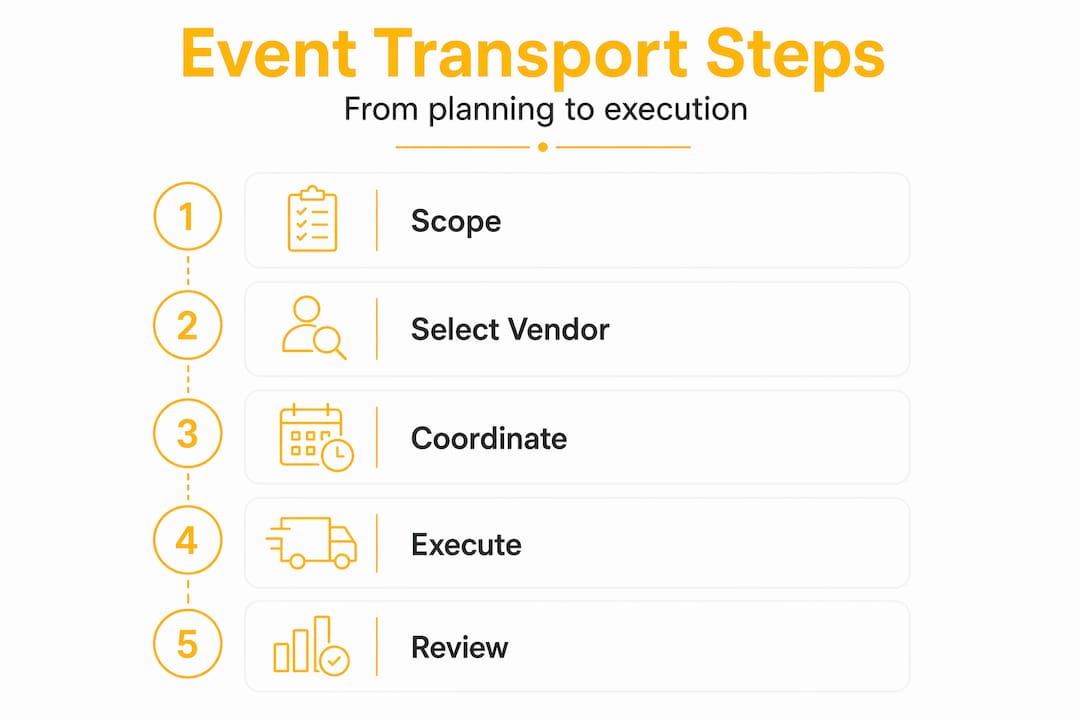
Planning event transportation step by step
A structured event transportation workflow separates events that run smoothly from those that generate chaos at the pick-up zone. Here is how experienced planners approach it from the ground up.
Build your attendee manifest. Collect confirmed guest data including arrival times, flight numbers, hotel assignments, and any accessibility requirements. Manifests for large events group attendees by arrival windows and terminals with assigned vehicles and greeters, supported by live dashboards tracking flight status and vehicle fill rates.
Map arrival and departure windows. Identify your peak demand periods. Most events have a concentrated arrival surge one to two hours before the start and a compressed departure window immediately after closing. Size your fleet and scheduling around these spikes, not average demand.
Assign named vehicles and drivers. This is where many planners underestimate the details. A named vehicle and driver assignment in your contract is the difference between a confirmed service and a vague promise. Know exactly which coach is running which route before event day.
Set departure windows and routes. Fixed departure schedules reduce crowd build-up and make it easier to manage expectations. Communicate departure windows to attendees in advance through your event app or email confirmations.
Integrate real-time tracking technology. Live dashboards monitoring flight and vehicle updates enable precision routing adjustments on the day. Push notifications through an event app allow attendees to see their shuttle assignment without calling a helpline.
Build in contingency vehicles. No matter how well you plan, a vehicle will be late or a group will be larger than anticipated. Professional contracts include a backup vehicle provision. Ask for it explicitly if it is not mentioned.
Debrief post-event. Post-event reviews convert operational data into sharper redeployment thresholds and cleaner protocols. Track on-time rates, vehicle utilisation, and any complaint patterns.
Pro Tip: Ask your vendor to send you a draft manifest template before the event. If they do not use one, that is a sign they are not operating at the level of precision your event requires.
Budgeting for event transportation
Cost is where event transportation planning gets uncomfortable, and it is usually because planners compare quotes without understanding what is actually included. A lower quote that excludes gratuity, fuel surcharges, and backup vehicles is not a deal. It is a setup for a larger invoice after the event.
Here is what to watch for when reviewing quotes:
- Per-person pricing traps. Per-person pricing can exclude gratuity, fuel, and backup vehicles, leading to budget overruns that show up after the contract is signed.
- Unspecified drivers. Lower quotes may lack named driver assignments, which raises co-ordination risks and can mean a last-minute replacement with no familiarity with your event routes.
- Staging and waiting fees. Vehicles that need to hold position at a hotel or venue for extended periods often carry waiting-time charges that are not itemised in the base quote.
- Cancellation and change fees. Event guest counts shift. Understand what it costs to add or remove vehicles within a week of the event.
Professional contracts specify named vehicles and drivers, confirmed departure windows, hotel staging co-ordination, backup vehicle provision, and all-inclusive pricing structures. When you are comparing vendors, use this checklist to evaluate what each quote actually covers rather than comparing headline numbers.
When it comes to the charter versus shuttle cost question: dedicated charter coaches offer predictability because you pay for the vehicle and its time, not per head. Shuttle loops are more economical for large, dispersed groups but require tighter operational management. For corporate events where the attendee experience carries brand weight, the per-vehicle cost of a chartered coach is almost always worth it.
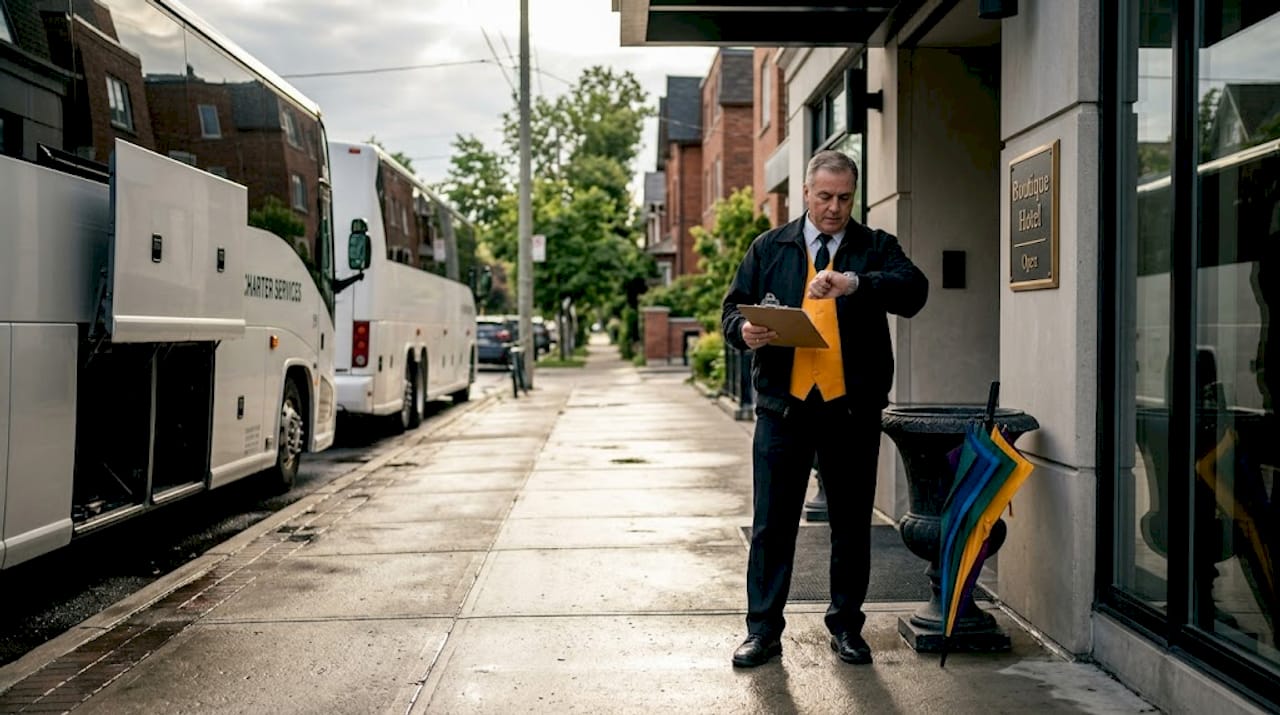
Before signing anything, review the bus rental checklist for events so you know precisely what to ask your vendor.
Best practices for event transportation operations
Operational execution is where the planning either holds or falls apart. The biggest cause of event shuttle delays is not a shortage of vehicles. Shuttle delays most often stem from dispatch failures in real-time vehicle redeployment rather than insufficient vehicle numbers. That distinction matters because it tells you where to focus your attention: not on adding more coaches, but on sharpening how your dispatch team communicates and responds.
Operational best practices worth embedding into every event plan:
- Establish clear communication protocols. Structured communication between dispatch, zone supervisors, and drivers reduces wait times and prevents crowd management problems. Define who calls what decision and how quickly.
- Use real-time fleet visibility tools. Dynamic redeployment is only possible if your dispatcher can see where every vehicle is at any given moment. GPS tracking integrated with your dispatch software is not a luxury at scale.
- Set alert thresholds. Build triggers into your dashboard so that when a vehicle fill rate drops below a threshold or a delay exceeds a set number of minutes, the dispatcher receives an automatic alert and can act.
- Vet vendors on accountability, not just price. Event planners increasingly prioritise vendors who demonstrate reliable execution and documented compliance over volume or low pricing. Ask for references from events of comparable size.
- Confirm insurance and licensing upfront. Commercial vehicle licensing, liability insurance, and driver certification should be provided before your deposit is paid, not after.
Pro Tip: Demand your vendor’s incident response protocol in writing before event day. Any reputable operator will have one. If they look surprised by the request, keep looking.
As event environments grow more complex, co-ordination and risk management are becoming the defining factors in vendor selection, not fleet size or geographic reach.
My take on why structured planning changes everything
I have seen what happens when event planners treat transportation as an afterthought. A 300-person corporate conference with a top-flight venue, exceptional catering, and a speaker lineup worth attending. Then a transit failure at the hotel pick-up that left guests waiting 40 minutes in the cold. No amount of good programming recovered the mood for those attendees.
What I have learned is that the gap between a smooth event and a logistics disaster almost never comes down to resources. It comes down to structure. Planners who treat transportation as a system — with manifests, named assignments, contingency protocols, and post-event reviews — consistently deliver better outcomes than those relying on a vendor’s verbal assurance that “it will all be fine.”
The detail that most surprises first-time planners is how much leverage they actually have before signing a contract. You can and should ask for a named driver, a specific coach, a written backup vehicle plan, and a communication protocol document. Vendors who cannot provide these things are not running at the operational level your event deserves.
My honest take: the best outcomes I have observed come from planners who treat their transportation vendor as a logistics partner, not a service commodity. Vet them like you would vet your venue. Ask uncomfortable questions early. And always build your event transport plan around the worst realistic scenario, not the best-case one.
— Firoz
Group transportation in Toronto, handled properly
Planning an event in Toronto and need reliable, professionally managed group transport? Torontobusrentals specialises in exactly this kind of work.

Whether you are co-ordinating airport arrivals for a multi-day conference, running shuttle loops for a corporate gala, or moving a wedding party across the city, Torontobusrentals offers modern motor coaches with professional drivers, named vehicle assignments, and transparent pricing. The fleet covers everything from mid-size coaches for intimate groups to full-size motor coaches for large-scale group shuttles and event transport. Every booking includes clear contracts, compliance documentation, and the operational rigour that Toronto event planners actually need. If you want to understand how motor coaches handle large group volumes efficiently, explore motor coaches for group travel for a closer look at what professional fleet management looks like in practice.
FAQ
What is event transportation, exactly?
Event transportation is the full system of moving attendees before, during, and after an event. It includes shuttle services, airport transfers, VIP transport, and on-demand ride co-ordination to support seamless arrivals and departures.
How far in advance should I arrange event transportation?
For large events, begin the vendor selection process at least eight to twelve weeks out. Corporate conferences drawing out-of-town guests or events requiring accessible vehicles warrant even more lead time to confirm compliance and availability.
What should a professional event transportation contract include?
A complete contract specifies named vehicles and drivers, confirmed departure windows, hotel staging co-ordination, backup vehicle provision, and all-inclusive pricing. Any quote missing these elements carries hidden risk.
Why do event shuttle delays happen?
Shuttle delays most often result from dispatch failures in real-time vehicle redeployment rather than a shortage of vehicles. Strong dispatch protocols, alert thresholds, and clear communication between supervisors and drivers are the actual fix.
How do I compare event transportation quotes accurately?
Compare what is included, not just the headline price. Per-person pricing often excludes gratuity, fuel, and backup vehicle costs. Ask each vendor for a full itemised breakdown and confirm that named driver assignments are part of the agreement.
Recommended
- How bus rentals streamline event logistics in Toronto
- Streamline your Toronto wedding transport workflow in 2026
- Corporate outing transport guide for Toronto planners
- Group transportation logistics explained for event planners