
Types of buses for schools: A guide for administrators
TL;DR:
- North American school buses are classified into four types based on capacity, chassis design, and route use, with electric buses gaining popularity for environmental and health benefits. Proper route mapping, maintenance scheduling, and fleet flexibility, including MFSABs and contracted rentals, optimize safety, cost, and student wellbeing. Transitioning to electric buses requires infrastructure planning and strategic partnerships, supported by comprehensive data and multi-modal transportation strategies.
Not all school buses are the same. If you have ever assumed that any yellow bus will do, you are already working with incomplete information, and that gap can cost your district money, safety compliance, and student wellbeing. The types of buses for schools span four distinct classifications under North American regulations, each with different capacities, chassis designs, and intended routes. Add fuel technology choices and specialised vehicle categories into the mix, and the decision becomes genuinely complex. This guide gives you the specific knowledge you need to make a well-informed procurement or rental decision.
Table of Contents
- Key takeaways
- Types of buses for schools: the four official classifications
- Fuel types: diesel, gasoline, and electric options
- MFSABs and activity buses: specialised transport explained
- Operational considerations when choosing bus types
- Safety and comfort features in school bus models
- Firoz’s take: rethinking the standard yellow bus model
- How Torontobusrentals supports your school’s transport needs
- FAQ
Key takeaways
| Point | Details |
|---|---|
| Four official bus types | North American classifications A through D define capacity, chassis, and appropriate route use. |
| Electric buses are gaining ground | Zero-emission electric buses reduce health risks and long-term costs, but require infrastructure planning. |
| MFSABs serve a specific niche | Multi-Function School Activity Buses fill the gap between standard school buses and extracurricular transport needs. |
| Maintenance windows matter | Scheduling inspections during spring and early summer is critical to avoid breakdowns once school resumes. |
| Mixed-fleet thinking pays off | Combining bus types and contracted rentals gives districts more flexibility for diverse student populations. |
Types of buses for schools: the four official classifications
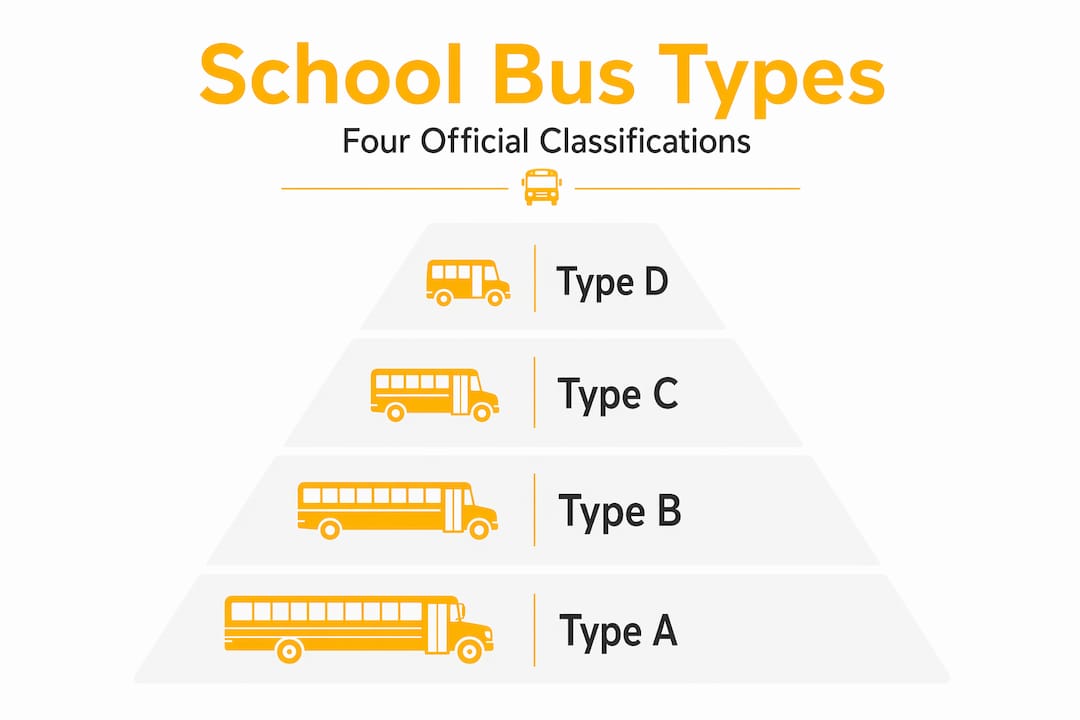
North American school buses are classified into four primary types, A through D, each defined by chassis design, capacity, and intended application. Understanding these categories is the first step in any serious procurement conversation.
Type A: the small but mighty minibus
Type A buses are the smallest in the classification system, built on a van or cutaway chassis. They typically seat between 10 and 30 passengers, making them well-suited for special education routes, rural pickups with low student density, and early childhood programmes. Their compact size is an advantage on narrow roads, but it also means you cannot use them as a primary fleet vehicle for high-volume routes.
Type B: the middle ground
Type B buses are less common and sit between the minibus and the conventional school bus in terms of size. They are built on a stripped chassis with a body constructed around it. You will not find them in most Canadian fleets, but they appear in certain niche applications where a Type A is too small and a Type C is unnecessarily large.
Type C: the backbone of most fleets
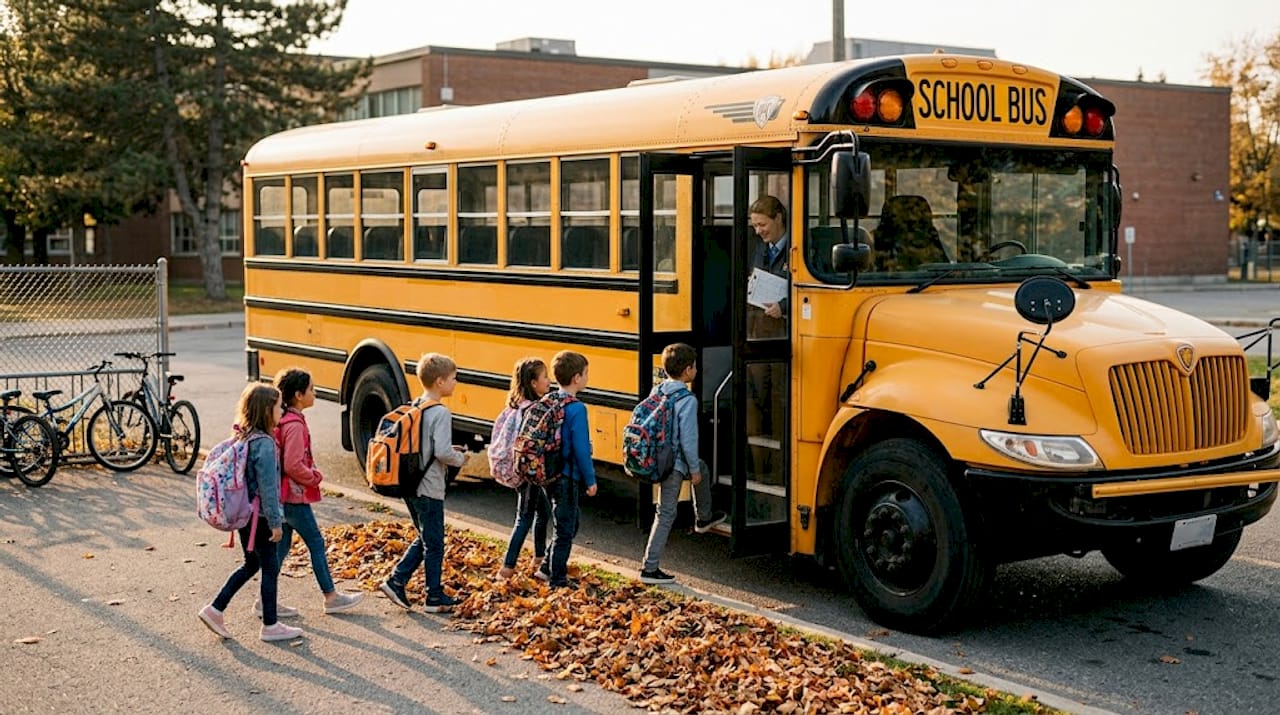
Type C buses are the conventional school bus most people picture. Built on a truck chassis with a hood at the front, they balance capacity, durability, and long-term serviceability. Seating ranges from roughly 48 to 72 passengers, and they are the most widely produced category in North America. If your district is looking for a reliable, versatile workhorse, this is the default choice for good reason.
Type D: maximum capacity, transit-style design
Type D buses feature a flat front and are built entirely forward of the front axle, similar in profile to a city transit bus. They carry the largest student loads, typically 72 to 90 passengers, and are best suited for dense urban routes. The flat-front design does remove the crumple zone you get with a hooded vehicle, which is worth factoring into your safety assessment.
| Type | Capacity range | Chassis style | Best use case |
|---|---|---|---|
| A | 10 to 30 | Van or cutaway | Special education, rural low-volume |
| B | 16 to 30 | Stripped chassis | Niche applications |
| C | 48 to 72 | Conventional truck | General routes, most districts |
| D | 72 to 90 | Transit flat-front | High-density urban routes |
Fuel types: diesel, gasoline, and electric options
Most school fleets in North America still run on diesel. It is energy-dense, widely available, and familiar to maintenance teams. The problem is cost volatility. Diesel prices surged 67%, adding roughly $1.8 billion in annual expenses to school bus fleets across the United States. Many Canadian districts are watching the same trend. Gasoline-powered buses exist as a lower-cost entry point for smaller fleets, but they are less fuel-efficient over long routes and carry their own maintenance demands.
Electric school buses are the most significant shift in this space right now. They produce zero tailpipe emissions, which matters enormously for student health, particularly in urban areas where diesel exhaust accumulates near school entrances and inside buses. Replacing even five diesel buses with electric alternatives reduces asthma risk for approximately 1,500 students. That is not a marginal improvement. It is a public health outcome.
The practical barriers to electrification are real, though. Charging infrastructure requires capital investment. Upfront vehicle costs are higher than diesel equivalents. And fleet-wide transitions involve complex logistics that go well beyond simply buying new buses. Electrification-as-a-Service (EaaS) partnerships have emerged as a practical solution, where specialist providers manage charging infrastructure, maintenance contracts, and software under a single agreement, reducing the operational burden on your transportation department.
Key factors when evaluating fuel type for your fleet:
- Total cost of ownership over 10 to 15 years, not just purchase price
- Route length and charging feasibility for electric options
- Air quality impact near school zones and along regular routes
- Local grant availability, such as EPA Clean School Bus programme funding, which has awarded millions to support electrification
Pro Tip: When evaluating new bus purchases, build a 10-year cost model that includes fuel, maintenance, and health-related productivity costs. Electric buses often look expensive at acquisition but are considerably cheaper over a full operating lifecycle.
MFSABs and activity buses: specialised transport explained
Multi-Function School Activity Buses, commonly called MFSABs, occupy a distinct regulatory category. They are not standard school buses. They do not carry stop arms, they are not required to be yellow, and they are not governed by the same federal standards that apply to Type A through D buses. What they are designed for is extracurricular and non-home-to-school transport, such as sports team travel, field trips, and specialised programme shuttles.
Where MFSABs have proven genuinely useful is as a legal and safer replacement for 15-passenger vans. Passenger vans in that size range have a documented rollover risk, and many school districts in the United States have moved away from them entirely. An MFSAB provides more structural protection, better seating configurations, and proper licensing requirements for drivers.
Before you add MFSABs to your procurement plan, weigh these considerations carefully:
- Advantages: More flexibility in scheduling and appearance; legal for most extracurricular routes; safer alternative to 15-passenger vans; cost-effective for small groups
- Limitations: Cannot be used for regular home-to-school routes where a standard school bus is required; drivers may need different licensing than standard bus routes; no stop arm protection for riders boarding in traffic
How MFSABs fit your district depends on your extracurricular volume and how many trips per week fall outside the home-to-school category. For schools running multiple sports programmes or arts tours, having two or three MFSABs in the fleet is often more cost-efficient than hiring chartered transport every time.
Operational considerations when choosing bus types
Matching the right bus type to the right route sounds straightforward. In practice, it requires looking at student volume per stop, route distance, road conditions, and the accessibility needs of your student population. A Type D bus running a rural route with seven students per stop is a waste of fuel and capacity. A Type A bus serving a dense urban corridor will fall behind schedule within weeks.
Accessibility is non-negotiable. Buses serving students with physical disabilities or mobility equipment must meet specific lift and securement standards. Not all Type A or B buses are equipped for this as standard, so verify specifications before purchase, not after.
Maintenance planning is where many districts fall short. Fleet inspections and HVAC checks during the spring and early summer off-season are the most critical windows for preventing in-season breakdowns. These windows are short, and they compete with staff leave schedules. Districts that treat them as optional tend to face reactive maintenance costs that are significantly higher than the preventive work they skipped.
On the logistics side, routing software with GPS tracking and vendor performance scorecards are increasingly standard in well-run districts. New York City’s school bus scorecard, for example, ties vendor payments to measurable performance metrics, creating direct accountability for on-time rates and safety compliance.
Pro Tip: Ask prospective bus vendors for their maintenance data, not just their sales materials. Uptime percentages, average repair turnaround times, and parts availability are better indicators of long-term fleet reliability than brochure specifications.
Safety and comfort features in school bus models
The regulatory floor for school bus safety is relatively high in Canada, but there is meaningful variation above that floor. When comparing school bus models, look beyond the minimum requirements and assess what is actually installed.
Key safety features to evaluate in any procurement decision:
- Seatbelts and compartmentalisation: Some provinces mandate lap-and-shoulder belts; others rely on compartmentalisation (high-backed, padded seats as passive protection)
- Emergency exits: Number, location, and ease of operation for students of different ages
- Onboard cameras: Interior and exterior cameras are now standard in many districts and support both safety monitoring and incident documentation
- Cross-view mirrors and crossing arms: Critical for pedestrian safety at stops
On the comfort side, HVAC systems are worth close attention, particularly for longer routes in extreme temperatures. Noise insulation affects student concentration and driver fatigue on extended runs. Comparing luxury vs. standard bus options for trips and excursions can also reveal which features translate into measurable student experience improvements versus which are simply added cost.
Firoz’s take: rethinking the standard yellow bus model
I have worked with enough school transportation decisions to see the same pattern repeat. A district buys a uniform fleet of Type C buses because that is what was always done, and then spends the next decade trying to retrofit that decision to routes and student needs that were never actually uniform.
The districts that get this right are the ones that start by mapping their actual routes, not their assumptions. They discover that three Type A buses for special education routes and a couple of contracted minibuses for extracurricular trips save more money and serve students better than a sixth Type C bus that sits underutilised three days a week.
Electric bus adoption is genuinely promising, but I would caution against treating it as a marketing exercise. The infrastructure and specialist support required to make electric buses reliable in daily operation is not trivial. Districts that rush in without EaaS partnerships or proper charging assessments end up with buses that are offline more than they should be.
What I have found works is a multi-modal transport strategy that treats yellow buses as one tool in a larger kit. Contracted rentals, smaller activity buses, and even public transit integration for older students can cover gaps that a single bus type never will. The flexibility you build into your transport programme now is what saves you when student populations shift or funding changes mid-year.
— Firoz
How Torontobusrentals supports your school’s transport needs
Planning a school trip or covering a gap in your district’s fleet? Torontobusrentals offers a range of vehicles that align directly with the bus types covered in this guide, from compact minibuses ideal for small groups and special excursions to large-capacity school buses suited for full-cohort travel.

Every vehicle in the Torontobusrentals fleet is maintained to a high safety standard and operated by professional, licensed drivers with school trip experience. Whether you need a minibus for a smaller group or a full-size bus for a field trip, the booking process is straightforward and the team understands the scheduling pressures school administrators face. Rental is also a practical option for districts testing a vehicle type before committing to a long-term purchase, giving you real operational data without the capital outlay.
FAQ
What are the four types of school buses?
North American school buses are officially classified as Type A (minibuses), Type B (mid-size), Type C (conventional hooded), and Type D (transit flat-front), with each type defined by chassis design, capacity, and intended route application.
Are electric buses safe for students?
Yes. Electric school buses meet the same federal safety standards as diesel models and offer additional benefits including reduced noise and zero tailpipe emissions, which lower air pollution exposure and asthma risk for students.
What is an MFSAB and when should a school use one?
A Multi-Function School Activity Bus is a specialised vehicle used for extracurricular and non-home-to-school transport. It differs from a standard school bus in that it has no stop arm and is not required to be yellow, but it is a safer and legally appropriate replacement for 15-passenger vans.
How do I choose between Type C and Type D buses?
Type C buses are better suited for mixed suburban and rural routes where capacity of up to 72 students is sufficient, while Type D buses are designed for high-density urban routes requiring 90-passenger capacity and work best where stop frequency is high.
How often should school buses be inspected?
Fleet inspections should be conducted during scheduled off-season windows, typically spring and early summer, to address chassis, HVAC, and mechanical issues before the academic year resumes and repair opportunities become limited.
Recommended
- School bus rental in Toronto: how to choose the right option
- Why Toronto schools should choose bus rentals for trips
- Luxury vs. standard buses: a guide for Toronto planners
- How to book a school trip bus efficiently in Toronto