
Special event transportation in Toronto: a complete guide
TL;DR:
- Proper transportation planning shapes guest experiences and ensures smooth event flow.
- Choosing appropriate vehicles and managing parking are crucial for accommodating Toronto’s logistical challenges.
- Early coordination, clear communication, and contingency plans prevent delays and guest frustration.
Imagine dozens of guests arriving in overlapping waves, your parking zones filling up faster than expected, and your shuttle running behind schedule before the event even begins. For Toronto event planners, corporate teams, schools, and couples organising special gatherings, transportation is rarely the first priority but it is almost always the biggest headache. 30% of guests arrive within the first 20 minutes at galas, which means your arrival plan needs to be airtight before anyone steps foot through the venue doors. This guide walks you through every layer of group transportation planning so your next Toronto event runs smoothly from the first pickup to the final drop-off.
Table of Contents
- Why transportation planning matters for Toronto events
- Choosing the right group transportation option
- Managing parking and arrival logistics
- Best practices for communicating and coordinating with guests
- What most event planners miss about group transportation
- Find reliable event transportation solutions with Toronto Bus Rentals
- Frequently asked questions
Key Takeaways
| Point | Details |
|---|---|
| Arrival patterns are crucial | Most guests arrive in waves, so predicting timing helps planners avoid bottlenecks. |
| Choose the right vehicle | Match charter buses, minibuses, shuttles or school buses to your group size and transport needs. |
| Plan for parking and logistics | Allocate zones, use shuttles for overflow, and build winter buffers to prevent delays. |
| Communicate clearly | Share up-to-date schedules and transport details to ensure smooth guest arrivals. |
| Transport shapes event experience | Thoughtful group transportation enhances accessibility, comfort and the overall event atmosphere. |
Why transportation planning matters for Toronto events
Transportation does far more than move people from point A to point B. The moment a guest boards a well-organised shuttle or steps off a clean, comfortable charter bus, they form an impression of your event. That first experience sets the tone for everything that follows. For corporate galas, weddings, and school trips alike, group transportations that feel effortless signal professionalism and care.
Toronto presents specific logistical challenges that many planners underestimate. Traffic congestion along major corridors like the Gardiner Expressway and the DVP can add 20 to 40 minutes to travel times during peak hours. Parking near popular venues in the downtown core is limited and expensive. Guests arriving in unpredictable waves create bottlenecks that ripple through your entire event timeline.
Accessibility is another layer that demands attention. VIP guests, elderly attendees, and persons with disabilities require dedicated zones, appropriate vehicles, and priority boarding. Overlooking these needs can create uncomfortable moments and even legal exposure for organisations hosting public events.
Winter in Toronto adds a further layer of complexity. Snow, ice, and cold temperatures slow everything down. Buses need extra buffer time, guests need covered waiting areas where possible, and drivers need clear communication about alternate routes. Planning for seamless event transport means building in seasonal contingencies from the very beginning.
Here are the core transportation challenges Toronto event planners face:
- Traffic delays on major routes, especially during evening rush hour
- Limited parking at urban venues, requiring overflow solutions
- Arrival waves that cluster guests into unpredictable surges
- Accessibility requirements for VIP, elderly, and disabled guests
- Winter conditions that extend travel times and increase cancellation risk
“Effective event transportation isn’t a luxury add-on. It’s the infrastructure that holds your entire event timeline together.”
Pro Tip: Allocate your VIP and accessible parking zones first, before general guest parking, and communicate these zones clearly in your pre-event communications. This small step prevents a surprising amount of day-of confusion.
Choosing the right group transportation option
With planning in mind, let’s look at which transportation types are available and best suited for your event. Not every event needs the same vehicle, and choosing the wrong one can mean unnecessary cost or, worse, uncomfortable guests.
Charter buses are the gold standard for large groups of 40 or more. They offer generous luggage space, climate control, reclining seats, and onboard amenities that make longer journeys feel comfortable. For corporate retreats, wedding parties, or large school excursions, a sports team charter bus style vehicle offers the capacity and reliability you need.
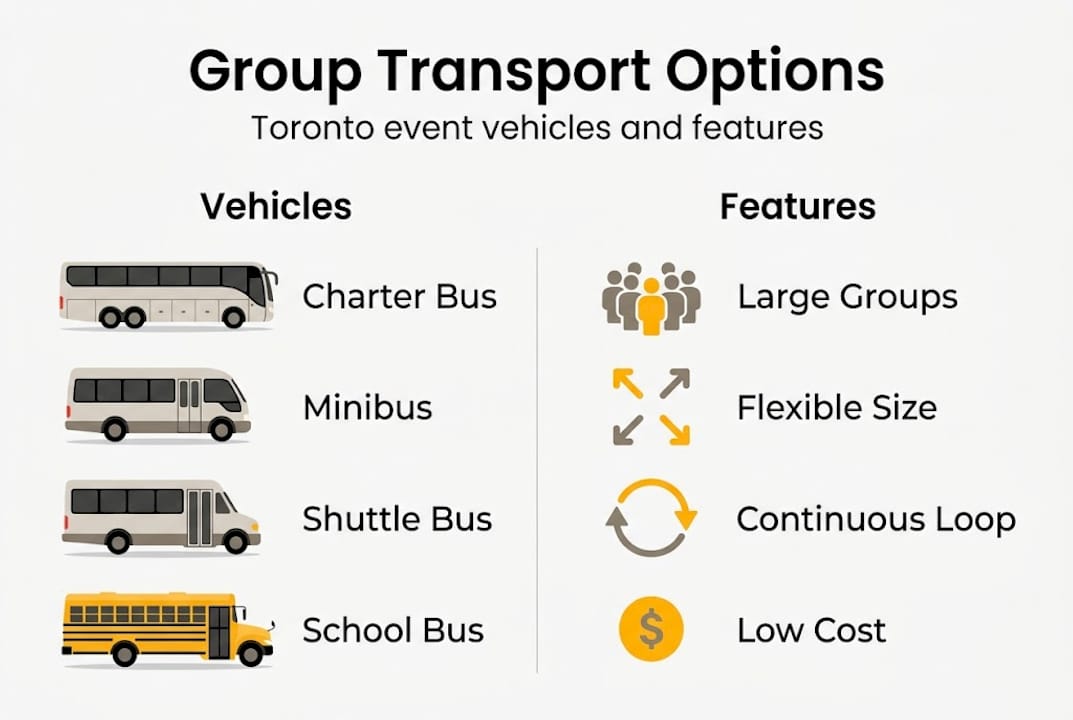
Minibuses are the flexible middle ground. They seat between 14 and 24 passengers and are ideal for smaller corporate teams, intimate wedding groups, or school outings where a full-sized coach would feel excessive. A well-chosen minibus rental keeps costs reasonable without sacrificing comfort.
Shuttle buses are purpose-built for continuous loops. If your venue has overflow parking 500 metres away, a shuttle running every 10 to 15 minutes solves the problem cleanly. Shuttles help manage overflow and guest waves without requiring guests to navigate unfamiliar streets on foot.
School buses remain the most cost-effective option for student groups. They are familiar, safe, and widely available. A school bus rental is often the smartest choice for field trips, sports days, and educational outings where budget is a priority.
| Vehicle type | Capacity | Best for | Key advantage |
|---|---|---|---|
| Charter bus | 40 to 55 | Large corporate, weddings | Comfort and amenities |
| Minibus | 14 to 24 | Small teams, intimate events | Flexibility and cost |
| Shuttle bus | 20 to 35 | Overflow parking, loops | Continuous movement |
| School bus | 47 to 72 | Student groups | Affordability |
Key factors to consider when selecting your vehicle:
- Group size and whether it may grow closer to the event date
- Distance between pickup points and the venue
- Accessibility needs of specific guests
- Budget and whether a premium experience is part of your event brand
Pro Tip: Always confirm that your chosen vehicle meets accessibility requirements before finalising your booking. A bus without a proper boarding solution can leave guests with mobility challenges stranded at the curb.
Managing parking and arrival logistics
Now that the right vehicle is chosen, let’s tackle the logistics of arrivals and parking so everything runs smoothly. This is where most events either succeed or quietly fall apart.
Predicting guest arrival times is not guesswork. You can use your RSVP data, historical patterns from similar events, and local traffic data to forecast when surges will occur. The arrival wave prediction approach divides your expected guests into time blocks, typically early arrivals, main wave, and stragglers, and assigns shuttle and parking capacity accordingly.
| Arrival wave | Percentage of guests | Recommended action |
|---|---|---|
| 30 min before start | 20 to 30% | VIP and accessible zones open |
| 0 to 20 min before | 40 to 50% | Main parking and shuttle active |
| After start time | 20 to 30% | Overflow and late shuttle loop |
Here is a practical step-by-step approach for managing arrivals:
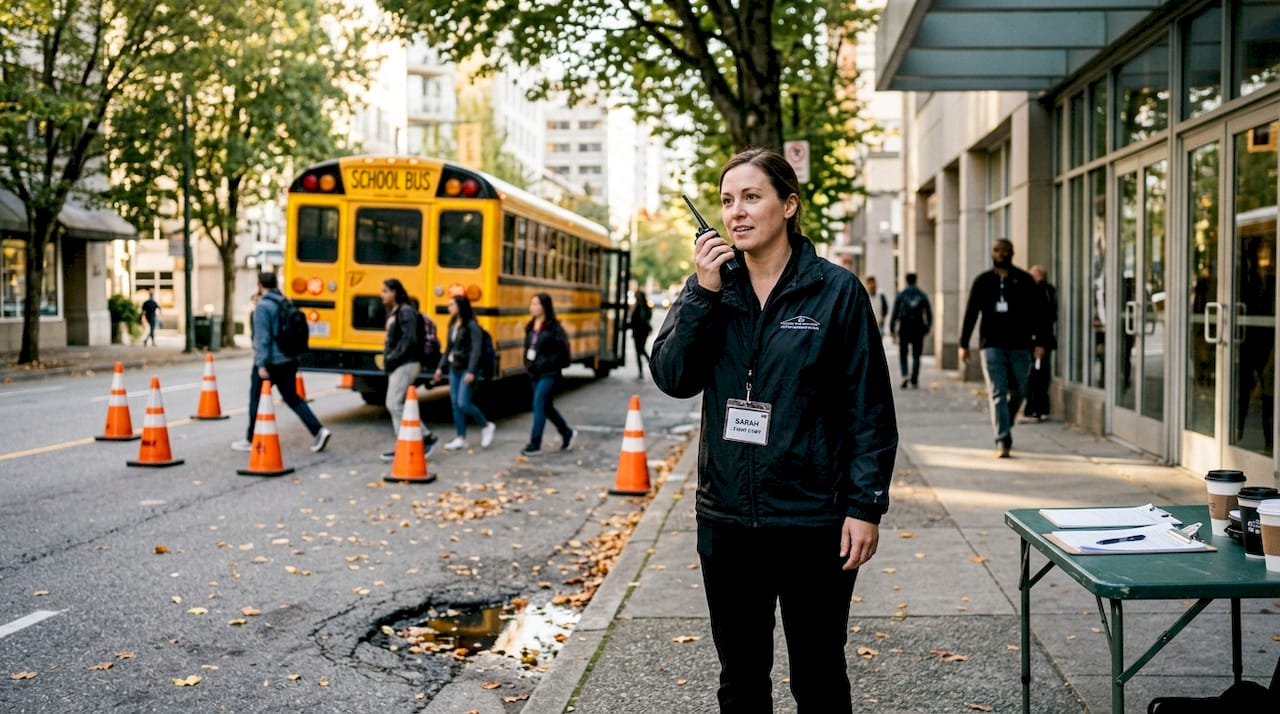
- Map your parking zones at least two weeks before the event, identifying VIP, accessible, general, and overflow areas.
- Assign a parking coordinator to each zone on event day, with clear radio or phone communication.
- Schedule shuttle loops based on your arrival wave forecast, not on a fixed timetable.
- Add winter buffers of at least 15 to 20 extra minutes per loop during November through March.
- Brief your drivers on alternate routes in case of unexpected road closures or weather delays.
- Confirm venue access for buses, including turning radius and drop-off clearance.
Your bus rental checklist should include all of these steps well before event day. Reviewing your event shuttle service options early gives you time to adjust vehicle counts and loop schedules as your RSVP numbers firm up.
“The events that run on time are the ones where the parking plan was treated as seriously as the catering plan.”
Best practices for communicating and coordinating with guests
After all logistics are set, guest communication can make or break an event’s flow. You can have the perfect shuttle schedule and the most organised parking zones, but if guests don’t know where to go, none of it matters.
Start communicating transportation details at least two weeks before the event. Your invitation or confirmation email should include pickup times, boarding locations, and any parking instructions. Use clear, simple language and avoid assuming guests know the area.
Real-time updates make a significant difference on event day. SMS alerts or a simple event app notification can tell guests when the next shuttle departs, if there’s a delay, or if a pickup point has changed. This reduces anxiety and prevents guests from wandering.
Contingency planning is non-negotiable for Toronto events. Winter buffers and forecasted waves reduce unexpected delays, but you still need a backup plan for severe weather, vehicle issues, or sudden changes in guest numbers. Have a secondary transport contact ready and brief your venue staff on the shuttle schedule so they can answer guest questions.
Key communication touchpoints to include:
- Pre-event email with pickup times, boarding locations, and parking maps
- Day-before reminder with any last-minute changes or weather notes
- Day-of SMS or app alert confirming shuttle departure times
- On-site signage at every pickup point and parking zone
- Venue staff briefing so all team members can direct guests confidently
For corporate events, the role of buses in corporate travel extends beyond simple logistics. Coordinated transport signals to attendees that every detail has been considered, which reinforces your organisation’s professionalism.
Pro Tip: Share your full shuttle and arrival schedule with venue staff 48 hours before the event. When guests ask a staff member where the bus stops, a confident answer keeps the experience smooth and stress-free.
What most event planners miss about group transportation
Let’s step back for a candid perspective on what actually works and what planners often miss. After working with event organisers across Toronto, one pattern stands out clearly: most planners treat transportation as a cost to minimise rather than an experience to design.
The instinct to choose the cheapest option or the most familiar vehicle type is understandable, but it often leads to the wrong decision. A slightly larger budget for a comfortable charter bus can transform a corporate outing from forgettable to genuinely impressive. The journey is part of the event.
Toronto-specific challenges, particularly winter conditions and arrival wave clustering, are consistently underestimated. Forecasting waves and winter buffers is often overlooked until the first shuttle runs 25 minutes late and 60 guests are waiting in the cold. By then, the damage to the event experience is done.
The best events we’ve seen treat transportation as an experience builder. Guests who board a warm, clean, professionally driven coach arrive in a good mood. That mood carries into the room. Conversely, guests who struggled to find parking or waited too long for a shuttle arrive frustrated, and that frustration lingers.
Review your bus rental checklist tips and run a scenario drill with your venue and transport teams at least one week before the event. Walk through the worst-case scenarios: a snowstorm, a vehicle running late, a sudden spike in arrivals. Teams that have rehearsed the response handle it calmly. Teams that haven’t tend to improvise poorly under pressure.
Pro Tip: Run a 30-minute scenario drill with your venue coordinator and transport provider before event day. Identify the two most likely problems and agree on the response in advance.
Find reliable event transportation solutions with Toronto Bus Rentals
Ready to put these strategies into action? Securing dependable group transport for your Toronto event is straightforward when you work with a provider who understands local logistics, seasonal conditions, and the specific demands of corporate, school, and wedding events.

At Toronto Bus Rentals, we offer a full range of vehicles and planning support to match every event size and style. Whether you’re exploring the charter bus advantages for a large corporate gathering or looking for flexible minibus rental solutions for a smaller group, we make it easy to find the right fit. Follow our simple bus rental steps to get a quote and lock in your booking well ahead of your event date.
Frequently asked questions
How early should I book transportation for a Toronto event?
Ideally 4 to 6 weeks before your event, especially during busy periods like summer festivals and winter galas when vehicle availability tightens quickly.
What’s the best vehicle type for transporting 40 or more guests?
A charter bus is the most efficient and comfortable option for large groups, offering ample seating, climate control, and professional drivers. For large groups, multiple minibuses can also work well when flexibility is needed.
How can I manage parking overflow for special events?
Plan dedicated shuttle loops between overflow parking areas and your venue entrance, and reserve VIP and accessible spaces first. Shuttles manage overflow most effectively when they run on a predictable, frequent schedule.
What’s a common mistake planners make with event transportation?
Failing to forecast arrival waves and not sharing clear schedules with guests leads to confusion and delays. 30% of guests arrive within the first 20 minutes, so your shuttle and parking plan must be fully operational before the event officially begins.
Recommended
- The ultimate wedding transportation checklist for Toronto couples
- Guide to Chartering Buses for Toronto Events
- Why bus rentals are essential for Toronto events: Cost, ease, safety
- Why rent buses in Toronto for smoother group travel