
School Bus Rental Toronto 2026: Book 2-4 Weeks Early for Best Rates
Organizing school trips or group events in Toronto can feel overwhelming when you’re juggling safety, comfort, budget, and logistics. Add in the pressure of coordinating schedules and finding reliable transportation, and stress levels skyrocket. Booking school bus rentals less than two weeks in advance significantly increases risk of unavailability and higher costs. This guide walks you through every step to secure safe, affordable, and comfortable school bus rentals in Toronto.
Table of Contents
- Introduction To School Bus Rental In Toronto
- Prerequisites: What You Need Before Renting A School Bus
- Choosing The Right Bus Size And Fleet Type
- Safety And Driver Qualifications
- Cost Considerations And Budgeting
- Booking Timelines And Procedures
- Bus Amenities And Passenger Comfort
- Common Mistakes And Troubleshooting
- Sustainability And Eco-Friendly Options
- Expected Outcomes And Success Metrics
- Explore Top School Bus Rentals In Toronto Today
Key Takeaways
| Point | Details |
|---|---|
| Early Booking | Reserve 2-4 weeks ahead to secure better prices and availability. |
| Right Bus Size | Match capacity to your group size plus luggage for comfort and cost efficiency. |
| Safety First | Verify driver certifications and mandatory safety features before booking. |
| Budget Smart | Compare quotes, confirm amenities, and check for hidden fees upfront. |
| Green Options | Eco-friendly buses support sustainability goals without compromising safety. |
Introduction to School Bus Rental in Toronto
Toronto’s urban landscape presents unique challenges for group transportation. Dense traffic, strict safety regulations, and diverse event needs require careful planning. School bus rentals bridge this gap by offering safe, reliable transport for schools, camps, and community organizations.
School trip bus rental guide options in Toronto range from compact mini-coaches to full-sized buses seating up to 47 passengers. Each vehicle type serves different purposes based on group size and trip requirements.
Local regulations mandate specific standards. Toronto school buses include special safety features like flashing stop lights and compartmentalized seating to enhance passenger protection. Understanding these requirements protects your group and ensures compliance.
The rental market offers flexibility for various budgets and needs:
- Mini-coaches for smaller groups navigating city streets
- Full-sized buses for large school trips or multi-day events
- Modern fleets with climate control and entertainment systems
- Professional drivers trained in Toronto traffic patterns
- Customizable rental packages for half-day or multi-day trips
Knowing what’s available helps you make informed decisions. The right provider balances safety, comfort, and cost while meeting Toronto’s transportation standards.
Prerequisites: What You Need Before Renting a School Bus
Successful rentals start with thorough preparation. Gather critical information before contacting providers to streamline the booking process and avoid costly mistakes.
Start with precise passenger counts. Include students, chaperones, staff, and any last-minute additions. Underestimating numbers leads to cramped conditions or emergency rebookings. Overestimating wastes budget on unnecessary capacity.
Confirm your trip details completely:
- Departure and return dates with exact times
- Pickup and drop-off locations with addresses
- Planned stops or detours during the journey
- Special requirements like wheelchair access or extra storage
- Emergency contact information for all parties
Accurate passenger counts and clear budget planning are essential to avoid overpaying or inadequate bus selection. Document these details in writing to share with rental companies.
Budget planning comes next. Secure funding approval early to avoid delays. Research typical rental costs for your group size to set realistic expectations. Factor in potential add-ons like extended hours or additional mileage.
Pro Tip: Create a shared document with all trip details accessible to your team and rental provider. This prevents miscommunication and ensures everyone works from the same information.
Review safety requirements specific to Toronto school bus rentals. Understand what certifications and inspections are mandatory. Knowing these standards helps you evaluate provider credibility during the selection process.
Choosing the Right Bus Size and Fleet Type
Matching your bus to your group size and trip needs maximizes comfort and budget efficiency. Toronto offers diverse fleet options designed for different scenarios.
Mini-coaches seat 15 to 30 passengers. They navigate Toronto’s narrow streets easily and cost less per hour than full-sized options. Perfect for small school groups, sports teams, or corporate outings within the city.
Full-sized school buses accommodate up to 47 passengers. They provide more storage for luggage, equipment, and supplies. Best for large groups, multi-day trips, or events requiring significant gear.

Mini-coach buses (15-30 seats) offer cost-effective, maneuverable options for smaller groups, while full-sized buses (up to 47 seats) serve larger groups with more amenities. Consider your specific needs when deciding.
| Bus Type | Capacity | Best For | Average Cost | Storage Space |
|---|---|---|---|---|
| Mini-Coach | 15-30 | City tours, small groups | Lower | Moderate |
| Mid-Size | 30-40 | Medium school trips | Medium | Good |
| Full-Size | 40-47 | Large events, multi-day | Higher | Excellent |
Consider trip length when selecting amenities. Short city trips need basic comfort features. Longer journeys benefit from entertainment systems, power outlets, and premium seating.
Evaluate these factors:
- Passenger count with 10% buffer for additions
- Luggage volume and special equipment needs
- Trip duration and number of planned stops
- Budget constraints and cost per passenger
- Accessibility requirements for passengers with disabilities
Toronto group shuttle bus options work well for airport transfers or venue shuttles. Full-sized school buses in Toronto excel at field trips and camp transport.
Pro Tip: For groups near 30 passengers, choose a mini-coach to save costs and improve maneuverability. For 40 plus passengers, invest in full-sized buses for comfort and adequate space.
Safety and Driver Qualifications
Safety forms the foundation of successful school bus rentals. Toronto mandates strict standards that protect passengers and reduce liability for organizers.
Drivers in Toronto must hold specific licenses and complete specialized training to operate school buses safely. Verify these credentials before signing any contract. Ask providers for documentation proving driver certification and training completion dates.
Vehicle inspections happen regularly. Buses must pass safety checks covering brakes, lights, tires, emergency equipment, and structural integrity. Request inspection reports to confirm compliance.
Mandatory safety features include:
- Flashing stop lights visible to other drivers
- Compartmentalized seating designed to protect passengers
- Clearly marked emergency exits with functional operation
- First aid kits and fire extinguishers on board
- Two-way communication systems between driver and passengers
These elements work together to create multiple layers of protection. Driver and safety standards in Toronto exceed basic transportation requirements because school buses carry vulnerable passengers.
Selecting only providers with certified drivers and regular vehicle checks is critical to passenger safety. Never compromise on these standards to save costs.
Ask providers about their safety record. Inquire about incident history, insurance coverage, and emergency protocols. Reputable companies share this information transparently and maintain detailed safety documentation.
Driver professionalism matters too. Experienced drivers know Toronto routes, handle traffic efficiently, and communicate clearly with passengers. They serve as the primary safety officer during your trip.
Cost Considerations and Budgeting
Understanding pricing structures helps you maximize value without sacrificing quality or safety. Toronto school bus rental costs vary based on several factors.
Mini-coach buses generally cost less to rent per hour than full-sized buses, but group size and mileage significantly impact final costs. Larger vehicles cost more upfront but reduce per-passenger expenses for big groups.
Pricing drivers include:
- Bus size and passenger capacity
- Rental duration measured in hours or days
- Total mileage or distance traveled
- Seasonal demand during peak school event periods
- Additional amenities like WiFi or entertainment systems
Follow these steps to budget effectively:
- Define your group size and calculate trip length precisely
- Request detailed quotes from at least three providers
- Verify what amenities and services are included in base price
- Identify extra fees for fuel, tolls, parking, or driver gratuity
- Review cancellation policies and refund terms carefully
Many providers offer discounts for multi-day rentals or off-peak bookings. Ask about these opportunities when requesting quotes. Booking during weekdays or outside busy spring/fall school trip seasons can yield savings.
Hidden costs catch planners off guard. Clarify whether quoted prices include:
- Fuel surcharges and current rates
- Driver accommodation for overnight trips
- Parking fees at destinations
- Cleaning fees for special events
- Insurance coverage and deductibles
Pro Tip: Always get quotes in writing with itemized breakdowns. This prevents surprises and provides documentation if disputes arise. Compare total trip costs, not just hourly rates.
Cost breakdown and budgeting resources help you understand market rates and identify fair pricing. Budget an extra 10 to 15% buffer for unexpected costs.
Booking Timelines and Procedures
Timing determines availability and pricing. Booking school buses 2-4 weeks in advance significantly increases availability and reduces rental costs in Toronto. Last-minute bookings risk limited options and premium pricing.
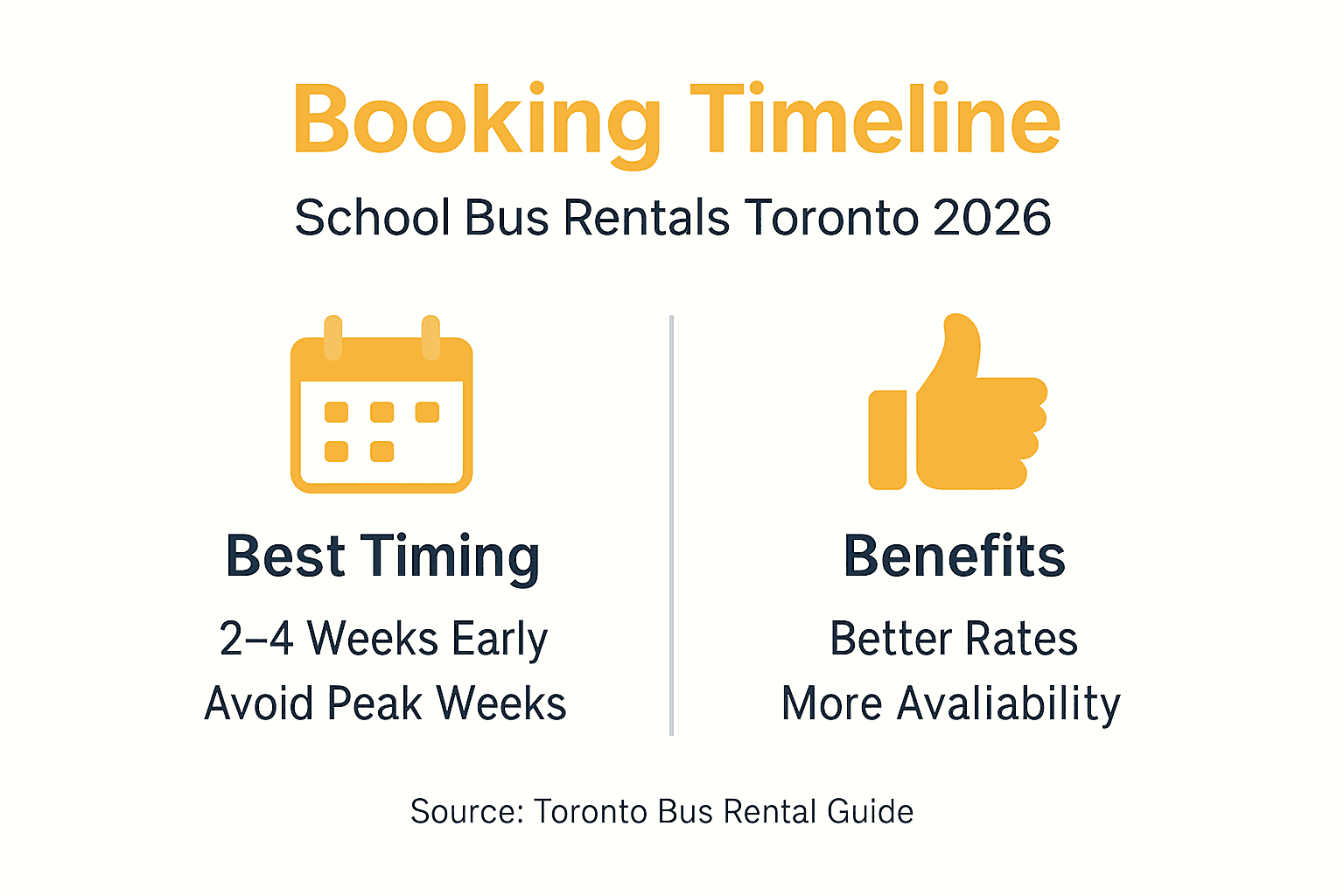
Peak seasons run from April through June and September through November when schools plan field trips. Book even earlier during these periods to secure preferred buses and times.
Follow this booking process:
- Collect complete trip details including passenger counts and itinerary
- Request quotes from multiple providers with identical specifications
- Verify provider licensing, insurance, and bus inspection records
- Confirm safety features, amenities, and driver qualifications meet your standards
- Review rental agreement thoroughly before signing and paying deposit
Deposits typically range from 20 to 50% of total rental cost. Understand refund policies for cancellations at different time intervals. Some providers offer flexible rebooking options for weather or emergency cancellations.
Communicate pickup logistics clearly:
- Exact addresses with parking or loading zone details
- Contact person name and phone number for day-of coordination
- Expected passenger arrival times and boarding procedures
- Special instructions for navigating school or venue grounds
Confirm these details in writing at least one week before your trip. Follow up 48 hours before departure to reconfirm timing and address any last-minute changes.
Pro Tip: Avoid booking during major Toronto events or holidays when demand spikes. Check city event calendars when planning trips to identify potential conflicts that might limit bus availability.
Bus rental tips for successful events include maintaining open communication with your provider throughout the planning process. Responsive providers demonstrate commitment to service quality.
Bus Amenities and Passenger Comfort
Comfort features transform basic transportation into positive experiences. The right amenities keep passengers happy during short city trips or extended journeys.
Buses equipped with climate control, entertainment systems, and ample storage significantly improve passenger satisfaction on longer trips. Match amenities to your trip duration and passenger expectations.
Essential comfort features include:
- Climate control with heating and air conditioning
- Comfortable seating with adequate legroom
- Audio and video entertainment systems for longer trips
- Power outlets for charging devices
- Clean restroom facilities on full-sized buses
Storage capacity matters for school trips. Ensure adequate space for backpacks, sports equipment, musical instruments, or camping gear. Underestimating storage leads to cramped passenger areas and safety concerns.
Driver knowledge enhances the experience. Experienced drivers familiar with Toronto routes navigate efficiently, avoid traffic delays, and provide local insights. They serve as ambassadors for your trip, setting the tone for passenger experience.
Customer service from rental providers impacts overall satisfaction. Responsive communication, flexible problem-solving, and professional conduct throughout the rental process indicate reliable service.
Bus amenities and comfort features vary by fleet age and provider investment. Newer buses typically offer updated technology and better maintenance standards.
Clarify amenity expectations upfront. Request photos or schedule vehicle inspections before finalizing bookings. This prevents disappointment when buses arrive and ensures alignment between expectations and reality.
Common Mistakes and Troubleshooting
Last-minute bookings and inaccurate passenger counts are common mistakes that lead to higher costs and logistic issues in Toronto. Learning from these errors helps you avoid similar problems.
Frequent mistakes include:
- Waiting until two weeks before departure to start booking
- Underestimating passenger numbers without accounting for additions
- Failing to verify safety certifications and driver qualifications
- Assuming lowest price equals best value without comparing services
- Neglecting to document trip details and agreements in writing
Double-check passenger counts with a buffer. School trips often see last-minute parent volunteers or staff additions. Build 5 to 10% extra capacity into your bus selection to accommodate changes.
Verify bus specifications match your needs. Confirm seating capacity, storage space, and amenities before signing contracts. Request photos or inspection opportunities to validate vehicle condition.
Communicate itinerary details clearly:
- Provide written pickup and drop-off instructions
- Share contact information for day-of coordination
- Specify timing expectations and flexibility windows
- Document special requirements or accessibility needs
Pro Tip: Keep a backup contact at your rental provider accessible during your trip. Having direct communication channels for urgent questions or last-minute adjustments prevents stress and delays.
Chartering bus mistakes and solutions resources help you anticipate problems. Experienced providers offer guidance based on common scenarios they’ve navigated successfully.
Address issues immediately when they arise. Don’t wait until trip day to resolve concerns about vehicle condition, driver assignment, or route planning. Early intervention prevents small problems from becoming major disruptions.
Sustainability and Eco-Friendly Options
Low-emission and hybrid school buses are increasingly available in Toronto, helping reduce environmental impact. Green transportation aligns with institutional sustainability goals and community expectations.
Eco-friendly options include:
- Hybrid buses combining electric and traditional fuel systems
- Electric buses with zero tailpipe emissions for city trips
- Newer diesel buses meeting stringent emission standards
- Biodiesel-powered vehicles using renewable fuel sources
Benefits extend beyond environmental impact. Hybrid and electric buses often feature quieter operation, improving passenger comfort. Fuel efficiency can reduce operating costs, potentially lowering rental rates.
Many schools and organizations prioritize sustainability in vendor selection. Choosing green buses demonstrates commitment to environmental responsibility. This resonates with students, parents, and community stakeholders who value eco-conscious decisions.
Discuss sustainability goals with providers early in the booking process. Some companies maintain dedicated green fleets or can source eco-friendly options with advance notice. Availability varies by provider and season.
Green rentals maintain identical safety and comfort standards as conventional buses. Environmental benefits don’t require compromising passenger protection or trip quality. Modern eco-friendly buses often feature updated amenities and technology.
Consider total environmental impact. Group transportation reduces per-person emissions compared to individual car travel. Even conventional buses provide sustainability benefits when replacing multiple vehicles for large group trips.
Expected Outcomes and Success Metrics
Measuring rental success helps improve future bookings and vendor relationships. Define clear metrics to evaluate performance objectively.
Key success indicators include:
- On-time pickup and drop-off with zero delays
- Zero safety incidents or passenger injuries
- Positive feedback from passengers and chaperones
- Actual costs matching budgeted amounts
- Smooth communication throughout the rental period
Collect passenger feedback through simple surveys. Ask about comfort, driver professionalism, vehicle cleanliness, and overall satisfaction. This data identifies strengths and improvement opportunities.
| Metric | Planned | Actual | Notes |
|---|---|---|---|
| Departure Time | 8:00 AM | 8:05 AM | Minor delay acceptable |
| Return Time | 4:00 PM | 3:55 PM | Early return positive |
| Budget | $1,200 | $1,185 | Under budget |
| Satisfaction Score | Target 4.5/5 | Achieved 4.7/5 | Exceeded expectations |
Track timing accuracy. Punctual service demonstrates provider reliability and respects participant schedules. Document any delays with explanations to understand whether issues were preventable.
Budget adherence indicates transparent pricing and effective planning. Significant cost overruns signal miscommunication or hidden fees that need addressing.
Safety performance is non-negotiable. Any incidents require thorough review and may necessitate changing providers. Zero tolerance for safety compromises protects your organization and passengers.
Document lessons learned after each rental. Note what worked well and what needs improvement. This institutional knowledge streamlines future planning and helps you select better providers over time.
Explore Top School Bus Rentals in Toronto Today
Ready to book safe, comfortable transportation for your group? Toronto Bus Rentals simplifies the process with transparent pricing, certified drivers, and modern fleets designed for Toronto’s unique needs.

Our 47-passenger school bus rentals accommodate large school trips with ample storage and comfort features. Smaller groups benefit from our flexible minibus rental options in Toronto that navigate city streets efficiently while maintaining safety standards.
We offer competitive rates with no hidden fees. Our affordable bus rental services include detailed quotes upfront so you can budget confidently. All vehicles meet Toronto safety requirements with regular inspections and certified drivers who know local routes.
Contact us today to discuss your trip needs and receive a customized quote. Our team helps you select the right bus size, plan logistics, and ensure smooth group transportation from start to finish.
FAQ
How far in advance should I book a school bus rental in Toronto?
Book at least 2 to 4 weeks before your trip date to ensure availability and better pricing. Peak school trip seasons from April to June and September to November require even earlier booking, ideally 6 to 8 weeks in advance. Booking timeline guidelines help you plan effectively.
What safety features are mandatory on Toronto school buses?
Mandatory features include flashing stop lights, compartmentalized seating, clearly marked emergency exits, and regular vehicle inspections. Drivers must hold proper certifications and specialized training. Toronto school bus safety features exceed standard transportation requirements to protect passengers.
How do I determine the right bus size for my group?
Count all passengers including students, chaperones, and staff, then add 5 to 10% buffer capacity. Mini-coaches fit 15 to 30 passengers for smaller groups, while full-sized buses accommodate up to 47 for larger trips. Choosing the right bus size depends on passenger count plus luggage and equipment needs.
Are eco-friendly buses available for school rentals in Toronto?
Yes, hybrid and electric buses are increasingly available in Toronto’s rental market. These options reduce environmental impact while maintaining identical safety and comfort standards as conventional buses. Discuss sustainability goals with providers early to identify available green options for your trip dates.
Recommended
- Toronto School Bus Rentals
- Robot Challenge Screen
- Robot Challenge Screen
- Minibus Rental Toronto – Group Transportation Made Easy