
Role of transportation for educational outings: 2026 guide
TL;DR:
- Reliable transportation is essential for student participation and safety during school outings. Proper planning, including early booking, safety assessments, and inclusive arrangements, reduces risks and ensures equitable access for all students.
Transportation is the single most decisive factor in whether a school outing happens at all. Without reliable, safe, and affordable transport, even the best-planned field trip to the Royal Ontario Museum or the Ontario Science Centre stays on paper. The role of transportation for educational outings extends far beyond moving students from point A to point B. A 2026 Frontiers in Psychology study confirms that longer travel times reduce study engagement and negatively affect grades. Educators and administrators who treat transport as an afterthought risk excluding students, creating safety gaps, and blowing their budgets before the trip even begins.
How does transportation impact student access and participation in educational outings?
Transportation is a structural determinant of educational access, not just a scheduling detail. MDPI Sustainability research from 2026 shows that transport barriers drive absenteeism and increase dropout risk, particularly for students in rural or low-income communities. That finding means a poorly planned trip can quietly exclude the students who would benefit most from hands-on learning outside the classroom.
The transportation impact on field trips is felt most sharply along socioeconomic lines. When a school in a suburban Toronto neighbourhood books a coach and assumes all students can reach the departure point, students without reliable home-to-school transport get left behind. Inclusive planning requires schools to think about the full journey, not just the leg from school to destination.
Common access barriers and practical solutions include:
- Distance from school to pick-up point. Coordinate a single central departure location and communicate it clearly to all families at least two weeks in advance.
- Cost of transport for families. Apply for board-level funding or community grants to cover student transport costs and remove financial barriers entirely.
- Reliability of the vehicle or operator. Book with a licensed, insured provider and confirm the booking in writing at least 30 days before the trip.
- Mobility and accessibility needs. Confirm wheelchair accessibility and any medical accommodation requirements when booking, not on the day of departure.
- Scheduling conflicts with part-time work or caregiving. Offer advance notice of trip dates so families can plan, and avoid scheduling outings on days with known community conflicts.
Pro Tip: When you collect permission forms, add a short question asking whether any student has a transport-related barrier to attending. That one question surfaces problems early enough to solve them.
Inclusive transportation planning, as MDPI Sustainability highlights, directly reduces absenteeism and supports equitable enrolment in educational activities. The importance of transport for education is not abstract. It determines who gets to learn.
What safety considerations and regulations should guide transportation planning?
Schools hold a non-delegable duty of care for students during excursions. That legal term means one thing in practice: even when you hire an external operator, the school remains legally responsible for student safety. Australian regulations require a formal transport risk assessment before every trip, regardless of whether the vehicle is school-owned or privately contracted.
Safety planning is not a one-time document. Risk assessments must be updated for each trip because routes, student needs, and operator circumstances change. Scottish government guidance on child rights and transport safety reinforces that inclusive and accessible transport planning is a rights-based obligation, not optional best practice.
A June 2026 NTSB safety alert confirms that pre-trip safety briefings covering seatbelt use, emergency exits, and emergency procedures are critical controls for student transport safety. Briefings should happen on the vehicle before departure, not in the classroom the day before.
Follow these steps for every school outing:
- Conduct a route-specific risk assessment. Identify road conditions, travel time, rest stops, and any known hazards along the planned route.
- Verify operator credentials. Confirm the provider holds a valid operating licence, adequate insurance, and a clean safety record before signing any contract.
- Check vehicle standards. Confirm the vehicle has functioning seatbelts for every passenger, working emergency exits, and a first-aid kit on board.
- Brief students before departure. Cover seatbelt use, emergency exit locations, expected behaviour, and what to do if separated from the group.
- Assign a supervising staff member per vehicle. That person holds the emergency contact list, the first-aid kit, and the authority to make safety decisions on the road.
- Prepare an emergency communication plan. Every staff member on the trip should have the school office number, the driver’s number, and a designated parent contact.
Pro Tip: Ask your transport provider for their safety checklist before you book. A reputable operator will send it without hesitation. If they cannot produce one, that is your answer.
Reviewing your provider’s protocols is not bureaucratic caution. Risk assessment responsibilities cannot be delegated, and verifying compliance is part of your legal duty as the organising school.
How do logistical factors affect the feasibility of school trip transportation?
Effective educational travel logistics depend on four operational variables: timing, grouping, routing, and budget. Get any one of these wrong and the trip either runs late, costs more than planned, or creates supervision gaps that compromise safety. A 2026 transportation planning guide for educators identifies coordinated departure and arrival timing, student grouping, and route management as the core functions of smooth field trip transport.

Budget pressure is the most common reason school trips get cancelled. A 2026 Education Week report documents that 40% of school districts manage rising fuel costs by adjusting routes, while 20% limit non-essential trips entirely. That pressure is real in Ontario too, where a 2026 report on declining school trips links transportation costs, liability concerns, and staff shortages to a measurable drop in outing frequency.
Choosing the right vehicle type is one of the highest-impact decisions you make. The table below compares the most common options for Toronto-area school outings.
| Vehicle type | Best for | Pros | Cons | Approximate cost factor |
|---|---|---|---|---|
| 47-passenger coach bus | Large groups, full-day trips | High capacity, comfortable, luggage space | Higher base cost, needs wide roads | Higher per-trip cost, lower per-student cost |
| 36-passenger coach bus | Mid-size groups, half-day trips | Manoeuvrable, cost-effective for medium groups | Less luggage space than full coach | Mid-range |
| 20-passenger minibus | Small groups, urban destinations | Easy parking, flexible routing | Limited capacity, fewer amenities | Lower per-trip cost, higher per-student cost |
| Public transit (TTC) | Short urban trips, older students | Very low cost | Supervision challenges, no group cohesion | Lowest cost |
Pro Tip: Build a contingency line of at least 10–15% into your transport budget before you present the trip cost to parents. Fuel price changes and last-minute route adjustments are predictable surprises. Plan for them.
Early budgeting and contingency planning, as Education Week documents, are the most effective tools districts have for maintaining trip viability when costs rise. Book your vehicle early, lock in a price in writing, and identify an alternate date before you need one.
What practical steps help teachers plan transport for school outings?
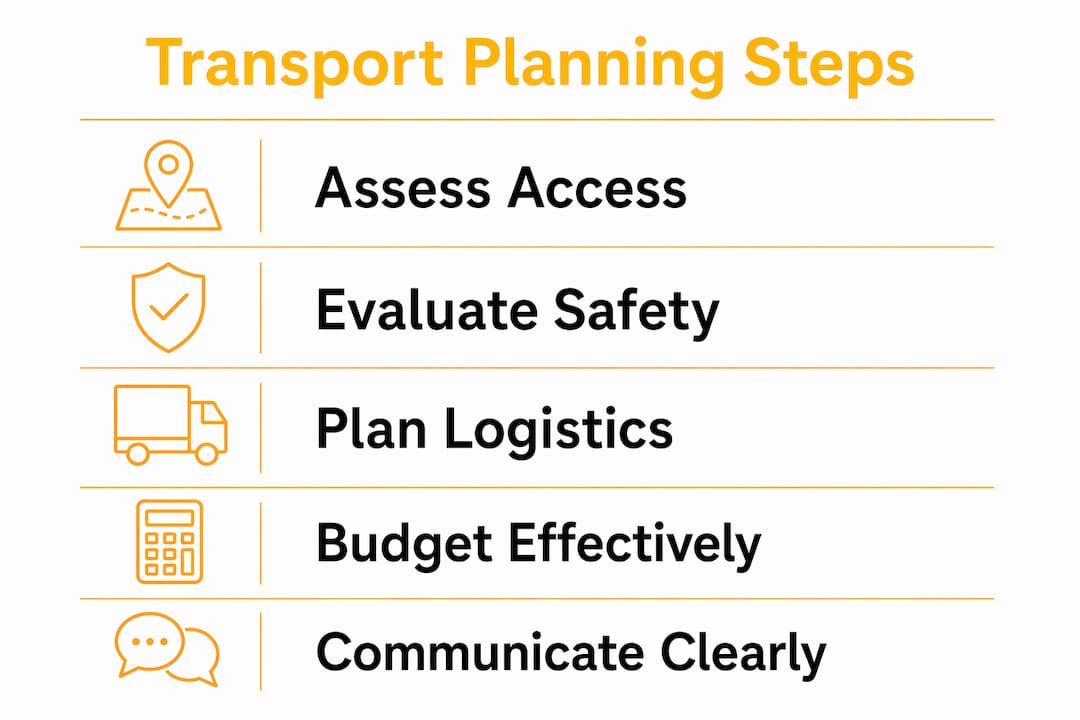
Strong educational travel logistics start six to eight weeks before the trip date, not the week before. By the time you are sending permission forms home, your vehicle should already be booked, your risk assessment drafted, and your budget approved. The benefits of transport for school outings are only realised when the planning behind it is thorough.
How transport enhances learning depends directly on how well the logistics are managed. A student who arrives at the Ontario Science Centre after a stressful, late, or chaotic bus ride is not ready to engage. A student who arrives on time, briefed, and settled is.
Use this checklist as your planning foundation:
- Six to eight weeks out: Confirm trip destination, group size, and any accessibility requirements. Request quotes from at least two licensed transport providers. Review the school trip planning guide for a structured booking framework.
- Four weeks out: Book the vehicle in writing. Confirm seatbelt availability, emergency kit, and driver qualifications. Submit the transport risk assessment to your administration.
- Two weeks out: Send permission forms with clear trip details, departure time, and return time. Identify any students with transport barriers and arrange solutions.
- One week out: Confirm booking with the provider. Brief supervising staff on emergency procedures and communication protocols.
- Day before: Confirm departure time with the driver. Prepare the student manifest, emergency contact list, and first-aid kit.
- Day of: Conduct the on-vehicle safety briefing before departure. Assign a staff member per vehicle. Carry the emergency communication plan.
Communication is as important as logistics. Parents who receive clear, early information about transport arrangements are far less likely to raise last-minute concerns that disrupt departure. Administrators who receive the risk assessment and budget breakdown in advance are far more likely to approve the trip without delay.
Inclusive planning deserves a specific mention. Students with mobility needs, financial constraints, or medical requirements need transport accommodations confirmed before the permission form goes home. Discovering an accessibility gap on the morning of the trip is not a logistics problem. It is a planning failure.
Key takeaways
Reliable, well-planned transportation is the foundation of every successful educational outing, directly shaping student access, safety, and learning readiness.
| Point | Details |
|---|---|
| Transportation determines access | Transport barriers exclude students from educational outings, particularly those in rural or low-income situations. |
| Safety is a legal obligation | Schools hold non-delegable duty of care and must conduct a risk assessment before every trip. |
| Budget pressure is real and manageable | 40% of districts adjust routes to manage fuel costs; early booking and contingency budgeting protect trip viability. |
| Vehicle choice affects outcomes | Matching vehicle size to group size reduces per-student cost and improves supervision and comfort. |
| Inclusive planning prevents exclusion | Confirming accessibility and financial accommodations early keeps every student on the trip. |
What I have learned from watching school trips succeed and fail
Firoz here. After years of working with schools and administrators on group transport in Toronto, the pattern I see most often is this: the trips that go wrong do not fail because of bad intentions. They fail because someone treated transport as the last item on the planning list instead of the first.
The schools that run the smoothest outings book their vehicles before they finalise the destination. They treat the risk assessment as a planning tool, not a compliance form. They ask their transport provider questions that most administrators never think to ask, like whether the driver has experience with student groups specifically, or whether the vehicle has been inspected in the last 30 days.
The other thing I have noticed is that inclusive planning is almost always underdone. Administrators confirm the destination, the curriculum connection, and the lunch arrangements. Then, two days before the trip, someone realises a student uses a wheelchair and the booked vehicle has no ramp. That is not a transport problem. It is a planning problem that shows up as a transport problem.
My honest recommendation: treat your transport provider as a planning partner, not a vendor. A good provider will flag route issues, suggest vehicle sizes, and confirm safety protocols without being asked. If yours does not, find one who does. The school event transport guide is a good starting point for understanding what that partnership should look like.
— Firoz
Trusted school trip transportation in Toronto
Planning a school outing in Toronto means managing safety requirements, group sizes, and budget constraints all at once. Torontobusrentals offers a fleet of modern, fully licensed coaches and minibuses sized for every school group, from small enrichment trips to full-grade excursions.

Every vehicle in the Torontobusrentals fleet meets current safety standards, with seatbelts, emergency exits, and experienced drivers who work regularly with student groups. Whether you need a 47-passenger school bus for a large cohort or a smaller minibus for a specialist programme, the team can match the right vehicle to your group and confirm pricing in writing. Contact Torontobusrentals directly to get a quote and start your transport risk assessment with a provider who knows what Toronto schools need.
FAQ
What is the role of transportation for educational outings?
Transportation determines whether students can access off-site learning at all. It directly affects participation rates, safety, and how ready students are to engage when they arrive at the destination.
How do transport barriers affect student participation in field trips?
MDPI Sustainability research shows that unreliable or unaffordable transport drives absenteeism and increases dropout risk, particularly for students in rural or low-income communities.
What safety steps are required before a school trip?
Schools must conduct a route-specific risk assessment, verify operator credentials, confirm vehicle safety standards, and deliver an on-vehicle safety briefing covering seatbelts and emergency procedures before every trip.
How do rising fuel costs affect school trip planning?
A 2026 Education Week report found that 40% of school districts adjust routes to manage fuel costs and 20% limit non-essential trips. Early booking and contingency budgeting are the most effective responses.
How far in advance should schools book transportation for outings?
Book your vehicle six to eight weeks before the trip date. That timeline allows you to confirm safety credentials, lock in pricing, complete the risk assessment, and resolve any accessibility requirements before permission forms go home.
Recommended
- School trip transportation explained: a 2026 guide
- Educational bus tours guide for Canadian educators
- School event transport guide for administrators