
Role of buses in student safety: a 2026 guide
TL;DR:
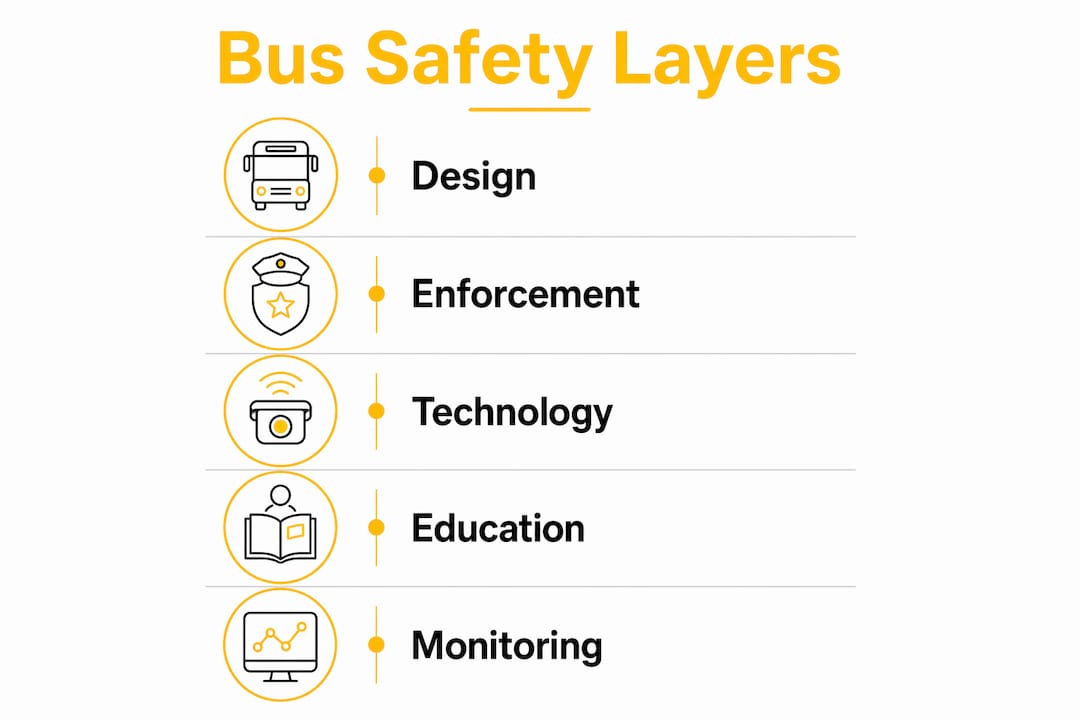
- School buses are the safest transportation option for students because of their purpose-built design and strict safety standards.
- Technology such as AI cameras, environmental sensors, and GPS tracking continuously monitors safety and behavior in real time.
School buses are the safest mode of student transportation available, combining purpose-built vehicle design, strict regulatory standards, and professional driver oversight to protect children on every trip. The role of buses in student safety goes far beyond simply moving students from home to school. 500,000 school buses transport 20 million children daily across North America, operating under safety requirements that no private vehicle comes close to matching. For parents and school administrators, understanding exactly how buses achieve this safety record is the foundation for making better decisions about student transportation.
How do buses protect students through design?
The single most important safety feature on a school bus is compartmentalization. This design principle surrounds each student with high, energy-absorbing seat backs that act like a protective shell during a collision. The seats are spaced and padded to absorb crash forces before they reach the child’s body. This is why school buses have historically maintained a strong safety record even without universal seat belt requirements.
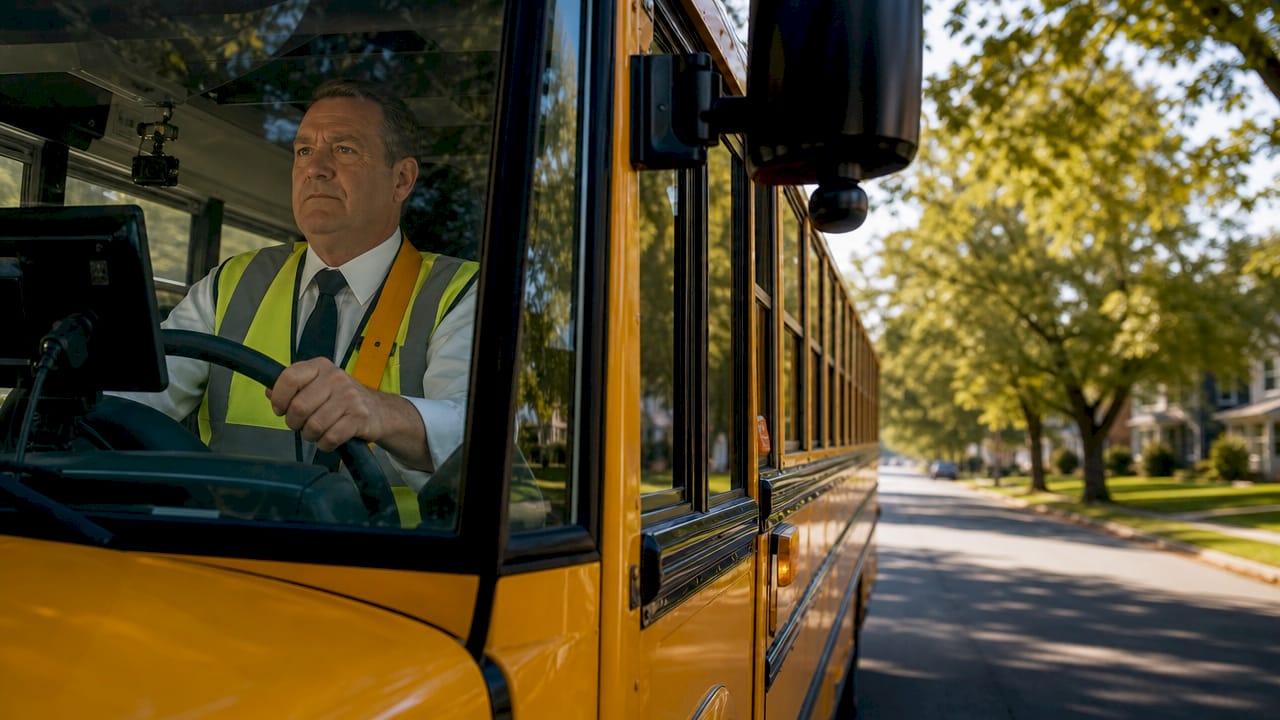
Newer safety standards are pushing beyond compartmentalization. The National Transportation Safety Board (NTSB) recommends that all new school buses include lap and shoulder seat belts, collision avoidance systems, and alcohol detection technology. The American Academy of Pediatrics (AAP) also supports the use of booster seats for preschool-aged children on buses. These recommendations reflect a clear direction: the baseline design is strong, but layering additional protections makes it stronger.
Crash data consistently shows that students travelling by bus face lower injury rates than those travelling by car or on foot. The protective geometry of a bus, its mass, its height off the ground, and its reinforced structure all contribute to this outcome. A child in a properly equipped school bus is far better protected than a child in a standard passenger vehicle, even with a seat belt.
Pro Tip: If your school or district is evaluating bus options, ask operators directly whether their fleet meets current NTSB recommendations for lap and shoulder belts. This single question separates compliant fleets from outdated ones.
| Feature | Safety benefit |
|---|---|
| Compartmentalization | Absorbs crash energy before it reaches the student |
| High, padded seat backs | Creates a protective zone around each child |
| Lap and shoulder belts | Reduces ejection risk in severe collisions |
| Collision avoidance systems | Alerts drivers to hazards before impact |
| Booster seats for young children | Provides age-appropriate restraint for preschoolers |
What role do enforcement and drivers play in bus safety?
Vehicle design alone does not make a bus safe. The people operating it and the rules governing the road around it matter just as much. About 39 million illegal school bus passings occur annually in the United States, which equals every bus being illegally passed roughly once every three days. This statistic reveals that the primary safety threat to students is not the bus itself. It is the behaviour of other drivers on the road.
Stop-arm camera programmes address this threat directly. Full-fleet stop-arm camera enforcement allows districts to issue $250 civil citations to drivers who illegally pass a stopped bus. The financial penalty creates a measurable deterrent. Districts that have adopted these programmes report improved compliance at bus stops.
Driver accountability is the other half of this equation. Bus drivers are held to higher scrutiny than almost any other vehicle operator. Key enforcement and training measures include:
- Alcohol detection systems: The NTSB recommends technology that disables a bus if driver impairment is detected, removing human error from the equation entirely.
- Virtual reality training: VR-based driver training prepares drivers for dangerous motorist behaviour and challenging student management scenarios before they encounter them in real conditions.
- Background screening: Professional bus operators conduct thorough criminal and driving record checks before placing any driver behind the wheel with students aboard.
- Wellness support: Driver fatigue and stress are recognised risk factors. Wellness programmes help maintain the alertness and judgement that student safety depends on.
The Governors Highway Safety Association (GHSA) advocates a multi-layered enforcement model that brings together law enforcement, school administrators, and private partners. This collaboration treats illegal passing as a systemic problem requiring a systemic response, not just individual penalties.
How does technology improve real-time safety monitoring?
Modern school buses are becoming mobile monitoring environments. AI-powered cameras and integrated platforms now track student behaviour, monitor boarding and exiting, and flag incidents in real time. These systems give administrators and parents a level of visibility that was impossible a decade ago.
Cameras on buses serve two distinct functions. First, they collect evidence when incidents occur. Second, and perhaps more powerfully, their presence changes behaviour. Students who know they are being monitored are less likely to engage in unsafe conduct. Cameras do not provide complete visibility at every angle, but the awareness of monitoring is itself a safety mechanism.
Environmental sensors represent a newer layer of protection. Integrated AI platforms monitor CO2 levels, temperature, and health indicators in real time, detecting conditions that could cause harm before they become emergencies. A child left on a hot bus, a sudden spike in carbon dioxide, or an unusual health event can all trigger an alert to the driver or a dispatcher. This continuous monitoring replaces the intermittent checks that previously left gaps in oversight.
The four core technology categories now active in leading school bus fleets are:
- AI behaviour cameras: Monitor student conduct and boarding patterns, flagging anomalies for review.
- Environmental sensors: Track air quality, temperature, and health indicators throughout the journey.
- GPS tracking: Provide parents and administrators with real-time bus location data via mobile apps.
- Stop-arm cameras with AI analytics: Identify and document illegal passing vehicles automatically.
Fragmented safety systems create gaps that integrated platforms close. When health data, behaviour data, and location data feed into a single dashboard, administrators can respond to problems faster and with more confidence.
What can parents and administrators do to support bus safety?
Parents and school administrators are not passive participants in student transportation safety. Their actions directly affect how well the safety systems on a bus actually work.
Pre-trip safety briefings are one of the highest-impact steps available. NTSB stresses that driver-led briefings on seat belt use and emergency procedures significantly reduce injury risk, particularly on charter trips where students may be unfamiliar with the vehicle. A briefing takes five minutes and closes one of the most common gaps in bus safety practice.
Practical steps for parents and administrators include:
- Teach the danger zone: Students should know that the area within three metres of a bus on all sides is the most dangerous place to stand. Exiting and moving directly away from the bus reduces exposure to passing traffic.
- Use GPS tracking tools: Many districts and private operators now offer apps that show real-time bus location. Parents who use these tools reduce anxiety and can respond faster if a bus is delayed.
- Reinforce respectful behaviour: Students who understand why bus rules exist are more likely to follow them. A short classroom conversation about bus safety before a trip makes a real difference.
- Establish clear communication protocols: Administrators should have a direct line to drivers and a documented procedure for reporting safety concerns. Informal communication chains create delays when speed matters.
- Review the school trip safety checklist before every charter: Confirming that the operator meets current safety standards before departure is a non-negotiable step.
Safety curricula that teach children to recognise and report unsafe behaviour around buses build a safety culture that extends beyond any single trip. When students understand the rules and the reasons behind them, they become active participants in their own protection.
Pro Tip: Ask your bus operator for a written safety briefing protocol before any charter trip. If they cannot provide one, that is a clear signal to look for a different provider.
Key takeaways
School buses are the safest student transport option because they combine purpose-built design, professional driver standards, enforcement technology, and community-level safety practices into a single system.
| Point | Details |
|---|---|
| Compartmentalization is the foundation | High, padded seat backs protect students even without seat belts in standard conditions. |
| Enforcement closes the biggest gap | Stop-arm cameras and civil citations deter the 39 million illegal passes that threaten students annually. |
| Technology adds continuous oversight | AI cameras, environmental sensors, and GPS provide real-time monitoring that intermittent checks cannot match. |
| Briefings reduce injury risk | Driver-led pre-trip briefings on seat belts and emergency exits are among the highest-impact safety steps available. |
| Community involvement sustains safety | Parents and administrators who engage with tracking tools and safety education reinforce every other protection in place. |
My perspective on where bus safety is heading
I have spent years watching the conversation around student transportation shift from “are buses safe?” to “how do we make them safer?” That shift matters. The yellow school bus is educational infrastructure, not just a vehicle. It is the reason millions of children from all economic backgrounds can access school reliably. When we treat it as infrastructure, we fund it, regulate it, and maintain it accordingly.
What strikes me most about the current moment is that the biggest remaining risks are not design problems. They are accountability problems. Illegal passing is a human behaviour failure, not a bus failure. Impaired driving is a human behaviour failure. The technology now exists to address both, but technology only works when districts, legislators, and operators commit to deploying it consistently.
The parents and administrators I respect most are the ones who ask hard questions before signing a contract with any transport provider. They want to know about driver screening, about whether the fleet meets current NTSB recommendations, and about what happens when something goes wrong. Those questions are not paranoia. They are exactly the right standard to hold.
The future of safe student transport is not a single breakthrough. It is the steady accumulation of better design, better enforcement, better training, and better community engagement. Every layer added makes the next incident less likely and less severe.
— Firoz
Torontobusrentals and safe student transportation in Toronto
School administrators and parents in Toronto deserve a transport partner who takes the safety standards described in this article seriously, not just in policy documents but in daily operations.

Torontobusrentals operates a fleet of modern coaches and 47-passenger school buses maintained to meet current safety requirements, with professional drivers who undergo thorough screening and training. Real-time GPS tracking gives administrators and parents visibility throughout every trip. Booking is straightforward, and the team is experienced in coordinating school trip transportation for groups of all sizes across Toronto. For any school planning a field trip, charter, or recurring student transport arrangement, Torontobusrentals is a reliable starting point.
FAQ
Are school buses safer than cars for students?
School buses are the safest mode of student transportation. Their size, compartmentalized seating design, and professional driver standards produce lower injury rates than private vehicles in comparable trips.
What does compartmentalization mean on a school bus?
Compartmentalization is a design method that uses high, energy-absorbing seat backs to create a protective zone around each student, reducing injury during a collision without relying solely on seat belts.
Why does illegal bus passing put students at risk?
Illegal passing occurs when drivers move past a stopped bus with its stop-arm extended, putting students who are boarding or exiting directly in the path of moving traffic. Approximately 39 million illegal passes occur annually in North America.
What technology do modern school buses use for safety?
Modern school buses use AI-powered cameras, environmental sensors, GPS tracking, and stop-arm enforcement cameras to monitor student behaviour, track vehicle location, and detect health or safety risks in real time.
What should parents ask before a school charter trip?
Parents should confirm that the operator provides a pre-trip safety briefing, that drivers are screened and trained, and that the fleet meets current NTSB recommendations for seat belts and collision avoidance systems.
Recommended
- Booking buses for schools 2026: the complete planning guide
- School trip transportation explained: a 2026 guide
- Types of buses for schools: A guide for administrators