
Why professional bus drivers matter for safe group travel
TL;DR:
- Professional bus drivers in Canada ensure safety through rigorous training, licensing, and daily vehicle inspections.
- Their professionalism significantly reduces accident risks and enhances passenger experience across group transportation.
Professional bus drivers are the single most important safety factor in Canadian group transportation. School buses are the safest form of student transport in Canada, and trained drivers are the primary reason why. That safety record does not happen by accident.
Why professional bus drivers are crucial in Canada
The numbers tell a clear story. Students are about 80 times more likely to arrive safely by bus than by car, according to Transport Canada and the National Collision Database. Professional drivers make that gap possible through skills, discipline, and daily accountability that go well beyond what a standard licence requires.
Here is what professional drivers actually do that casual drivers do not:
- Apply defensive driving techniques including constant mirror checks, blind spot management, and hazard anticipation
- Enforce loading and unloading procedures and keep emergency exits accessible at all times
- Conduct legally mandated pre-trip and post-trip vehicle inspections before every run
- Manage passenger behaviour calmly and de-escalate conflict without stopping safely
- Maintain zero tolerance for alcohol or drugs under Ontario law and equivalent provincial rules
- Communicate with dispatchers, report delays, and document mechanical issues in real time
- Assist passengers with disabilities and ensure wheelchair-accessible boarding is handled correctly
Pro Tip: When booking group transportation in Toronto, ask specifically whether your driver holds the licence class required for your vehicle type. A Class 2 or Ontario Class B/C licence is the baseline for commercial buses.
What qualifications and training do professional bus drivers need in Canada?
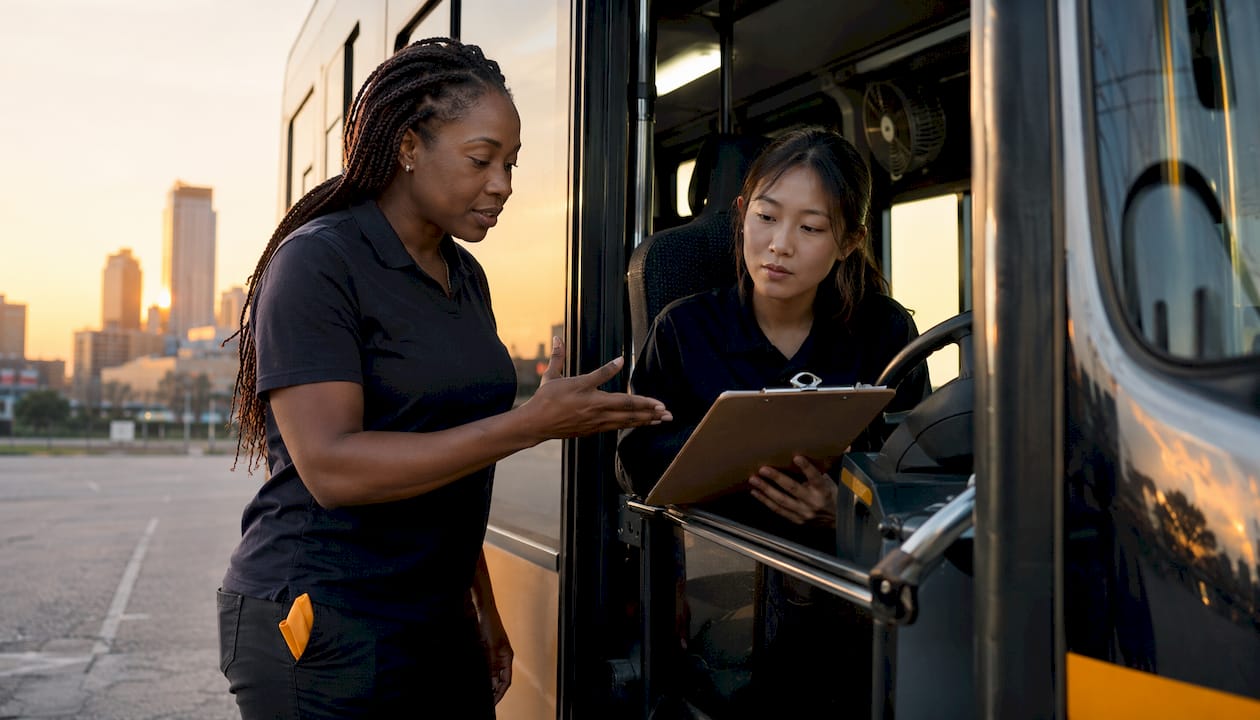
Requirements vary by province, but the floor is high everywhere. In Ontario, drivers need a Class B, C, E, or F licence depending on vehicle type, plus a valid medical report, a criminal record check, and completion of a government-approved course. Alberta goes further: its Mandatory Entry-Level Training programme requires 53.5 hours of structured training before a commercial licence is issued, covering defensive driving, vehicle inspection, emergency procedures, and passenger management.
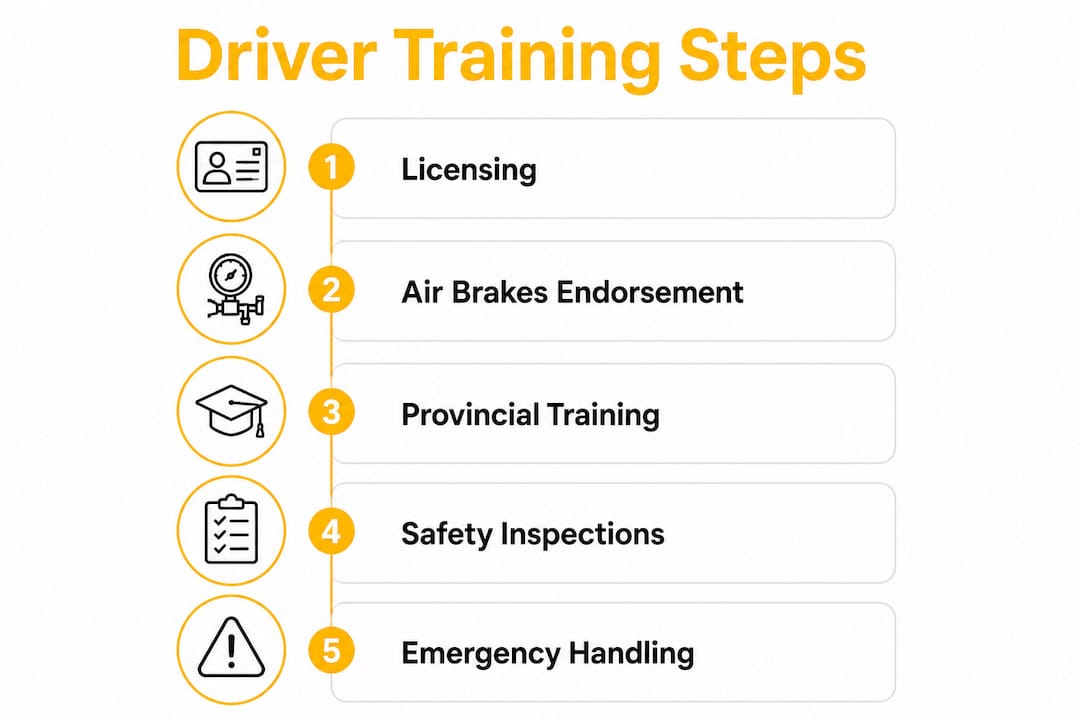
An air brakes endorsement is often required on top of the base licence. Most employers also run three to six weeks of on-the-job training after hiring. The Ontario MTO Bus Handbook sets out the specific driving skills and regulations candidates must demonstrate before passing their road test, which includes a live vehicle inspection component.
Graduated licensing for heavy vehicles matters too. Articulated and double-decker buses handle differently from standard coaches, and demonstrated competence with each vehicle type is a genuine safety requirement, not a formality.
How do professional drivers handle emergencies on the road?
A professional driver’s response in a crisis is shaped by training, not instinct. They know evacuation routes, can operate emergency exits under pressure, and are trained to keep passengers calm while managing the vehicle or coordinating with emergency services. Safety culture built by drivers consistently outperforms technology alone in preventing accidents, which is why hiring assessments now screen specifically for temperament and stress tolerance, not just driving records.
What happens when bus driving falls short of professional standards?
Unprofessional driving creates compounding risks. A driver who skips the pre-trip inspection misses the last opportunity to catch a brake fault or tyre defect before it becomes a collision. Beyond physical danger, operators face licence revocations, safety fitness certificate cancellations under Transport Canada’s Motor Carrier Safety Fitness Certificate Regulations, and civil liability for injuries. The legal exposure for cutting corners on driver qualifications is substantial.
How does driver professionalism shape the passenger experience?
Calm communication and professionalism by drivers directly reduce passenger incidents and improve travel satisfaction. A driver who greets passengers, answers questions clearly, and handles disruptions without escalating them sets the tone for the entire trip. For corporate outings, school trips, or weddings, that composure is part of what you are paying for when you book professional motor coaches through a reputable provider like Torontobusrentals.

Key takeaways
Professional bus drivers in Canada combine rigorous provincial licensing, mandatory training, and daily vehicle inspections to deliver a safety record that no other transport mode matches for group travel.
| Point | Details |
|---|---|
| Safety record | Students are about 80 times more likely to arrive safely by bus than by car, according to Transport Canada data. |
| Licence requirements | Ontario requires Class B, C, E, or F; all other provinces require a Class 2 commercial licence. |
| Alberta training standard | Alberta’s MELT programme mandates 53.5 hours of training before a commercial licence is issued. |
| Daily inspections | Drivers must complete a vehicle inspection before every trip under provincial law. |
| Safety culture | Driver temperament and training outperform technology as the primary factor in accident prevention. |
Recommended
- How to choose the right bus for group travel
- Why reliable bus providers matter for group travel
- Benefits of bus transportation for Toronto group travel planners