
How to rent a bus in Toronto for seamless group travel
Coordinating group transportation for events, school trips, or corporate outings in Toronto often creates logistical headaches that drain time and energy. Whether you’re planning a wedding shuttle, organising a field trip, or arranging corporate transport, juggling multiple vehicles and schedules quickly becomes overwhelming. Renting a bus eliminates these complications by consolidating your group into one comfortable, professional solution. This guide walks you through every essential step to rent a bus efficiently, from initial preparation to final confirmation, ensuring your group travels smoothly and arrives together.
Table of Contents
- Key takeaways
- Preparation: what you need before renting a bus
- How to choose the right bus and rental company
- Step-by-step process to rent and confirm your bus booking
- Common mistakes and tips for a smooth rental experience
- Explore Toronto bus rental options for your next group event
- How to rent a bus frequently asked questions
Key Takeaways
| Point | Details |
|---|---|
| Group transport simplified | Renting a bus consolidates your group into one comfortable transport solution, reducing coordination time and avoiding multiple vehicles. |
| Essential preparation | Begin with an accurate headcount and itinerary, note any required permits, and create a shared document accessible to the rental company and group leaders. |
| Right bus and company | Choose bus size to fit the group and luggage, confirm licensing and insurance, and review pricing and cancellation policies. |
| Booking steps and pitfalls | Follow the documented booking steps and secure written confirmation to avoid delays or surprises. |
Preparation: what you need before renting a bus
Successful bus rentals start long before you contact a company. Gathering accurate passenger numbers and itinerary details upfront is crucial for a smooth rental process. Begin by establishing your exact headcount, including any chaperones or staff members. Account for potential last-minute additions by building in a small buffer.
Next, map out your complete itinerary with specific pickup and drop-off locations. Include any intermediate stops, rest breaks, or schedule changes. Toronto’s traffic patterns vary dramatically between rush hour and off-peak times, so timing matters significantly. Document addresses, contact persons at each location, and estimated arrival times.
Essential preparation checklist:
- Confirmed passenger count with accessibility requirements noted
- Complete event schedule including all pickup/drop-off points
- Required permits or permissions for event venues
- Budget range including contingency for potential extras
- Preferred amenities list (WiFi, restroom, climate control)
- Emergency contact information for group leaders
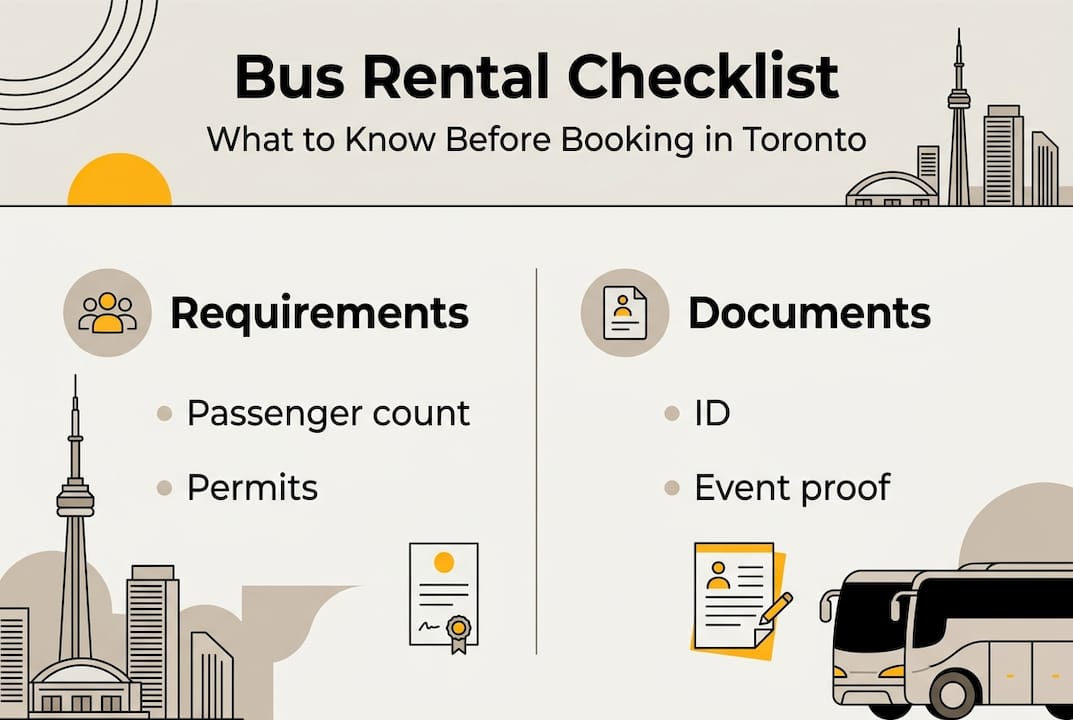
Understanding Toronto’s bus rental regulations prevents complications later. Some events require special permits, particularly for school trips or events involving alcohol. Research venue requirements, as certain locations restrict bus sizes or mandate specific drop-off procedures.
| Bus type | Typical capacity | Best for | Key features |
|---|---|---|---|
| Minibus | 18-28 passengers | Small groups, airport transfers | Compact, manoeuvrable, cost-effective |
| Motor coach | 47-56 passengers | Large events, long trips | Premium amenities, luggage space, restroom |
| School bus | 47 passengers | Educational trips, budget travel | Economical, reliable, familiar |
| Luxury coach | 35-40 passengers | Corporate events, weddings | Premium seating, entertainment systems |
Different bus types serve distinct purposes. Minibus rentals excel for intimate groups or multiple shorter trips throughout the day. Motor coaches provide maximum comfort for longer journeys or when passenger amenities matter. School bus rentals offer economical solutions for educational institutions with straightforward transportation needs.
Pro Tip: Create a shared document with all trip details accessible to your rental company, drivers, and group leaders. This centralised information source prevents miscommunication and ensures everyone works from identical information.
Prepare documentation before contacting rental companies. Most require valid identification, proof of event or organisation affiliation, and payment information. Corporate clients often need purchase orders or authorisation letters. Having these materials ready accelerates the booking process and demonstrates professionalism.
How to choose the right bus and rental company
Selecting the appropriate bus type directly impacts your group’s comfort and your event’s success. Match vehicle size to your passenger count whilst considering luggage requirements. Oversized buses waste money, whilst undersized options create cramped, uncomfortable conditions. Factor in amenities that enhance your specific journey.
Critical evaluation criteria for rental companies:
- Valid commercial vehicle licensing and insurance certificates
- Documented safety records and driver qualifications
- Transparent pricing with detailed breakdowns of all fees
| Positive customer reviews and industry reputation | - Fleet maintenance records and vehicle age information
- Clear cancellation and refund policies
- Responsive customer service and communication
Choosing the right bus size and provider optimises comfort, safety, and budget for group travel. Request detailed quotes from multiple companies to compare not just prices but service levels. Hidden fees often appear in fuel surcharges, driver gratuities, parking costs, or cleaning fees. Reputable companies provide itemised estimates that account for your complete itinerary.

| Comparison factor | Questions to ask | Red flags |
|---|---|---|
| Licensing | Is the company properly licensed for commercial passenger transport? | Reluctance to share licence numbers |
| Insurance | What coverage limits apply to passengers and property? | Vague or incomplete insurance details |
| Fleet condition | How old are the buses and when were they last serviced? | No maintenance records available |
| Driver credentials | What training and experience do drivers have? | Unwillingness to discuss qualifications |
| Reviews | What do recent customers say about reliability and service? | Predominantly negative feedback |
Group transportation services vary significantly in specialisation. Some companies focus exclusively on corporate travel, whilst others excel at wedding shuttles or educational trips. Match your rental company’s expertise to your event type for optimal service.
Examine cancellation policies carefully before committing. Toronto weather can disrupt travel plans, particularly during winter months. Flexible cancellation terms protect your investment if circumstances change. Understand deposit requirements, refund timelines, and weather-related contingencies.
Pro Tip: Request references from recent clients with similar event types. A five-minute conversation with a past customer reveals more about service quality than any website testimonial.
Driver qualifications deserve special attention. Professional drivers with extensive Toronto experience navigate traffic efficiently and handle unexpected situations calmly. Ask about driver training programmes, safety records, and familiarity with your specific routes. Companies that invest in driver development typically deliver superior service.
Consider alternatives to traditional charter services if your needs fall outside standard offerings. Some situations benefit from shuttle services, whilst others require specialised vehicles with unique features.
Step-by-step process to rent and confirm your bus booking
Once you’ve identified your ideal bus and rental company, follow this structured approach to secure your booking. A structured booking process reduces errors and ensures timely confirmations for group events.
Complete booking sequence:
- Contact your selected company with comprehensive trip details including dates, times, passenger count, and complete itinerary
- Request formal written quotes that itemise all costs including base rental, fuel, driver fees, and potential extras
- Review contract terms thoroughly, paying special attention to cancellation policies, payment schedules, and liability clauses
- Confirm specific bus amenities match your requirements and verify accessibility features if needed
- Clarify pickup procedures, driver contact information, and contingency plans for delays or emergencies
- Submit required deposits or full payment according to company policies, retaining all receipts and confirmations
- Receive written booking confirmation with complete details, driver assignments, and emergency contacts
- Follow up one week before travel to reconfirm all arrangements and communicate any last-minute changes
Document every interaction with your rental company. Save emails, record phone conversation details, and maintain a booking file with all correspondence. This documentation proves invaluable if disputes arise or details need clarification.
Review contracts meticulously before signing. Pay particular attention to overtime charges, route restrictions, and additional stop fees. Some contracts include mileage limits or geographic boundaries that could impact your itinerary. Question any unclear terms immediately rather than discovering restrictions later.
Communicate special requirements explicitly during booking. Wheelchair accessibility, pet accommodation, or specific pickup configurations need advance arrangement. Last-minute requests often incur premium charges or prove impossible to accommodate.
Pro Tip: Schedule a pre-trip vehicle inspection if possible. Viewing your actual bus and meeting your driver builds confidence and allows you to verify amenities firsthand.
Share confirmed details with all stakeholders promptly. Create passenger information sheets with pickup times, locations, driver contact numbers, and basic trip guidelines. Clear communication prevents confusion and ensures everyone arrives prepared.
Understand event shuttle service protocols if your rental involves multiple trips or complex logistics. Shuttle services require precise timing coordination and clear passenger instructions.
Maintain open communication channels with your rental company as your event approaches. Confirm final passenger counts, report any itinerary changes, and verify driver assignments. Proactive communication prevents last-minute surprises and demonstrates professional event management.
Implement proven bus rental strategies to maximise your booking success and ensure smooth execution.
Common mistakes and tips for a smooth rental experience
Avoid these frequent errors that compromise bus rentals and create unnecessary stress. Many rental issues stem from unclear communication and underestimating group needs.
Last-minute bookings severely limit options and inflate costs. Toronto’s bus rental market experiences high demand during peak seasons, particularly spring and autumn when events concentrate. Book at least four to six weeks ahead for standard events, longer for peak periods or specialised requirements. Rush bookings often mean settling for suboptimal vehicles or paying premium rates.
Critical mistakes to avoid:
- Providing inaccurate passenger counts that necessitate vehicle changes
- Failing to communicate dietary restrictions or accessibility needs
- Underestimating travel time without accounting for Toronto traffic
- Neglecting to confirm pickup locations and contact information
- Assuming amenities without explicit confirmation
- Ignoring weather contingency planning for outdoor events
- Skipping contract review and accepting verbal agreements
Communicate continuously with drivers and rental staff throughout your event. Provide drivers with complete itineraries, contact numbers for group leaders, and any special instructions. Establish protocols for handling delays, route changes, or emergencies. Clear communication empowers drivers to make informed decisions that benefit your group.
Weather contingencies deserve explicit discussion, particularly for events scheduled during unpredictable seasons. Understand how snow, ice, or severe storms affect service. Some companies include weather clauses in contracts that permit cancellations or rescheduling under specific conditions. Clarify these terms before finalising bookings.
“The difference between a good bus rental and a great one often comes down to preparation and communication. Groups that provide detailed information and maintain open dialogue with their rental company consistently report superior experiences and fewer complications.”
Prepare passengers with clear guidelines before travel. Share boarding procedures, safety rules, and behaviour expectations. Distribute contact information for group leaders and drivers. Well-informed passengers create smoother journeys and reduce driver distractions.
Confirm cancellation policies thoroughly and understand refund procedures. Life circumstances change, and flexibility protects your investment. Some companies offer trip insurance or transfer options that provide additional security. Evaluate these offerings against your risk tolerance and event importance.
Maintain contact availability throughout your rental period. Designate a primary contact person accessible by phone during the entire trip. Unexpected situations require quick decisions, and rental companies need reliable communication channels to address issues promptly.
Understand the compelling reasons to rent buses for Toronto group travel beyond simple convenience. Professional bus rentals enhance safety, reduce environmental impact, and create cohesive group experiences that individual vehicles cannot match.
Explore Toronto bus rental options for your next group event
Planning your next group event becomes significantly easier when you partner with experienced transportation providers who understand Toronto’s unique logistics. Toronto Bus Rentals specialises in comprehensive group transportation solutions, offering everything from compact minibus services for intimate gatherings to full-sized motor coaches for large-scale events.

Their diverse fleet includes modern, well-maintained vehicles equipped with amenities that match your specific requirements. Whether you need school bus rentals for educational programmes or premium coaches for corporate functions, their group transportation services deliver reliable, professional solutions. Experienced drivers familiar with Toronto routes ensure punctual arrivals and smooth navigation through the city’s busiest corridors. Simplified booking processes and transparent pricing eliminate the guesswork from group travel planning.
How to rent a bus frequently asked questions
What documents are needed to rent a bus in Toronto?
Most rental companies require valid government-issued identification, proof of event or organisational affiliation, and payment information such as credit cards or purchase orders. Corporate clients typically need authorisation letters or company documentation. Some specialised events may require additional permits or insurance certificates.
How far in advance should I book a bus rental?
Book at least four to six weeks ahead for standard events to ensure vehicle availability and reasonable rates. Peak seasons including spring and autumn require earlier booking, ideally eight to twelve weeks in advance. Last-minute rentals within two weeks often face limited options and premium pricing.
Can I customise the bus itinerary during the rental?
Most companies accommodate reasonable itinerary changes with advance notice, though modifications may incur additional fees. Communicate changes as early as possible to allow proper route planning and schedule adjustments. Significant alterations might require contract amendments or supplementary charges for extended time or mileage.
What are cancellation policies usually like?
Cancellation terms vary by company but typically involve tiered refund schedules based on notice timing. Cancellations thirty days or more in advance often receive full or substantial refunds, whilst shorter notice periods result in partial refunds or forfeited deposits. Always review specific cancellation clauses in your contract before booking.
Are wheelchair-accessible buses available for group rentals?
Yes, wheelchair-accessible buses are available but require advance booking due to limited fleet availability. Specify accessibility requirements during initial inquiries to ensure proper vehicle assignment. Accessible buses include features like wheelchair lifts, designated securement areas, and appropriate interior configurations to accommodate mobility devices safely.
Recommended
- Toronto School Bus Rentals
- Minibus Rental in Toronto – Multi-Day Trip to USA
- Minibus Rental Toronto – Group Transportation Made Easy
- Robot Challenge Screen