
How to coordinate guest transport for your wedding
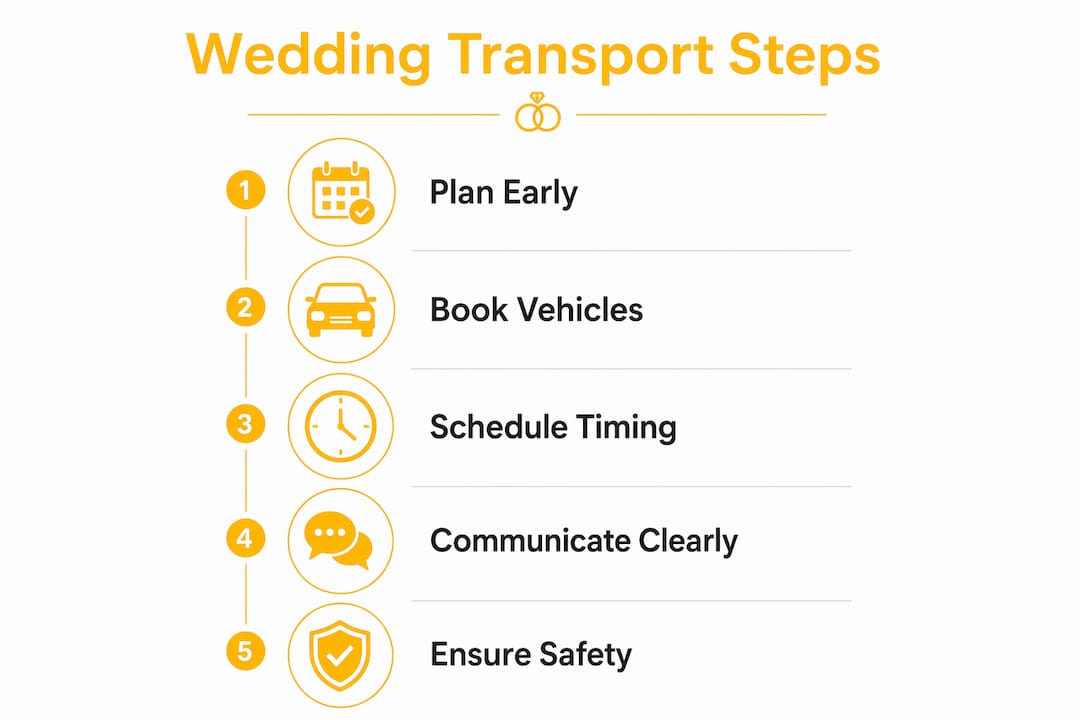
Getting guest transport right comes down to five things: booking early, building a realistic schedule, sizing your vehicles correctly, communicating clearly, and assigning someone to manage it all on the day. Book transportation well in advance of your wedding date, especially for popular spring and fall weekends when fleets fill up fast. Once you have secured a vehicle, everything else, from timing to signage, falls into place around it.
Here is what a complete guest transport plan covers:
- Vehicle type and quantity matched to your confirmed guest count and venue layout
- Detailed pickup and drop-off schedules with realistic travel and loading times built in
- Clear communication sent to guests at least 7–10 days before the wedding
- Safety and comfort provisions including shelter at waiting areas, lighting, and end-of-night rides home
- A designated coordinator responsible for keeping shuttles on schedule on the day
- Contingency plans for traffic delays, missed shuttles, and guests with accessibility needs
Table of Contents
- What you need to plan before booking wedding guest transport
- How to schedule shuttle timing for arrivals and departures
- How to communicate transport details so guests actually show up on time
- Keeping guests safe and comfortable throughout the day
- Key takeaways
- The part of wedding transport most couples underestimate
- Torontobusrentals makes wedding guest transport straightforward
What you need to plan before booking wedding guest transport
Good guest transportation planning starts well before you call a single provider. The decisions you make at this stage determine your budget, your vehicle count, and how smoothly the day runs.
- Book 6–9 months in advance. Spring and fall wedding dates are the most competitive for fleet availability. Waiting until two months out often means settling for whatever is left.
- Assess your venue situation. Limited parking, a rural location, or a venue that is difficult for rideshare drivers to find all point toward a shuttle being necessary rather than optional. Remote venues and open bars are the two clearest reasons to provide transport.
- Estimate your guest count honestly. Plan as though every invited guest will use the shuttle, including those who said they would drive. Vehicles that are too large cost a little more; guests left behind cost you far more goodwill.
- Budget for gratuities. Many transport companies include a 10–15% gratuity in the invoice, but not all do. Confirm this when you review the contract and have cash ready for the driver on the day.
- Account for accessibility needs. Ask guests during the RSVP process whether they require accessible vehicles or boarding assistance. Retrofitting this detail the week before the wedding is stressful and sometimes impossible.
- Build in buffer time for traffic. Toronto-area weddings especially need this. A Saturday afternoon run from a downtown hotel to a venue in Vaughan or Mississauga can vary by 20 minutes depending on the week.
Pro Tip: Add a transport question directly to your RSVP form. Ask guests whether they plan to use the shuttle and, if so, from which pickup location. The answers give you the numbers you need to size your vehicle correctly.
How to schedule shuttle timing for arrivals and departures
Timing is where most wedding transport plans fall apart. The schedule looks fine on paper and then unravels the moment guests take longer than expected to board.
- Schedule pickups at least half an hour before the ceremony. Factor in loading time, travel time, and unloading at the venue end. Estimate roughly 10 minutes for passengers to board at each stop, then add your drive time, then add a buffer on top.
- Use Google Maps at the right time. Check your route on a Saturday at the same time your wedding will run. A 3:00 PM Saturday drive from downtown Toronto to a Muskoka venue is a completely different trip than a Tuesday morning test run.
- Post fixed departure windows, not vague estimates. “Around 3:30” causes guests to show up at 3:45. “Departing at 3:15 and 3:45” gives them something to plan around.
- Separate your VIP and guest schedules. VIPs need buffer time for photos, touch-ups, and family wrangling. General guests need a simple, repetitive schedule they can follow without thinking.
- Plan end-of-night departure waves. Multiple return trips, for example at 10:30 PM, 11:30 PM, and 12:30 AM, keep guests from clustering at the exit all at once and give them a reason to stay longer.
- Communicate the last shuttle time clearly. Have the DJ or MC announce it twice during the evening and post it near the exits. Guests who know the last ride leaves at 12:30 AM will plan accordingly.
Pro Tip: Most bus and shuttle rentals operate on a minimum booking block. Ask your provider whether you can split that time across the afternoon arrival run and the late-night departure waves. Many operators will accommodate a split, which lets you cover both ends of the day without paying for a second full booking.
For a deeper look at setting up event shuttles around a wedding timeline, Torontobusrentals has a practical guide worth reading before you finalise your schedule.

How to communicate transport details so guests actually show up on time
Clear communication is the difference between a shuttle that runs full and one that leaves half-empty because guests did not know where to stand.
- Send final details about a week or so before the wedding. Finalized pickup points and specific departure windows should go out by email and appear on your wedding website. Do not rely on word of mouth.
- Use specific times, not ranges. “The shuttle departs at 3:15 PM and 3:45 PM from the main entrance of the Marriott on Front Street” is useful. “Shuttles run in the afternoon” is not.
- Repeat the information across multiple channels. Post it on your wedding website, include it in your pre-wedding email, and put a small sign in the hotel lobby near the pickup point. Guests who miss one channel will catch another.
- Place clear signage and lighting at pickup spots. Night pickups especially need bright, obvious signage so guests are not wandering a dark parking lot trying to find the right bus.
- Designate a point person guests can contact. Assign a coordinator or trusted guest to manage the shuttle on the day. This person fields questions, confirms the driver is on site, and keeps departures on schedule. It should not be you or your partner.
A chauffeured event shuttle guide from Fort Lauderdale VIP Car Service covers the communication handoff between planners and drivers in useful detail, including what information drivers need before the day begins.
Keeping guests safe and comfortable throughout the day
Safety and comfort are not afterthoughts. They are the reason you are providing transport in the first place, and a few practical decisions make a real difference.
- Provide shelter at waiting areas. If there is any chance of rain or heat, move the pickup point to a covered entrance. Guests in formal wear standing in a July downpour will remember it.
- Warn guests about terrain. If the shuttle drops people on gravel or grass, say so in your pre-wedding communication. Guests in heels need to know before they step off the bus.
- Plan specifically for alcohol service. When an open bar is involved, providing a safe ride home is not just courteous, it is the responsible choice. Make sure end-of-night transport options are clearly available and that guests know about them before they start drinking.
- Size up, not down. A vehicle that is slightly too large costs a little more. A vehicle that is too small means guests get left behind. Plan as though everyone will use the shuttle, even those who initially said they would drive.
- Have a plan for missed shuttles. Post a list of local taxi numbers and rideshare instructions near the bar for anyone who misses the last bus. A pre-arranged on-call vehicle is worth considering for very remote venues.
- Check venue access in advance. Confirm that your bus or coach can physically reach the venue entrance, including any weight restrictions on private laneways or height restrictions at parking structures.
For more on wedding travel safety, Torontobusrentals covers the practical considerations specific to Ontario venues and seasonal conditions.
Key takeaways
Coordinating wedding guest transport requires early booking, a timed schedule with buffers built in, and repeated clear communication sent to guests at least 7–10 days before the wedding.
| Point | Details |
|---|---|
| Book 6–9 months ahead | Fleet availability for popular spring and fall dates fills quickly; early booking secures your vehicle. |
| Build in loading and buffer time | Estimate 10 minutes per stop for boarding, plus travel time and a buffer for unexpected delays. |
| Use fixed departure windows | Post specific times like 3:15 PM and 3:45 PM rather than vague estimates to prevent late arrivals. |
| Communicate across multiple channels | Send final pickup details 7–10 days out via email, wedding website, and on-site signage. |
| Torontobusrentals for Toronto weddings | Torontobusrentals provides motor coaches and shuttle options sized for wedding guest groups across the Toronto area. |
The part of wedding transport most couples underestimate
Most wedding transport advice focuses on the vehicle. Book early, pick the right size, confirm the address. That is all correct, but the part that actually determines whether the day runs smoothly is the handoff between your written plan and the people executing it.
Drivers need a full itinerary, not just a pickup address. They need to know which entrance to use, where to park while waiting, who to call if a guest is not at the pickup point, and what the last departure time is. A driver who has all of that information before the morning of your wedding will run the schedule without needing to track you down mid-reception.
The same logic applies to your on-site coordinator. Separating the VIP schedule from the general guest schedule is not just a scheduling trick. It protects your timeline from the one thing that reliably derails it: a family photo that runs 15 minutes long while 80 guests stand at the hotel entrance wondering if they missed the bus.
Canadian weddings add one more variable that rarely comes up in general transport guides: weather. A late-October wedding in Ontario can mean anything from a warm evening to an early snowfall. Your waiting areas, your vehicle access routes, and your guests’ footwear choices all need a weather contingency. Build it in before the day, not during it.
Torontobusrentals makes wedding guest transport straightforward
Planning the guest transport for a Toronto-area wedding is genuinely complex, and the stakes are high. Torontobusrentals provides group shuttle services sized specifically for wedding guest counts, with professional drivers who arrive with a full itinerary and know the venue access routes before the day begins.

Whether you need a single shuttle running two departure waves or a larger coach covering ceremony arrivals and late-night returns, Torontobusrentals has the fleet to match. The team works with couples and planners to build a schedule that accounts for loading times, traffic buffers, and end-of-night departures, so you are not managing logistics from the dance floor. Get a quote for your wedding group transport and confirm your date before the fleet fills up.
Recommended
- Streamline your Toronto wedding transport workflow in 2026
- Wedding travel safety tips: a practical guide for 2026
- Wedding logistics best practices: your 2026 planning guide
- 7 Essential Bus Rental Options for Weddings in Toronto