
How to choose the right bus for group travel
TL;DR:
- Choosing the right bus depends on group size, trip purpose, and safety standards before comparing costs.
- Operators must meet specific safety and accessibility regulations, and early, detailed bookings help avoid logistical issues.
Choosing the right bus for group travel means matching your group’s size, comfort needs, and safety requirements to the correct vehicle type before you book anything else. The best bus selection balances capacity, accessibility, and regulatory compliance under Canadian standards like the Accessible Transportation for Persons with Disabilities Regulations (ATPDR) and the Motor Vehicle Safety Act. Getting this decision right reduces costs, eliminates logistical headaches, and keeps every passenger safe. Torontobusrentals works with groups across Toronto to match the right vehicle to each event, from corporate outings to school trips and weddings.
What are the main bus types for group travel?
Bus type is the first decision you make, and it determines everything else. Each category serves a different group size and trip purpose, so picking the wrong one creates problems that no amount of planning can fix later.

| Bus type | Typical capacity | Best for |
|---|---|---|
| Motor coach | 40–57 passengers | Long-distance trips, corporate travel, tours |
| Minibus | 15–35 passengers | Airport transfers, small events, shuttle runs |
| School bus | 48–72 passengers | Student groups, field trips, youth programmes |
| Shuttle bus | 12–24 passengers | Hotel loops, venue transfers, urban events |
Motor coaches are the gold standard for long-distance group travel. They offer reclining seats, overhead storage, onboard washrooms, and climate control, making them the right choice when comfort matters over several hours. Modern motor coach features have expanded significantly, with many vehicles now including Wi-Fi, USB charging ports, and entertainment screens.
Minibuses fill the gap between a passenger van and a full coach. They work well for groups of 15–35 people who need flexibility and do not require the full amenities of a motor coach. Shuttle buses are the leanest option, built for short, frequent runs between fixed points like a hotel and a conference centre.
Key trade-offs to weigh when picking a bus type:
- Motor coaches offer the most comfort and storage but cost more per trip
- Minibuses cost less and fit tighter urban routes but carry fewer passengers
- School buses carry large groups affordably but offer minimal passenger comfort
- Shuttle buses are efficient for loops but unsuitable for long-distance travel
How does group size influence which bus you pick?
Group size is the single most reliable starting point for bus selection. Detailed planning improves travel efficiency and passenger experience, and that planning starts with an accurate headcount.
A common mistake is booking a bus based on the maximum seating number alone. Luggage, equipment, and mobility aids all reduce usable space. A motor coach rated for 55 passengers may realistically carry 45 comfortably when you account for overhead storage and aisle space for bags.
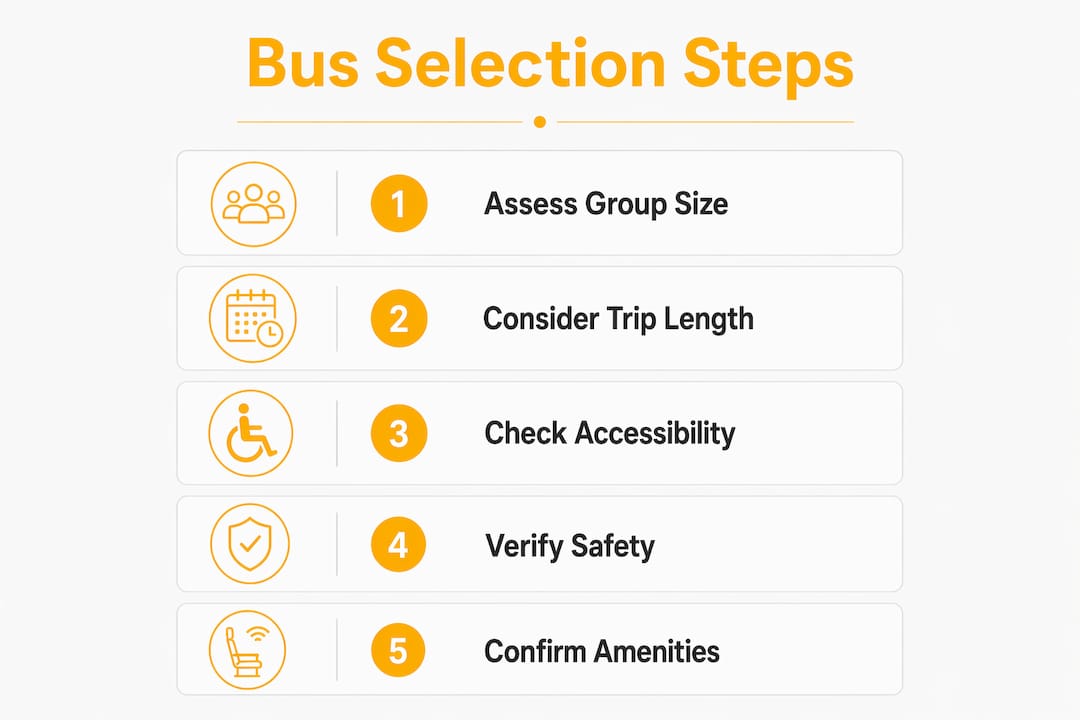
Follow these steps to match group size to the right vehicle:
- Confirm your final headcount. Count confirmed attendees, not estimates. Overbooked buses create safety issues; underbooked ones waste money.
- Account for luggage and equipment. Sports teams, school groups, and corporate retreats often carry gear that occupies seat or undercarriage space.
- Identify passengers with mobility needs. Wheelchair users, passengers with walkers, and those needing boarding assistance require specific vehicle configurations.
- Add a 10% buffer. Last-minute additions happen. A bus with a small capacity buffer prevents scrambling on the day of travel.
- Match the trip length to comfort level. A 90-minute trip tolerates a school bus; a six-hour journey demands reclining seats and onboard facilities.
Pro Tip: Book a bus that seats roughly 10–15% more than your confirmed group size. That buffer covers late additions and gives passengers room to spread out on longer trips.
Accessibility needs deserve specific attention. ATPDR mandates that federally regulated bus operators with 10 or more employees provide boarding assistance, mobility aid spaces, and accessible communication. This is not optional for interprovincial carriers. For local Toronto operators, Ontario’s Accessibility for Ontarians with Disabilities Act (AODA) sets parallel requirements. Always ask your operator directly whether their vehicles meet these standards before you sign a contract.
What safety standards should you check before booking?
Safety compliance is non-negotiable, and the regulatory framework in Canada is specific. Charter buses are among the safest transport methods for groups, largely because of vehicle design, driver training, and strict operational regulations. That safety record depends on operators following the rules consistently.
The two key regulatory frameworks to understand are:
- ATPDR (Accessible Transportation for Persons with Disabilities Regulations): Applies to federally regulated interprovincial carriers with 10 or more employees. Covers boarding assistance, mobility aid spaces, staff training, and communication standards.
- Motor Vehicle Safety Act (MVSA): Regulates vehicle safety for buses sold or operated interprovincially in Canada. Operators must certify that vehicles meet Canadian safety standards.
“Professional drivers must follow regulated shift lengths and mandatory rest periods to manage fatigue and ensure safety. Charter bus operators adhere to federal and provincial guidelines on driver rest times and shift management.”
Bus operators conduct multi-level inspections involving in-house mechanics and third-party evaluators. These checks cover engine diagnostics, transmission, brakes, and emergency systems. Ask any operator you consider for documentation of their most recent inspection before you commit to a booking.
Driver qualifications matter as much as vehicle condition. Professional drivers follow strict rest and safety regulations, including federally mandated limits on consecutive driving hours. A well-maintained bus with an undertrained or fatigued driver is still a safety risk. Verify that your operator employs licensed, experienced drivers with clean records.
What practical steps help you make the right bus choice?
Choosing the right transportation for your group requires a structured process, not a quick phone call. Group transportation coordinators benefit most from defining a clear itinerary and passenger needs before contacting any operator.
Follow this decision process:
- Write your itinerary first. List pickup locations, drop-off points, stops, and estimated travel times. This tells the operator exactly what the trip demands.
- Define your must-have amenities. Wi-Fi, washrooms, luggage storage, and climate control are not standard on every vehicle. Know what you need before you request a quote.
- Request itemised quotes. Bus rental costs depend on distance, duration, bus type, and additional fees such as tolls and driver gratuities. A quote that bundles everything hides the real cost.
- Book early. High demand during peak seasons makes early reservations critical. Booking well in advance also gives you time to communicate special accommodation needs clearly.
- Communicate accessibility requirements in writing. Verbal requests get forgotten. Put every special need in the booking confirmation.
Pro Tip: Ask for a bus rental checklist from your operator before your event. A good operator provides one automatically. If they do not, that tells you something about their process.
Use this quick reference when comparing quotes:
| Factor | What to ask | Why it matters |
|---|---|---|
| Vehicle age | Year and model of assigned bus | Newer vehicles meet current safety standards |
| Driver credentials | Licence class and experience | Ensures regulatory compliance and passenger safety |
| Inspection records | Date of last third-party inspection | Confirms ongoing maintenance standards |
| Accessibility features | Lift, ramp, or mobility aid space | Required for passengers with disabilities |
| Cancellation policy | Terms and refund conditions | Protects your group if plans change |
Common mistakes to avoid: booking based on price alone, ignoring accessibility requirements until the last minute, and failing to confirm the exact vehicle assigned to your trip. Operators sometimes substitute vehicles. Get the specific bus model in writing.
For event transportation tips that apply across different group sizes and event types, reviewing a broader planning framework helps you catch details that a single-event focus can miss.
Key takeaways
The right bus choice comes down to matching group size, trip length, accessibility needs, and safety compliance before comparing price or amenities.
| Point | Details |
|---|---|
| Start with group size | Confirm your headcount and account for luggage before selecting a bus type. |
| Match bus type to trip purpose | Motor coaches suit long trips; minibuses and shuttles work for short urban runs. |
| Verify safety compliance | Check ATPDR and MVSA compliance, inspection records, and driver qualifications before booking. |
| Address accessibility early | Confirm mobility aid spaces and boarding assistance in writing at the time of booking. |
| Book early and get itemised quotes | Early booking secures availability; itemised quotes reveal the true cost of your trip. |
What I have learned from watching groups get this wrong
I have seen event planners spend weeks perfecting a programme and then book the first bus that fits their budget. That shortcut creates problems that show up on the day of the event, not before. The most common one is a vehicle that technically seats the group but has no undercarriage storage for luggage, forcing bags into the aisle.
The second pattern I see regularly is ignoring accessibility until a passenger with a mobility aid shows up at the departure point. ATPDR compliance is not a box to check after you have already signed a contract. It is a filter you apply at the start of the selection process. Operators who meet these standards are easy to identify because they document it. Operators who do not tend to be vague when you ask directly.
The cost argument for skipping a well-maintained motor coach rarely holds up. Consolidating group travel under professional management reduces per-person costs compared to multiple vehicles, and it eliminates the convoy risks that come with car caravans. When you spread the cost across 40 passengers, a quality motor coach often costs less per head than the alternatives.
My honest advice: treat the bus selection process the same way you treat venue selection. Visit the operator’s facility if you can. Ask to see the assigned vehicle. Request the inspection records. The operators who welcome those questions are the ones worth booking.
— Firoz
Group travel made easier with Torontobusrentals
Planning group transportation in Toronto involves more variables than most organisers expect. Torontobusrentals operates a fleet that covers groups of all sizes, from compact minibus options to full-size motor coaches built for long-distance comfort.

Every vehicle in the Torontobusrentals fleet is maintained to current Canadian safety standards, and the team works with event planners, corporate coordinators, schools, and travel agencies to match the right bus to each trip. Whether you need motor coach group travel for a large corporate outing or a shuttle solution for a smaller event, the booking process starts with a straightforward conversation about your group’s needs. Reach out to Torontobusrentals to get an itemised quote and confirm availability for your date.
FAQ
What is the best bus type for a group of 40 people?
A motor coach is the best option for groups of 40 or more, offering seating for 40–57 passengers along with luggage storage, onboard washrooms, and climate control for comfortable long-distance travel.
Does ATPDR apply to all bus operators in Canada?
ATPDR applies to federally regulated interprovincial carriers with 10 or more employees. Local operators in Ontario must still meet provincial accessibility standards under AODA.
How early should you book a charter bus?
Book as early as possible, particularly for peak seasons. Early booking secures vehicle availability, locks in better rates, and gives you time to communicate any special accessibility or accommodation needs in writing.
What should an itemised bus rental quote include?
A complete quote should list the base rental rate, driver fees, fuel surcharges, tolls, gratuities, and any charges for additional amenities like Wi-Fi or onboard entertainment.
How do you verify a bus operator’s safety record?
Ask for documentation of the most recent third-party vehicle inspection, confirm the driver’s licence class and experience, and check that the operator complies with Motor Vehicle Safety Act standards for interprovincial travel.
Recommended
- Benefits of bus transportation for Toronto group travel planners
- Top benefits of bus rentals for Toronto events in 2026
- How to choose a motor coach for group events