
How to book bus rental in Toronto: step-by-step guide
TL;DR:
- Thorough planning, clear communication, and written confirmation prevent common bus rental issues.
- Choosing the right bus type depends on group size, trip length, and comfort needs.
- Booking 4 to 6 weeks in advance ensures reliable transportation and availability.
Coordinating group transportation for a Toronto event is one of those tasks that looks simple until it isn’t. You’ve confirmed the venue, sorted the catering, and now you’re staring at a list of 60 guests with no reliable way to get them there and back. A missed pickup, an undersized bus, or a vague contract can unravel even the most carefully planned outing. This guide walks you through every stage of the bus rental process, from assessing your group’s needs to managing event day logistics, so you arrive prepared and your guests arrive on time.
Table of Contents
- Assess your event’s transportation needs
- Compare bus types and rental options
- Plan your trip details and request quotes
- Confirm your booking and avoid common mistakes
- What to expect on the day of your rental
- Why a proactive approach leads to stress-free group transportation
- Make your next Toronto event seamless with expert bus rental support
- Frequently asked questions
Key Takeaways
| Point | Details |
|---|---|
| Know your group needs | Clarifying group size, event type, and accessibility requirements ensures you choose the right bus. |
| Compare your options | Review bus types, features, and pricing to find the best fit for your Toronto event. |
| Communicate details clearly | Provide complete trip details to avoid surprises and secure accurate bus rental quotes. |
| Double-check before booking | Review contracts, deposit terms, and provider credentials before you confirm your reservation. |
| Prepare for the event day | Have a communication plan and checklist ready to ensure smooth group transportation on the day. |
Assess your event’s transportation needs
To set yourself up for a smooth booking process, start by understanding exactly what your group needs. This sounds obvious, but many planners skip this step and end up with a bus that’s too small, missing key amenities, or simply wrong for the occasion.
Begin with your guest count. A rough estimate isn’t enough. Count confirmed attendees and add a small buffer for last-minute additions. From there, consider what type of event you’re organising:
- Corporate outings often require professional, comfortable coaches with Wi-Fi and charging ports
- School trips prioritise safety features and supervised seating arrangements
- Sports team travel may need extra luggage space for equipment
- Wedding shuttles call for clean, elegant vehicles with punctual scheduling
- Group tours benefit from panoramic windows and onboard commentary systems
Next, think about comfort level. Does your group expect air conditioning, onboard restrooms, or reclining seats? These details narrow your vehicle options quickly.
Don’t overlook accessibility. Accessible bus rentals are an essential consideration for inclusive transportation, especially if any guests use wheelchairs or mobility aids. Confirm these requirements early, as accessible vehicles are in higher demand and book out faster.
Finally, use a bus rental checklist to organise your requirements before contacting any provider. It keeps your thinking structured and ensures you don’t forget critical details.
Pro Tip: Always overestimate your guest count by 10% when selecting bus capacity. It’s far better to have a few empty seats than to leave guests stranded at the pickup point.
Compare bus types and rental options
With your event needs clarified, explore the main bus rental options available in Toronto. Each vehicle type serves a different purpose, and choosing the wrong one wastes both money and comfort.
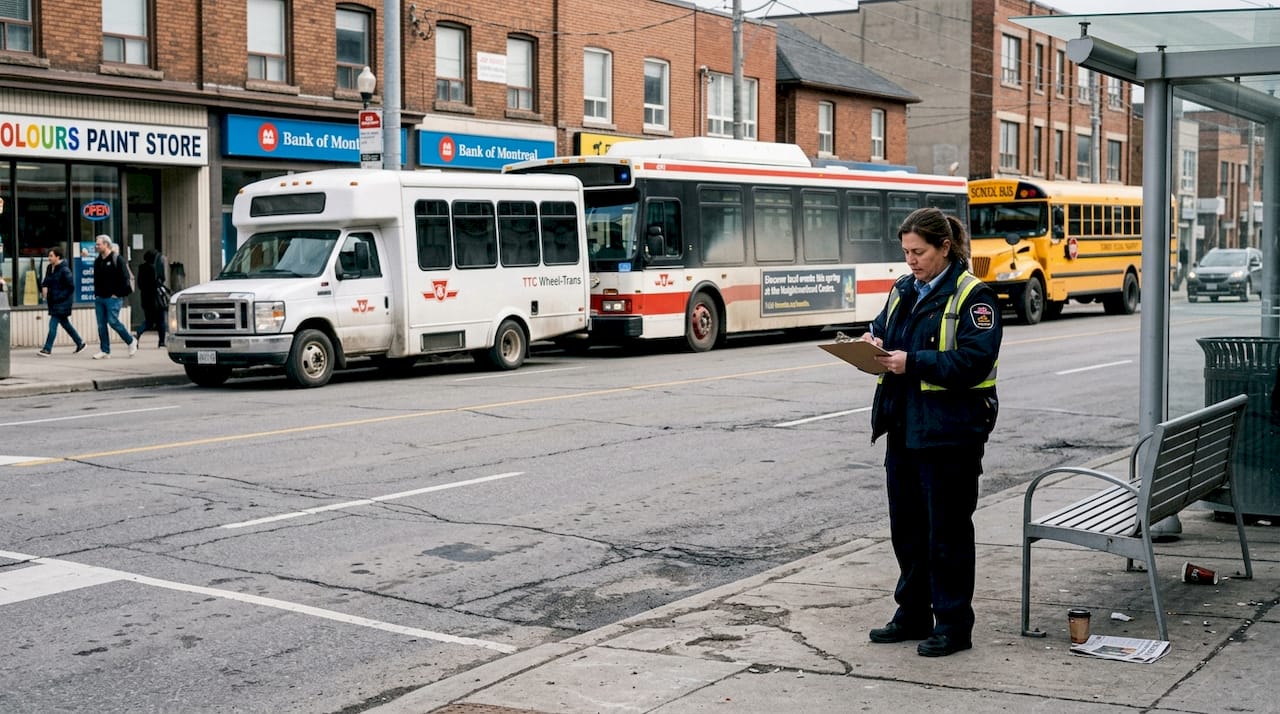
| Bus type | Seating capacity | Best suited for | Key amenities |
|---|---|---|---|
| Minibus | 15 to 30 passengers | Small corporate groups, airport transfers | A/C, basic seating |
| School bus | 40 to 72 passengers | Student trips, budget group travel | Safety features, durable seating |
| Motor coach | 40 to 56 passengers | Corporate, weddings, long-distance tours | Wi-Fi, restroom, reclining seats, luggage storage |
As this motor coach guide explains, different bus types offer various features and capacities suitable for specific event needs. A motor coach is the premium choice for longer journeys or events where comfort matters. A school bus works well for budget-conscious school excursions. A minibus fits smaller groups who don’t need the full amenities of a coach.
Key considerations when comparing options:
- Multiple buses: For groups over 56 passengers, consider splitting into two vehicles rather than cramming everyone into one
- Journey length: Longer trips justify the extra cost of a full motor coach with onboard restrooms
- Budget vs. comfort: School buses cost less but offer fewer amenities; weigh this against your guests’ expectations
- Luggage needs: Coach buses provide undercarriage storage, which school buses and minibuses typically lack
Pro Tip: If your group is borderline between two bus sizes, always go with the larger option. Passengers travelling in comfort arrive in a better mood, which sets the tone for the entire event.
Plan your trip details and request quotes
Now that you know what to book, it’s time to communicate your plans and gather competitive price quotes. Vague requests produce vague quotes, and vague quotes lead to billing surprises.
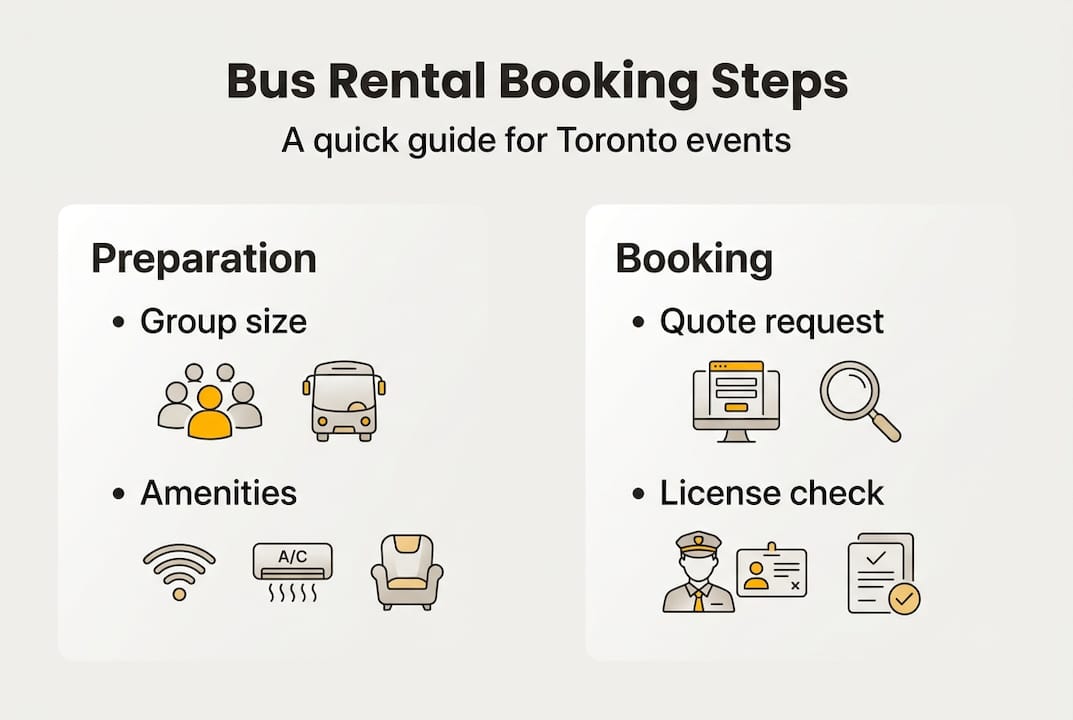
Here’s what to prepare before contacting any rental company:
- Event date and time: Include pickup time, expected duration, and drop-off time
- Group size: Confirmed headcount, not an estimate
- Pickup and drop-off locations: Full addresses, including any intermediate stops
- Special requirements: Accessibility needs, luggage volume, onboard amenities
- Budget range: Sharing a rough budget helps providers suggest the right vehicle
Transparent communication of trip requirements helps secure accurate quotes and avoid misunderstandings. Request quotes from at least three providers and compare them line by line, not just by total price.
Watch for hidden costs. Common extras include driver overtime charges for trips running past the agreed hours, toll fees along Highway 407 or the DVP, and fees for custom stops not listed in the original itinerary.
Always confirm that the provider holds valid operating licences and adequate liability insurance before agreeing to anything. This is non-negotiable. Review bus rental tips for a broader look at what separates reliable providers from risky ones.
Pro Tip: Send your trip details in writing, even if you’ve already discussed them by phone. A written record protects you if pricing or logistics are disputed later.
Confirm your booking and avoid common mistakes
After you’ve agreed on a quote, securing the booking with clear confirmation and review is essential. This is where many planners rush and later regret it.
Here’s a step-by-step approach to finalising your rental:
- Review the contract carefully: Check vehicle type, seating capacity, pickup times, and route details
- Confirm the cancellation policy: Understand exactly what you’ll owe if plans change
- Pay the deposit: Most providers require a deposit to hold the booking; get a receipt
- Provide a passenger list: Some providers require this for insurance or safety compliance
- Re-confirm 48 hours before the event: Call or email to verify all details are still accurate
Verifying contract details and double-checking with the provider is crucial for preventing last-minute challenges, as outlined in these bus rental steps.
Here’s a quick reference for what your contract should cover:
| Contract element | What to verify |
|---|---|
| Vehicle details | Make, model, capacity, amenities |
| Timing | Pickup time, duration, overtime rates |
| Route | All stops listed and confirmed |
| Payment terms | Deposit amount, final payment due date |
| Cancellation policy | Deadlines and refund conditions |
For larger or more complex events, review the chartering buses guide to understand how multi-vehicle or multi-stop arrangements should be documented.
What to expect on the day of your rental
With booking completed, ensure every detail is managed so event transportation runs without a hitch. Even the best-planned trips encounter surprises, so preparation is your best tool.
Here’s what smooth event-day transportation looks like in practice:
- Designate a point of contact: One person from your team should liaise directly with the driver throughout the day
- Arrive early at the pickup point: Aim to be there 15 minutes before departure to manage check-in
- Conduct a headcount: Confirm all passengers are aboard before the bus departs
- Share the itinerary with the driver: Even if the provider has a copy, hand the driver a printed schedule
- Have a contingency plan: Know your provider’s emergency contact number in case of delays or mechanical issues
A bus rental day checklist confirms that having a communication plan ensures no one is left behind and helps manage unforeseen issues. Toronto traffic, especially around the Gardiner Expressway or the 401 during peak hours, can add significant time to any route.
For weather delays or unexpected route changes, stay in contact with the driver and inform your guests promptly. A quick group message goes a long way toward managing expectations and keeping everyone calm.
Pro Tip: Save the driver’s direct mobile number in your phone before the event starts. Routing all communication through a dispatcher during a live event adds unnecessary delay.
Why a proactive approach leads to stress-free group transportation
Looking back at everything covered in this guide, one pattern stands out clearly. The planners who have the smoothest experiences aren’t necessarily the most experienced. They’re the most proactive.
Every logistical problem we see, wrong pickup times, undersized vehicles, surprise fees, traces back to a moment where someone assumed rather than confirmed. A vague verbal agreement becomes a billing dispute. A rough headcount becomes a bus that’s three seats short. These aren’t catastrophic errors on their own, but they compound quickly on event day when there’s no time to fix them.
The uncomfortable truth is that bus rental providers can only work with the information you give them. When you’re thorough and specific, they can deliver exactly what you need. When you’re vague, they fill in the gaps with assumptions that may not match your expectations.
We’ve seen this play out repeatedly. Early planning, written confirmations, and a simple checklist consistently separate smooth outings from stressful ones. Explore more event transport tips to build on these habits and keep every group trip running on schedule.
Make your next Toronto event seamless with expert bus rental support
You now have a clear roadmap for booking reliable group transportation in Toronto, from assessing your needs to managing event day logistics. The next step is finding a provider who matches that level of preparation.

At Toronto Bus Rentals, we work with event planners across every sector, from corporate teams to school coordinators to wedding organisers. Whether you’re reviewing corporate bus rental steps or comparing motor coach options for a large group, our team is ready to help you find the right fit. Visit Toronto Bus Rentals to request a quote and get personalised guidance for your upcoming event.
Frequently asked questions
How far in advance should I book a bus rental in Toronto?
Aim to book at least 4 to 6 weeks before your event to secure your preferred vehicle and avoid last-minute shortages, especially during peak seasons like summer and the holiday period.
What information do I need to provide for a bus rental quote?
You’ll need the event date, confirmed group size, pickup and drop-off addresses, timing, and any special requirements. Providing full trip details helps rental companies generate accurate, transparent quotes.
Are there accessible bus rental options in Toronto?
Yes, several Toronto providers offer wheelchair-accessible vehicles. Specify your accessibility requirements at the time of inquiry, as these buses book out faster than standard options.
What should I double-check before finalising a bus rental?
Confirm contract terms, cancellation policy, provider licensing, and all event-day logistics in writing. Reviewing these agreement details before signing prevents the most common problems event planners face.
Recommended
- How to rent a bus in Toronto for seamless group travel
- School Trip Bus Rental Guide for Safe Group Travel
- Guide to Chartering Buses for Toronto Events
- Why rent buses in Toronto for smoother group travel
- How to schedule event shuttles efficiently: step-by-step