
How to book a school trip bus efficiently in Toronto
TL;DR:
- Proper planning, documentation, and early booking are essential to avoid school trip transportation issues.
- Selecting the right vehicle depends on group size, accessibility needs, and specific trip details.
- Contingency plans and adherence to policies ensure safety and smooth execution of school trips.
A poorly planned bus booking can unravel an entire school trip before it even begins. Imagine arriving at school with 45 excited students, only to discover the wrong bus showed up, the driver has no accessibility ramp, and your principal’s signature is missing from the required forms. That scenario is more common than most educators admit. Organising school trip transportation in Toronto involves a web of school board policies, safety requirements, and logistical details that can easily overwhelm a busy teacher or administrator. This guide breaks down every stage of the process clearly and practically, from choosing the right vehicle to troubleshooting day-of surprises.
Table of Contents
- Understanding your school trip transportation options
- How to prepare for a smooth school trip bus booking
- The step-by-step school trip bus booking process in Toronto
- Avoiding common pitfalls and troubleshooting on the day
- What most guides leave out about Toronto school trip bus bookings
- Next steps: Get reliable bus solutions for your school trip
- Frequently asked questions
Key Takeaways
| Point | Details |
|---|---|
| Choose the right vehicle | Match bus type to group size and needs—consider TTC for small groups and chartered buses for larger groups or complex trips. |
| Gather documents early | Have all safety forms, permissions, and key trip details ready before contacting bus providers. |
| Start booking 2–4 weeks ahead | Early booking ensures availability, better rates, and compliance with school board policies. |
| Plan for accessibility | Notify providers of wheelchair or special needs well in advance so proper accommodations are made. |
| Prepare for the unexpected | Have back-up plans in case of delays, mix-ups, or last-minute changes to ensure student safety and trip success. |
Understanding your school trip transportation options
Now that you know what’s at stake, let’s clarify the transportation options most suitable for Toronto school trip groups. Choosing the wrong vehicle size is one of the most costly and stressful mistakes a trip organiser can make.
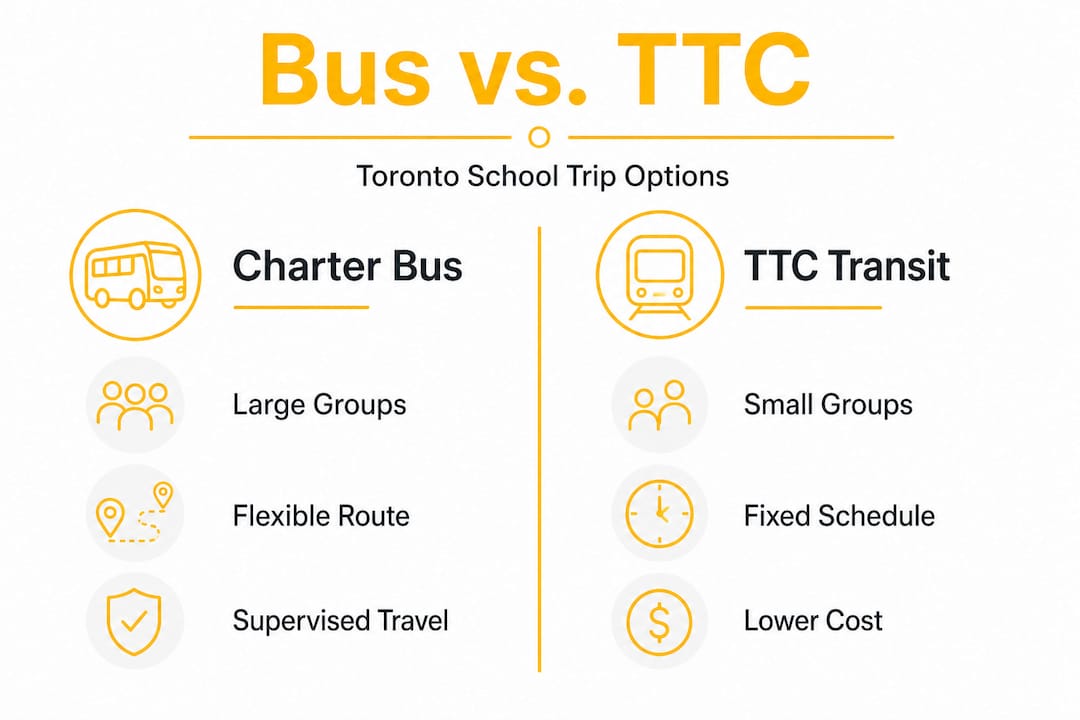
Toronto school trips typically fall into three vehicle categories: minibuses (14 to 24 passengers), standard school buses (up to 48 students), and full-size motor coaches for larger groups of 50 or more. If your group is smaller than 20 students and travelling a short distance during off-peak hours, a minibus keeps costs reasonable. For the typical classroom excursion, a standard school bus hits the sweet spot between capacity and budget. Larger school-wide trips, overnight excursions, or multi-school events benefit most from a full-size motor coach, which also tends to offer more comfortable seating, overhead storage, and climate control for longer rides. You can find detailed specifications when choosing the right school bus for your group.
When does TTC make sense?
For small groups of Grades 7 to 12 students, the TTC can serve as a cost-effective field trip option. A recent City of Toronto backgrounder confirms that while TTC is suitable for eligible small groups, private charters remain more reliable and predictable, particularly for younger students, large groups, or tight schedules. The key trade-off: TTC costs less (sometimes with reimbursement programmes), but offers far less control over timing, seating, and student supervision.
Here is a quick comparison to help you decide:
| Scenario | Recommended option | Reason |
|---|---|---|
| Small group (under 20), Gr 7–12, short urban route | TTC (with supervision) | Cost-effective, transit familiarity |
| Full classroom (25–48 students), any grade | Standard school bus | Reliable, point-to-point, supervised |
| Multi-class or school-wide trip | Motor coach (47–55 seat) | Comfort, storage, professional driver |
| Student with mobility device | Accessible charter bus | Ramp/lift equipped, AODA-compliant |
| Overnight or multi-day trip | Coach with amenities | Washroom, luggage space, driver rest rules |
Key situations where charter almost always wins:
- Any student has a mobility device or specific accessibility need
- The group includes primary or junior students (Grades 1 to 6)
- Return time falls after 9 p.m.
- The destination is outside Toronto’s transit network
Pro Tip: If your trip involves multiple grades or students from different classes, consider splitting into two smaller buses rather than one oversized coach. Supervision ratios stay manageable, and you have a built-in backup if one vehicle encounters a mechanical issue. The 47-passenger bus is a popular choice precisely because it matches the typical single-class group size without excess capacity. For a broader look at why charter consistently outperforms other options for groups, the benefits of bus rentals are worth reviewing before you commit.
How to prepare for a smooth school trip bus booking
With your best-fit transportation option in mind, preparation is your next critical step. The biggest delays in school trip planning rarely come from the bus company. They come from incomplete paperwork and missed internal approvals.
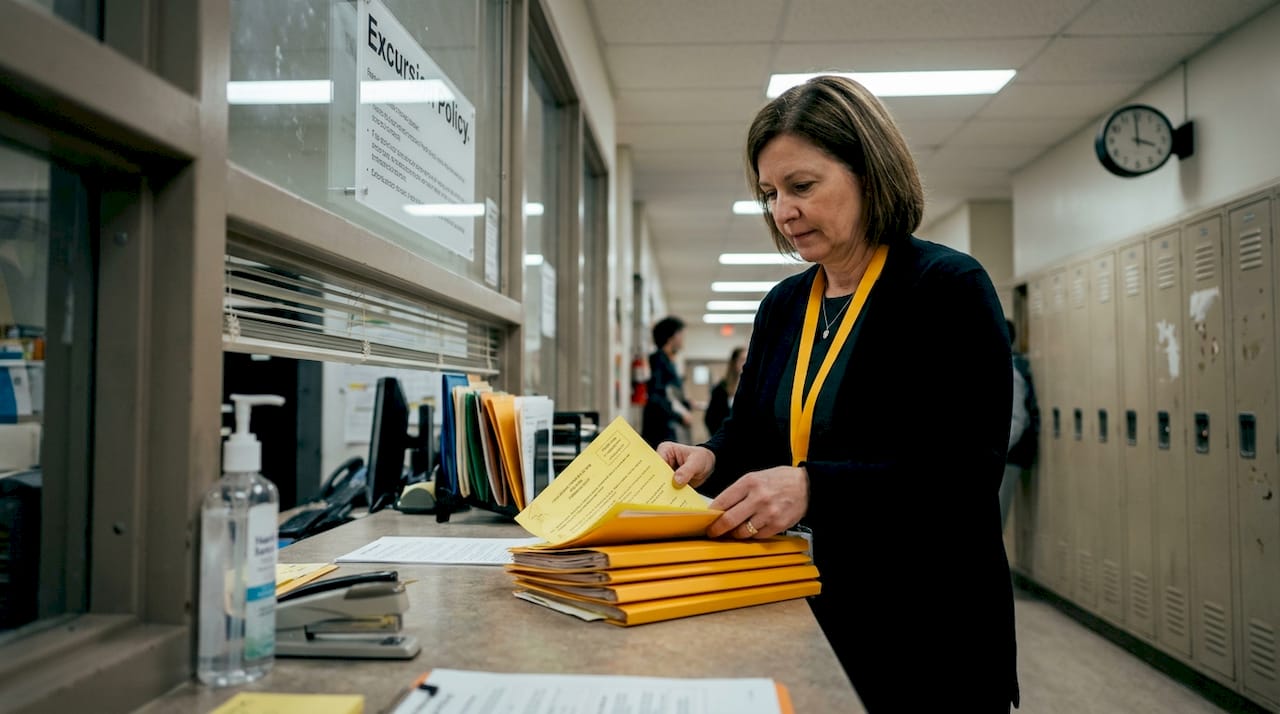
The TDSB Excursion Policy and Procedure makes clear that board policies require safety plans, signed permission forms, confirmed supervision ratios, and demonstrated curricular alignment before any trip can proceed. These are not optional administrative courtesies. Missing one of them can lead to a trip cancellation, even if the bus is already booked and paid for.
Here is the essential information you need to gather before contacting any bus provider:
| Information needed | Why it matters |
|---|---|
| Confirmed student headcount | Determines correct vehicle size |
| Pickup and drop-off addresses | Affects route planning and timing |
| Trip date, departure, and return times | Confirms driver availability and overtime rules |
| Any students with special needs or mobility devices | Ensures correct vehicle is reserved |
| Supervision ratio confirmed by principal | Required by board policy |
| Signed permission forms status | Must be complete before trip proceeds |
| Curricular connection documentation | Board requirement for excursion approval |
Checklist before you pick up the phone:
- Confirmed trip date and backup date (in case of weather or cancellations)
- Exact number of students plus accompanying adults
- Full route: school pickup, destination, and return
- Any dietary or medical emergency protocols relevant to travel
- Budget approved by administration
- School board excursion approval initiated or completed
- Contact details for a second emergency administrator
Pro Tip: Confirm your supervision ratios with your principal before the trip is announced to students or parents. In TDSB schools, primary students typically require a 1:5 adult-to-student ratio during travel. If you don’t have enough volunteers confirmed, your trip may need to be reduced in size or rescheduled. Our school trip bus rental guide outlines what most providers will ask for during the booking process, and our safety tips for school trips are worth reading alongside your board’s excursion policy.
The step-by-step school trip bus booking process in Toronto
With all the paperwork and approvals in hand, you’re ready to walk through the actual bus booking process. This is where many educators feel uncertain, but the steps are straightforward once you know what to expect.
Start early. Contact bus providers at least two to four weeks before your trip date. Spring and early June are peak school trip season in Toronto. Popular dates fill up fast, particularly Fridays and days around PA days. The earlier you reach out, the more options you’ll have. Read more about booking timing advice specific to Toronto.
Provide precise details in your first inquiry. Give the provider your confirmed student count, exact pickup and drop-off locations, departure time, expected return time, any accessibility requirements, and your school board’s name. Vague inquiries lead to general quotes that can shift dramatically when accurate details emerge later.
Ask directly about accessibility vehicles. If any student requires a wheelchair lift, ramp, or specific seating configuration, say so in your first contact. Accessible buses are booked separately and often in limited supply. A City of Toronto report highlights that accessibility and large-group needs must be confirmed well in advance, as last-minute requests frequently cannot be fulfilled.
Review the rental agreement carefully. Before signing, check the cancellation policy, overtime charges, and what happens if the trip runs long. Confirm the driver’s credentials and whether the provider holds the appropriate commercial vehicle insurance for student transport. Knowing how to read rental agreement terms protects you from unexpected costs.
Get everything in writing and confirm closer to the date. Send a written confirmation email two to three days before the trip. Include the exact pickup time, location, number of students, and the driver’s contact number. Ask the provider to confirm these details in reply.
Important for overnight or extended trips: Any driving schedule that exceeds 14 hours of total trip time may require a second driver under Ontario transport regulations. This effectively doubles the driver-related cost of the trip and must be budgeted in advance. Overnight trips also need specific vehicle amenities such as onboard washrooms and luggage storage, which not all providers offer. Confirm these details before signing any agreement.
Avoiding common pitfalls and troubleshooting on the day
You’ve made your booking, but trips can still go awry, so it pays to know how to troubleshoot issues as they arise.
What to do if the bus is late or doesn’t show:
- Call the driver’s direct number first. Dispatchers sometimes have updated ETAs that aren’t communicated to the school.
- If no contact after 10 minutes past the scheduled time, call the provider’s main office immediately.
- Have your backup plan ready: for small Grades 7 to 12 groups on eligible routes, the TTC alternative may be a last resort, though this requires confirmed supervision ratios and Presto cards for all students.
- Notify your principal and document the time and nature of the issue in writing.
If the wrong vehicle arrives (missing accessibility features):
This is the most serious day-of failure. As the City of Toronto confirms, double-checking accessibility features during booking is critical, because a standard bus arriving in place of an accessible vehicle may mean a student cannot travel at all. If this happens, contact the provider immediately to request the correct vehicle. Do not place the student on an inaccessible vehicle, regardless of pressure or inconvenience. Document the issue for your principal and, if applicable, your board’s transportation coordinator.
General day-of checklist:
- Headcount confirmed before loading
- All permission forms physically present with the supervising teacher
- Emergency contacts accessible for every student
- First aid kit on board or carried by a supervising adult
- Provider’s phone number, driver’s mobile number, and school office number all saved and shared with at least two supervising adults
Pro Tip: Create a shared contact list in a group chat with all supervising adults on the trip. Include the driver’s mobile number, the bus provider’s main line, your principal’s mobile, and the destination venue’s contact. When something goes wrong, you’ll be grateful you don’t have to search for numbers while managing 40 students on a sidewalk.
What most guides leave out about Toronto school trip bus bookings
Let’s step back and consider insights most advice misses, drawn from real-world trip planning experience in Toronto schools.
Most how-to guides treat bus booking as a logistics task. It isn’t. It’s a risk management task. The difference matters enormously when something goes wrong. The TDSB Excursion Policy is explicit: principals must ensure curricular alignment and a documented risk assessment for all trips. That means the transportation plan is part of your legal and professional accountability, not just a scheduling detail.
Here’s what that looks like in practice. When you skip board paperwork or file it late, you expose the school to liability if an incident occurs during travel. When you overlook the supervision ratio during booking, you may need to reduce your student list last minute, which creates chaos and upset for families. These aren’t edge cases. They happen regularly in Toronto schools every spring.
The deeper issue is sequencing. Most educators book the venue first, then scramble to arrange transportation. We’d argue strongly for the opposite. Lock in your transportation logistics and board approvals before committing to a destination date. Venues are far more flexible than bus availability windows during peak season. Confirming charter bus safety standards early also gives you documentation your principal and school board may need before approving the trip.
The backup-first mindset is the single biggest differentiator between a smooth trip and a crisis. Before your trip departs, ask yourself: “If the bus doesn’t show, what do I do?” If you can’t answer that in 30 seconds, you’re not ready. Build the contingency into your plan from day one, not as an afterthought once you’ve already booked.
Next steps: Get reliable bus solutions for your school trip
Planning a school trip is already a full-time task on top of your regular duties. The last thing you need is a transportation provider that drops the ball. Choosing a reliable, experienced bus rental company in Toronto removes one of the biggest variables from your trip equation.

At Toronto Bus Rentals, we work regularly with Toronto schools to provide safe, professionally driven, and properly insured buses for school excursions of all sizes. Whether you need a 47-passenger school bus for a single classroom or multiple vehicles for a full school excursion, our fleet covers the full range of school group needs. We make the quote process simple, provide full written agreements, and confirm every booking before your trip date. Explore our group transportation services and reach out today to get a quote tailored to your school’s specific trip requirements.
Frequently asked questions
What information do I need to book a school bus in Toronto?
You need your confirmed group size, trip route with exact addresses, pickup and drop-off times, any special accessibility needs, and all board-required forms. Board policies require safety plans, permission forms, and confirmed supervision ratios before a trip can proceed.
How soon should I book a bus for a school trip?
Book at least two to four weeks before your trip date, especially for spring dates in April, May, and June, when demand from Toronto schools peaks significantly.
What should I do if my group needs accessibility accommodations?
Declare accessibility needs during your very first contact with the provider. Accessibility and wheelchair needs must be confirmed well in advance, as accessible vehicles are limited and last-minute requests are rarely fulfilled.
Are there cost-effective options for small Toronto school groups?
For eligible small groups in Grades 7 to 12, the TTC field trip pilot offers free or reimbursed transit rides on select routes, though it requires careful supervision planning and is not suitable for all grade levels or trip types.
What happens if a trip runs longer than scheduled?
Trips that exceed 14 hours of total trip time may require a second driver under Ontario transport regulations, which can effectively double the driver-related transportation cost and should be budgeted for in advance.
Recommended
- School Trip Bus Rental Guide for Safe Group Travel
- School Bus Rental Toronto 2026: Book 2-4 Weeks Early for Best Rates
- Toronto School Bus Rentals
- Essential bus rental tips for safe Toronto school trips