
Group travel solutions explained: your 2026 planning guide
TL;DR:
- Effective group travel planning relies on early booking, locking in headcount, and clear contractual agreements. Technology streamlines logistics with software that manages itineraries, payments, and notifications, reducing errors. Proper organization ensures smooth trips that build relationships and create shared experiences beyond cost savings.
Group travel solutions are coordinated systems that manage booking, logistics, and communication for groups travelling together, whether for a corporate retreat, school trip, wedding, or large event. The industry standard defines a group booking as 8 or more people, and negotiating room blocks six months ahead can save 20–40% compared to individual rates. That savings window matters because group travel logistics involve far more moving parts than solo trips: transportation, accommodation, payments, headcount changes, and vendor contracts all need to run in parallel. Getting these elements right from the start is what separates a smooth group experience from a costly, stressful one.
What are the key components of group travel solutions?
Effective group travel solutions rest on four pillars: centralised booking, role delegation, firm timelines, and clear contracts. Each one directly affects whether a trip comes together or falls apart.
Centralised booking and coordination
Centralised booking means one point of contact manages all reservations rather than having each traveller book independently. This applies to transportation, accommodation, and group dining. Centralising high-value logistics like hotel blocks and group meals is where the real savings appear. Individual bookings can sometimes cost less for small groups under 10, so the decision to go group rate should be based on actual quotes, not assumptions.

Role delegation among planners
Large groups need a planning team, not a single overwhelmed organiser. Clear role definition at the start prevents burnout and keeps every process moving. Assign one person to vendor communication, one to finances, and one to itinerary management. These roles can overlap for smaller groups, but the responsibilities must be named and owned.
Booking timelines and RSVP deadlines
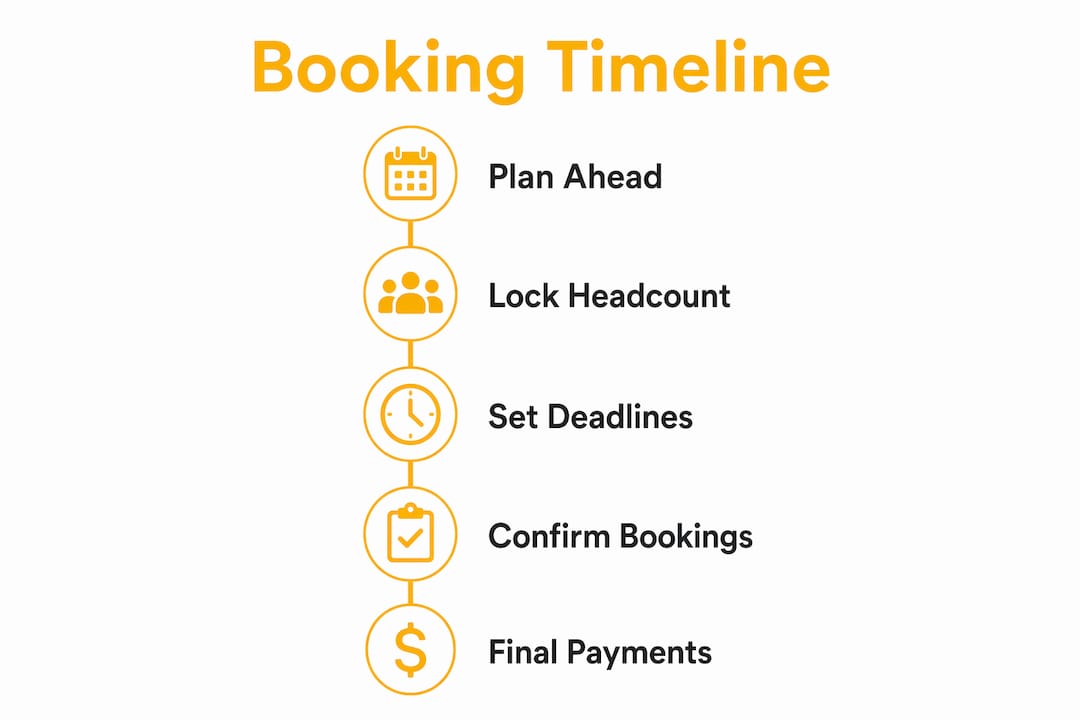
Standard group trips require booking 60–90 days out. Major events or peak-season travel demand six months or more of lead time. Headcount and dates must be locked in early because providers cannot hold spaces indefinitely. Set a firm RSVP deadline for your group, communicate it clearly, and enforce it. Late additions create contract complications and often cost more.
Pro Tip: Send two RSVP reminders: one two weeks before the deadline and one 48 hours before. Groups consistently underestimate how long it takes to collect confirmations from every member.
Here is a practical sequence for planning group travel:
- Define the group size, dates, and budget range before contacting any vendor.
- Assign planning roles to specific team members.
- Set an RSVP deadline and communicate it to all travellers.
- Contact accommodation and transportation vendors simultaneously, not sequentially.
- Collect deposits from group members before committing to any vendor contract.
- Distribute a shared itinerary document and update it in real time as bookings confirm.
How does technology improve group travel management?
Group travel management software turns a chaotic spreadsheet process into a reliable workflow. Dedicated platforms handle itinerary consolidation, live rooming list management, and integrated payment tracking in one place. That matters because manual coordination is the leading cause of errors in group bookings, from mismatched room assignments to missed payment deadlines.
Key features to look for in group booking software include:
- Automated notifications that alert travellers about payment due dates, itinerary changes, and departure times
- Live rooming lists that update in real time as confirmations come in
- Integrated payment tracking that shows who has paid, who owes, and what the group balance is
- Waitlist management that automatically fills spots when a traveller cancels
- Document sharing that gives every group member access to tickets, vouchers, and itineraries
Automation in communication reduces the organiser’s workload and keeps trips on track without constant manual follow-up. The organiser shifts from chasing individuals to managing exceptions only.
| Feature | Manual coordination | Software platform |
|---|---|---|
| Rooming list updates | Manual, error-prone | Live, automatic |
| Payment tracking | Spreadsheet, delayed | Real-time dashboard |
| Traveller notifications | Email by hand | Automated triggers |
| Cancellation handling | Reactive, slow | Waitlist fills gaps |
| Document distribution | Multiple emails | Single shared link |
Pro Tip: Choose a platform that integrates with a payment gateway so travellers can pay their share directly online. Collecting cash or bank transfers from 30 people is one of the most common causes of planning delays.
What are the financial and contractual considerations for group bookings?
Group travel contracts carry financial commitments that individual bookings do not. Non-refundable deposits typically range from 25% to 50% of the total booking value. That upfront exposure is real, and managing it requires both negotiation skill and clear internal policies.
Attrition clauses and modification windows
An attrition clause lets a group reduce its confirmed headcount by an agreed percentage without financial penalty. Negotiating this clause upfront is one of the most valuable things a group planner can do. Without it, dropping from 40 to 35 travellers could trigger penalties on the five unused spots. Most hotel contracts include a modification window, typically 30–60 days before arrival, within which changes carry no fee.
Flexible payment structures
Some operators now offer 10% deposits with monthly instalment plans, which reduces the upfront financial risk for groups. A 10-day refund guarantee post-deposit is also available through select providers. These structures make group travel more accessible for organisations with tight cash flow, such as schools or non-profits.
Group rates versus individual bookings
Group rates deliver clear savings on hotel blocks and chartered transportation. The comparison shifts for small groups.
| Booking type | Best for | Typical advantage |
|---|---|---|
| Group rate (hotel block) | 10+ travellers | 20–40% below rack rate |
| Group rate (transportation) | 15+ travellers | Fixed cost, no surge pricing |
| Individual booking | Under 10 travellers | Flexibility, no attrition risk |
| Hybrid approach | Mixed needs | Centralise hotel, book transit individually |
Pro Tip: Always ask vendors for their attrition threshold before signing. A 10% attrition allowance on a 50-person block means you can drop to 45 without penalty. That buffer is worth negotiating hard for.
What practical tips help groups travel smoothly?
The difference between a well-run group trip and a disorganised one comes down to preparation and communication discipline. These practices apply whether you are coordinating 12 colleagues or 120 conference attendees.
- Assign a single point of contact per vendor. Every hotel, transportation provider, and activity operator should have one named person from your team to call. Shared responsibility becomes no responsibility.
- Use a dedicated group chat channel. A single WhatsApp group or Slack channel for trip logistics keeps communication out of personal inboxes and creates a searchable record of decisions.
- Centralise all documents in one shared folder. Use Google Drive or a similar platform so every traveller can access their ticket, itinerary, and emergency contacts without emailing the organiser.
- Pre-book group transportation before finalising any other logistics. Transportation is the hardest element to adjust last-minute, especially for large groups. Vehicle options by group size vary significantly, and the right choice affects both comfort and cost.
- Build buffer time into every transfer. Groups move slower than individuals. A 15-minute buffer between a hotel checkout and a bus departure becomes critical when 40 people are checking out simultaneously.
- Avoid assuming group rates are always cheaper. For groups under 10, individual transit bookings combined with a centralised hotel block often produce better value than a full group package.
Niche travel specialists add particular value for groups with specific needs, such as seniors, sports teams, or travellers with mobility requirements. General booking platforms cannot anticipate the logistical details these groups need. A specialist who understands activity-appropriate pacing or accessible vehicle requirements prevents problems that no spreadsheet can fix after the fact.
Key takeaways
Effective group travel planning requires locking in headcount, contracts, and transportation early, because every delay compounds across the entire group.
| Point | Details |
|---|---|
| Book early and lock headcount | Standard trips need 60–90 days lead time; major events need six months or more. |
| Negotiate attrition clauses | Secure the right to reduce headcount by 10–15% without financial penalty before signing. |
| Use software, not spreadsheets | Platforms with live rooming lists and payment tracking eliminate the most common coordination errors. |
| Assign clear planning roles | Delegate vendor, finance, and itinerary responsibilities to named individuals from the start. |
| Match booking type to group size | Groups under 10 often save more by combining individual transit with centralised hotel blocks. |
What I have learned from watching group trips succeed and fail
The single biggest predictor of a smooth group trip is not budget or destination. It is how early the organiser locks in the headcount. Every other decision, from contract terms to vehicle size, flows from that number. Groups that treat the headcount as flexible until two weeks out consistently face penalties, undersized vehicles, and last-minute scrambles.
The second thing I have noticed is that planners underestimate transportation. Accommodation gets booked months ahead, but the bus or shuttle gets arranged in the final week. That is backwards. Transportation is the one element where late booking means either no availability or a significant price premium. For Toronto groups especially, pre-booking a motor coach through a dedicated provider like Torontobusrentals removes the single largest variable from an already complex plan.
Technology helps, but it does not replace judgement. The best group travel management software still requires someone to make decisions about attrition thresholds, payment deadlines, and vendor selection. The software handles execution. The planner handles strategy. Groups that confuse the two end up with a well-organised disaster.
One more thing worth saying: the benefits of group travel go beyond cost savings. A well-coordinated group trip builds relationships, reduces individual stress, and creates shared experiences that matter. The logistics exist to serve that outcome, not the other way around.
— Firoz
Torontobusrentals: group transportation for every occasion
Planning a group trip in Toronto means solving the transportation piece before anything else falls into place.

Torontobusrentals provides motor coach and shuttle services for corporate outings, school trips, weddings, sports teams, and large events across Toronto and beyond. The fleet covers a range of group sizes, from minibuses for smaller parties to full-size coaches for large delegations. Every vehicle comes with a professional driver, so your group arrives together, on time, and without the stress of coordinating multiple cars or rideshares. For event planners who need reliable group transportation logistics handled by experienced professionals, Torontobusrentals is the place to start.
FAQ
What qualifies as a group booking for travel?
Most providers define a group booking as 8 or more travellers. Hotel room blocks and charter transportation typically use this threshold to apply group rates and contract terms.
How far in advance should a group book travel?
Standard group trips require 60–90 days of lead time. For major events or peak travel periods, booking six months ahead is the industry standard and secures the best rates.
What is an attrition clause in a group travel contract?
An attrition clause allows a group to reduce its confirmed headcount by an agreed percentage without paying penalties. Negotiating this clause before signing protects against last-minute cancellations.
Are group rates always cheaper than individual bookings?
Not always. Groups under 10 travellers sometimes save more by booking individual transit and centralising only hotel accommodation and dining as a group block.
What is the most common mistake in group travel planning?
Leaving transportation to the last minute is the most frequent and costly error. Vehicle availability drops and prices rise sharply when bookings happen within two weeks of travel.
Recommended
- Group travel planning: your complete 2026 guide
- Wedding travel safety tips: a practical guide for 2026
- School trip transportation explained: a 2026 guide