
Educational bus tours guide for Canadian educators
TL;DR:
- Educational bus tours are curriculum-aligned group trips that take students to relevant destinations to enhance classroom learning through guided programming. Successful planning requires early booking, clear learning objectives, collaboration with venue educators, and strict safety and accessibility compliance to maximize educational impact. Guided tours with expert narration typically outperform self-guided visits, especially when teachers integrate inquiry-based activities aligned with specific curriculum outcomes.
An educational bus tour is a structured, curriculum-aligned group travel experience that transports students by motor coach to destinations that reinforce classroom learning. These trips go by several names in the industry: school field trips, curriculum-based tours, and guided educational excursions are all terms you will encounter when planning. Whatever you call them, the core purpose is identical. Students leave the classroom, travel to a site with direct relevance to what they are studying, and return with knowledge that a textbook cannot replicate. Resources like Global Educational Tours and the Exploratorium have built entire programme frameworks around this model, and Canadian provincial education ministries increasingly recognise guided bus tours as legitimate instructional time rather than extracurricular extras.
What is an educational bus tours guide and why does it matter?
A practical educational bus tours guide covers destination selection, booking timelines, transportation logistics, safety compliance, and curriculum alignment in one place. Without this kind of structured reference, educators routinely underestimate lead times, miss venue registration windows, or book transportation that does not meet provincial accessibility requirements. The result is a trip that costs more, delivers less, and creates unnecessary stress for everyone involved.
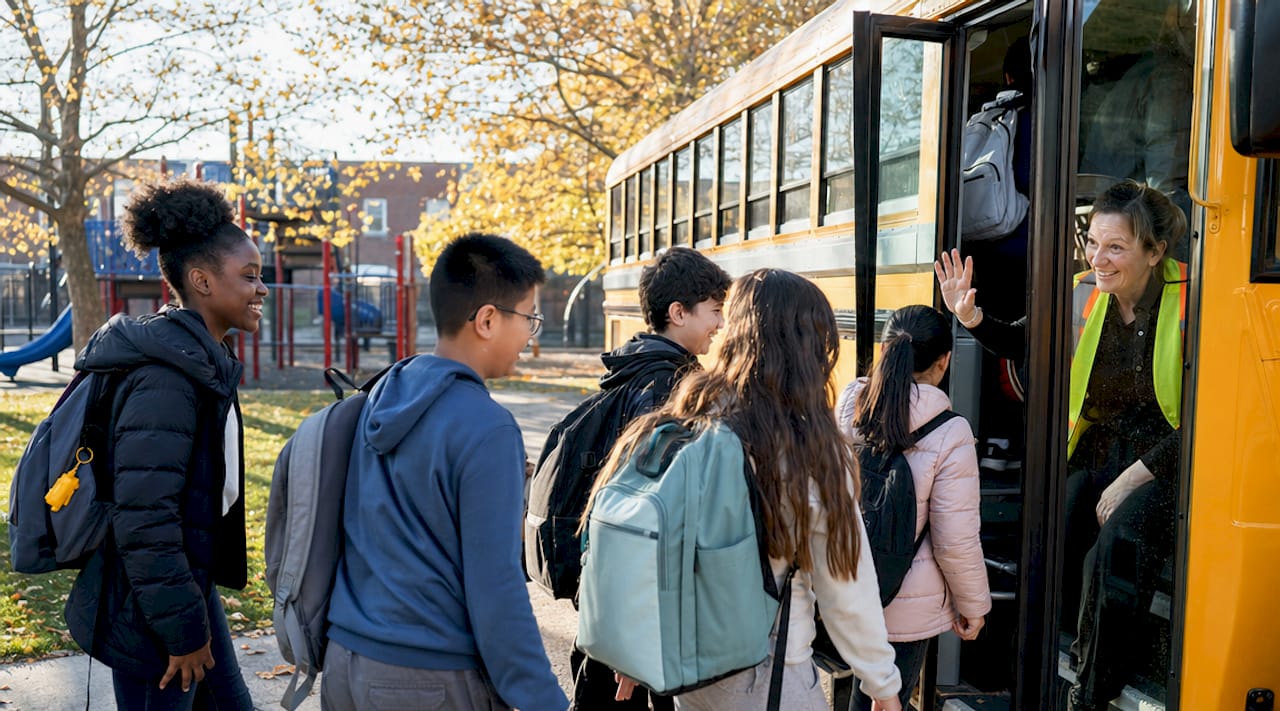
Tours aligned with curriculum standards at the 8th grade and junior high level consistently produce higher student engagement and measurable learning outcomes. That finding matters because it tells you exactly where to concentrate your planning energy: matching the destination to the grade and the subject, not simply choosing a popular attraction and hoping it fits.
The distinction between a guided bus tour and a self-guided excursion is also worth establishing early. Guided tours include expert narration, a structured itinerary, and professional group management. Self-guided visits give teachers more flexibility but require significantly more on-the-ground coordination. Both have their place, and this guide covers both.
How to choose destinations that align with learning objectives
The single most effective filter for destination selection is the curriculum standard you are trying to reinforce. A history bus tour to a National Historic Site of Canada works for a Grade 10 civics class. A visit to the Ontario Science Centre works for a Grade 7 science unit on ecosystems. The destination earns its place only when a teacher can point to a specific learning outcome it supports.
Top destinations in Canada for curriculum-based tours include:
- The Royal Ontario Museum (ROM) in Toronto for history, anthropology, and natural science units
- The Canadian Museum of History in Gatineau for social studies and Indigenous studies programmes
- The Ontario Science Centre for STEM-focused interactive educational excursions
- Niagara Falls and the Niagara Parks Commission sites for geography and environmental science
- Historic sites like Fort York in Toronto for early Canadian history and civics content
Age-appropriateness shapes destination choice as much as curriculum alignment does. A site that works brilliantly for Grade 8 students may overwhelm Grade 4 learners or bore Grade 11 students. Educational travel coordinators at institutions like the Exploratorium recommend confirming with venue education staff that the programming matches your students’ developmental stage before you book.
Language immersion opportunities are an underused dimension of educational road trips in Canada. French-language sites in Quebec and bilingual programming at federal museums give French Immersion classes a rare chance to practise language skills in an authentic context. Build that into your destination criteria if it applies to your group.
Pro Tip: Contact the venue’s education department directly, not the general admissions desk. Education staff can tell you which programmes align with Ontario or provincial curriculum codes, saving you hours of research.
How to plan and book educational bus tours step by step
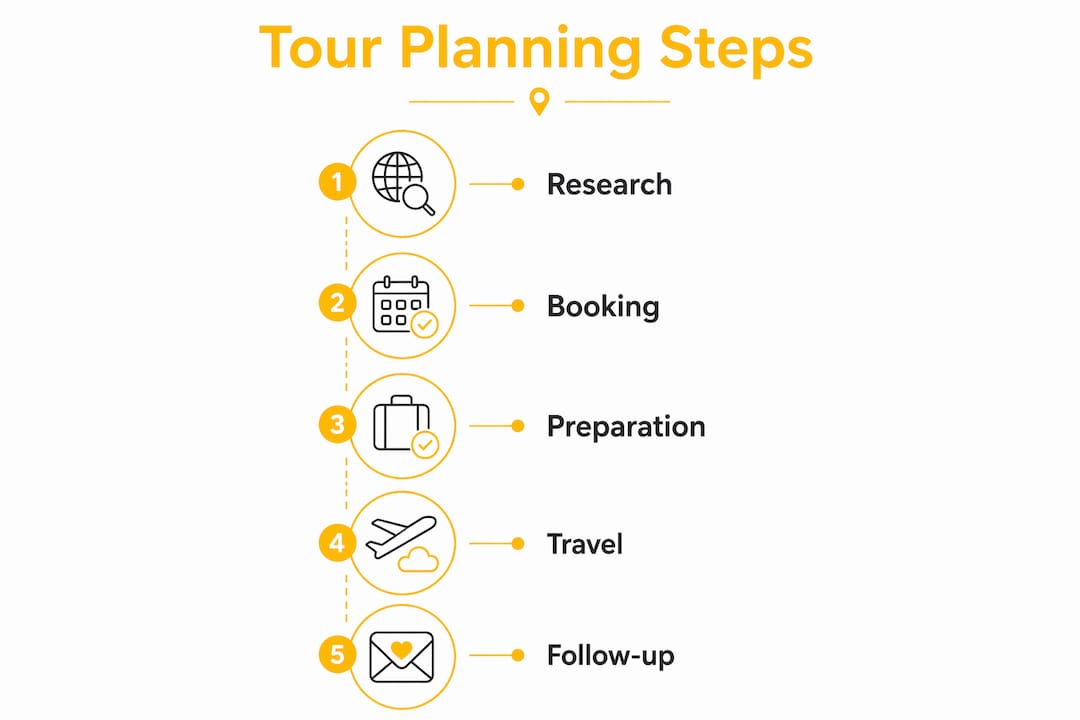
Successful planning follows a clear sequence. Skipping steps or compressing timelines is the most common reason school field trips go sideways.
- Set your learning objectives first. Write down two or three specific curriculum outcomes the trip must address. Every subsequent decision flows from this.
- Select your destination and confirm programme availability. Call or email the venue’s education department. Ask about group size limits, programme duration, and accessibility features.
- Book the venue at least 14 days in advance. Many museums and aquariums require field trip request forms submitted at minimum two weeks before the visit to secure a spot. Facilitated programmes at institutions like the Monterey Bay Aquarium require two weeks’ advance notice, while self-guided visits need only 24 hours. Canadian venues follow similar policies.
- Book your transportation. Confirm bus type, passenger capacity, accessibility features, and driver credentials. Book at least four to six weeks ahead for spring and fall travel, when demand peaks.
- Confirm bus parking and drop-off logistics with the venue. Parking and drop-off zones must be confirmed in advance to avoid delays and safety issues on arrival.
- Distribute permission forms and collect them. Allow at least two weeks for returns and follow up with families who have not responded.
- Brief chaperones. Assign specific roles, review the itinerary, and confirm the chaperone-to-student ratio meets provincial requirements.
- Co-design activities with site educators. Teacher involvement in trip co-design with venue educators significantly increases student engagement. Inquiry-based activities consistently outperform standard sightseeing in educational impact.
Pro Tip: Use a bus rental checklist to cross-reference transportation requirements against your venue’s logistics before you finalise any booking.
For budgeting, check whether your destination offers free or reduced admission. Many institutions provide free admission for schools with demonstrated financial need, and some offer one complimentary visit per academic year for registered school groups. Verify eligibility early because these programmes often have limited spots.
| Planning task | Recommended lead time |
|---|---|
| Venue programme booking | Minimum 14 days; 4 weeks preferred |
| Transportation booking | 4 to 6 weeks for peak seasons |
| Permission forms distributed | 3 weeks before departure |
| Chaperone briefing | 1 week before departure |
| Parking and drop-off confirmation | 1 to 2 weeks before departure |
Guided bus tours versus self-guided and alternative transport options
Guided bus tours produce better educational outcomes than self-guided visits because expert narration contextualises what students see, and a structured itinerary keeps groups on schedule. For educators managing 30 or more students, the logistical simplicity alone justifies the cost difference.
| Feature | Guided bus tour | Self-guided visit | Public transit |
|---|---|---|---|
| Expert narration | Yes | No | No |
| Structured itinerary | Yes | Flexible | Flexible |
| Group supervision | High | Moderate | Low |
| Cost per student | Moderate to high | Low to moderate | Low |
| Accessibility | High (with right vehicle) | Varies by venue | Varies by route |
| Curriculum alignment | Built in | Teacher-managed | Teacher-managed |
Self-guided visits work well for smaller groups, older students with strong self-direction, or when the teacher has deep subject expertise and wants to lead the experience personally. Public transit is a practical choice for urban schools visiting nearby sites, but it introduces supervision challenges that multiply with group size.
Cost is the most common objection to guided bus tours for students. The strategies that work best include applying for school board travel grants, partnering with parent councils for fundraising, and splitting costs across two or more classes travelling together. Some Toronto-area schools have reduced per-student costs significantly by booking a full motor coach for two classes rather than two smaller vehicles.
Safety and accessibility considerations for educational bus tours
Safety compliance is not optional. Chaperone-to-student ratios and safety protocols are legal requirements for group transportation across many Canadian provinces, and Ontario is no exception. Failing to meet these requirements exposes the school board to liability and puts students at risk.
Key safety and accessibility requirements to confirm before any trip:
- Chaperone ratios: Ontario school boards typically require one adult per 10 students for elementary trips and one per 15 for secondary. Confirm your board’s specific policy in writing.
- Vehicle safety standards: Motor coaches used for school groups must meet Transport Canada safety regulations. Confirm the operator’s safety certification and driver credentials before signing any agreement.
- Accessibility accommodations: If any student uses a wheelchair, mobility aid, or requires sensory accommodations, confirm the vehicle has the necessary equipment and that the venue is fully accessible.
- Emergency protocols: Every chaperone should carry a copy of the emergency contact list, the itinerary, and the school’s emergency response procedure.
- Insurance coverage: Confirm whether the school board’s insurance covers off-site student activities and whether the transportation provider carries adequate liability coverage.
- Student behaviour management: Establish clear expectations in writing before departure. Many venues reserve the right to remove groups that disrupt other visitors.
Accessibility planning deserves more attention than it typically receives. A student who uses a wheelchair needs a vehicle with a lift or ramp, a venue with step-free access throughout, and a programme that does not require physical activities they cannot participate in. Confirming all three in advance is the planner’s responsibility, not the student’s.
Key takeaways
Effective educational bus tours require curriculum alignment, early booking, co-designed activities, and strict safety compliance to deliver genuine learning value.
| Point | Details |
|---|---|
| Curriculum alignment first | Match the destination to a specific learning outcome before booking anything else. |
| Book venues and transport early | Most venues require 14 days minimum; book transport 4 to 6 weeks ahead for peak seasons. |
| Co-design with site educators | Teacher and venue educator collaboration produces inquiry-based experiences that outperform standard sightseeing. |
| Confirm safety and accessibility | Verify chaperone ratios, vehicle certifications, and accessibility features before finalising any trip. |
| Explore free admission programmes | Many institutions offer complimentary or discounted entry for school groups; check eligibility early. |
What I have learned from watching educational tours succeed and fail
The trips that deliver real learning value share one characteristic: the teacher treated the tour as an extension of the classroom, not a day off from it. The trips that fall flat share a different characteristic: someone booked a popular attraction first and tried to find curriculum justification afterward.
I have seen Grade 8 teachers build entire units around a single visit to the Canadian Museum of History, using the pre-visit preparation and post-visit reflection to triple the instructional value of the day itself. I have also seen groups arrive at science centres with no preparation, spend three hours pressing buttons, and return with nothing to show for it academically. The difference is not the destination. It is the intentionality of the planning.
The other pattern worth naming is the tendency to underestimate logistics. Educators are curriculum experts, not transportation coordinators, and there is no shame in that. But assuming the bus will arrive on time, the venue will have parking sorted, and the chaperones know their roles without explicit briefing is how trips become chaotic. Every logistical detail that gets confirmed in writing before departure is one less crisis to manage on the day.
Partnering with a professional transportation provider who has experience with school groups changes this dynamic considerably. When the driver knows the route, the vehicle meets all safety standards, and the booking is confirmed weeks in advance, the educator can focus entirely on the students and the learning. That is the division of labour that makes these trips worth running.
— Firoz
Plan your next school trip with Torontobusrentals
Torontobusrentals provides motor coaches and minibuses purpose-suited for school groups across the Greater Toronto Area, with professional drivers, verified safety certifications, and flexible booking options that accommodate the unpredictable nature of school scheduling.

Whether you are organising a history bus tour to a downtown heritage site or a full-day interactive educational excursion to a science centre, the right vehicle makes the entire day run more smoothly. Torontobusrentals works with educators and school administrators to match group size, accessibility needs, and itinerary requirements to the right coach. Explore the motor coach travel guide to see how professional group transportation supports better learning travel experiences from departure to return.
FAQ
What is an educational bus tour?
An educational bus tour is a curriculum-aligned group trip where students travel by motor coach to a destination that reinforces specific classroom learning objectives. It combines guided or facilitated programming at the venue with structured group transportation.
How far in advance should I book a school field trip?
Most educational venues require booking at least 14 days in advance, and facilitated programmes often need two to four weeks’ notice. Transportation should be booked four to six weeks ahead during peak spring and fall travel periods.
What chaperone ratio is required for Ontario school trips?
Ontario school boards typically require one adult chaperone per 10 students for elementary trips and one per 15 for secondary, though individual board policies vary. Confirm the exact ratio with your school board before finalising the trip.
Are there free admission options for school groups?
Many major institutions, including the Exploratorium and Field Museum, offer free or discounted admission for school groups with demonstrated financial need or Title I status. Canadian venues such as the Canadian Museum of History also offer educational group programmes at reduced or no cost for eligible schools.
How do I make a bus tour more educationally effective?
Co-design the visit with the venue’s education staff to build inquiry-based activities around your curriculum outcomes. Research consistently shows that teacher involvement in trip co-design produces significantly higher student engagement than standard sightseeing formats.
Recommended
- Essential bus rental tips for safe Toronto school trips
- School trip transportation explained: a 2026 guide
- School Trip Bus Rental Guide for Safe Group Travel