
Defining modern motor coaches: features and benefits
TL;DR:
- Modern motor coaches combine advanced safety technology, passenger comfort, and operational reliability into a single system. They feature standard driver-assist systems, spacious interiors, and integrated telematics to enhance safety and efficiency. These connected systems provide a seamless experience, setting them apart from outdated or standalone vehicle features.
Modern motor coaches are defined as full-size, professionally operated passenger vehicles that integrate advanced driver-assist technology, ergonomic passenger amenities, and fleet-grade serviceability into a single, purpose-built platform. The industry describes this generation as a thoughtful evolution of proven designs rather than a radical reinvention. For any individual or organisation planning group travel, a corporate outing, a wedding, or a multi-stop event in Toronto, understanding what separates a modern motor coach from older alternatives is the clearest path to making a confident booking decision. Defining modern motor coaches in 2026 means recognising three converging pillars: safety technology, passenger comfort, and operational reliability.
What advanced driver-assist technologies define modern motor coaches?
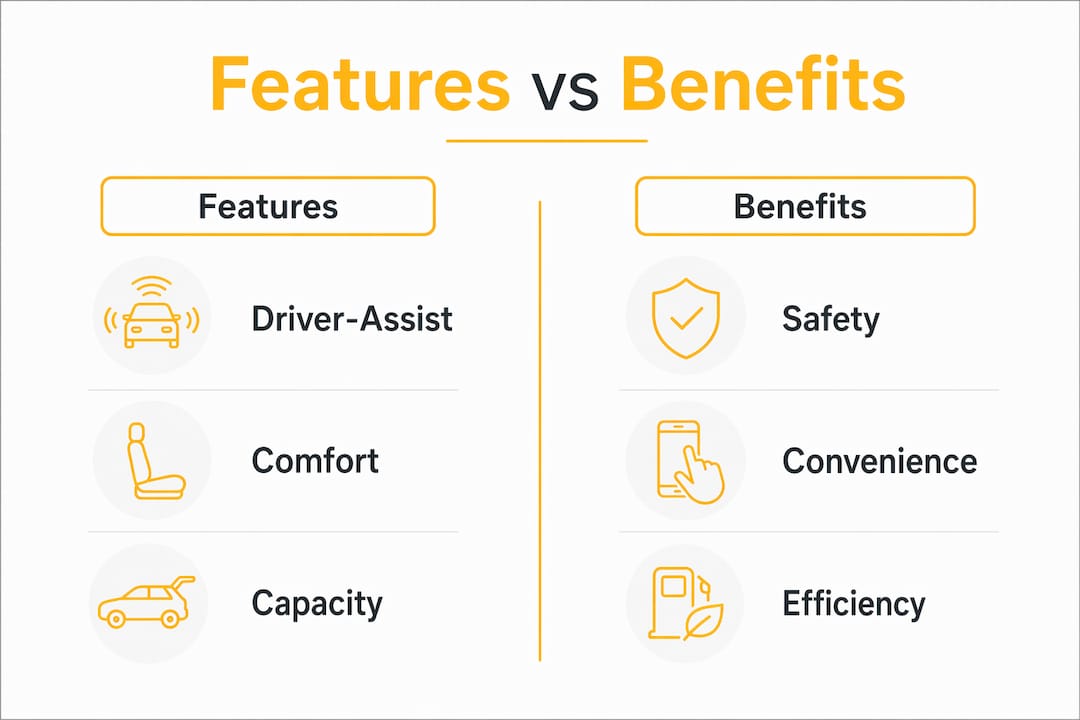
The safety profile of a modern motor coach is built on a layered stack of driver-assist systems that work together rather than in isolation. Advanced driver-assistance features now standard on 2026 models include adaptive cruise control, lane-keeping assist, collision avoidance, 360-degree cameras, and telematics support. Each system addresses a specific risk, but their combined effect is what makes the difference on a long highway run or a tight urban route through downtown Toronto.
Adaptive cruise control maintains a safe following distance automatically, reducing driver fatigue on multi-hour trips. Lane-keeping assist corrects minor drift before it becomes a hazard, which matters most on overnight or early-morning departures. Collision avoidance systems use forward-facing radar and cameras to trigger alerts or automatic braking when a vehicle ahead slows suddenly. These are not optional extras on a premium trim. They are baseline features on coaches built for professional group transport in 2026.
Telematics integration adds another layer by connecting the vehicle to fleet management software in real time. Operators can monitor speed, braking patterns, fuel consumption, and maintenance alerts from a central dashboard. This data loop benefits passengers indirectly: a well-monitored coach is a well-maintained coach, and a well-maintained coach is a safer, more reliable one.
- Adaptive cruise control: maintains safe following distance on highways
- Lane-keeping assist: corrects drift before it escalates
- Collision avoidance: radar and camera-triggered braking alerts
- 360-degree cameras: full-perimeter visibility for urban manoeuvring
- Electronic stability control: prevents rollover in sharp turns or sudden lane changes
- Telematics: real-time fleet monitoring for maintenance and driver behaviour
Pro Tip: When evaluating a motor coach provider, ask specifically whether their fleet includes telematics-linked vehicles. A provider who can share real-time vehicle data is one who takes fleet safety seriously.
How do modern motor coach interiors enhance passenger comfort?
Passenger comfort in a modern motor coach is both measurable and experiential. Average legroom in current coach models sits at approximately 32 inches, which is meaningfully more than a standard economy airline seat. That single measurement explains why groups choose motor coaches for trips where comfort over distance matters.
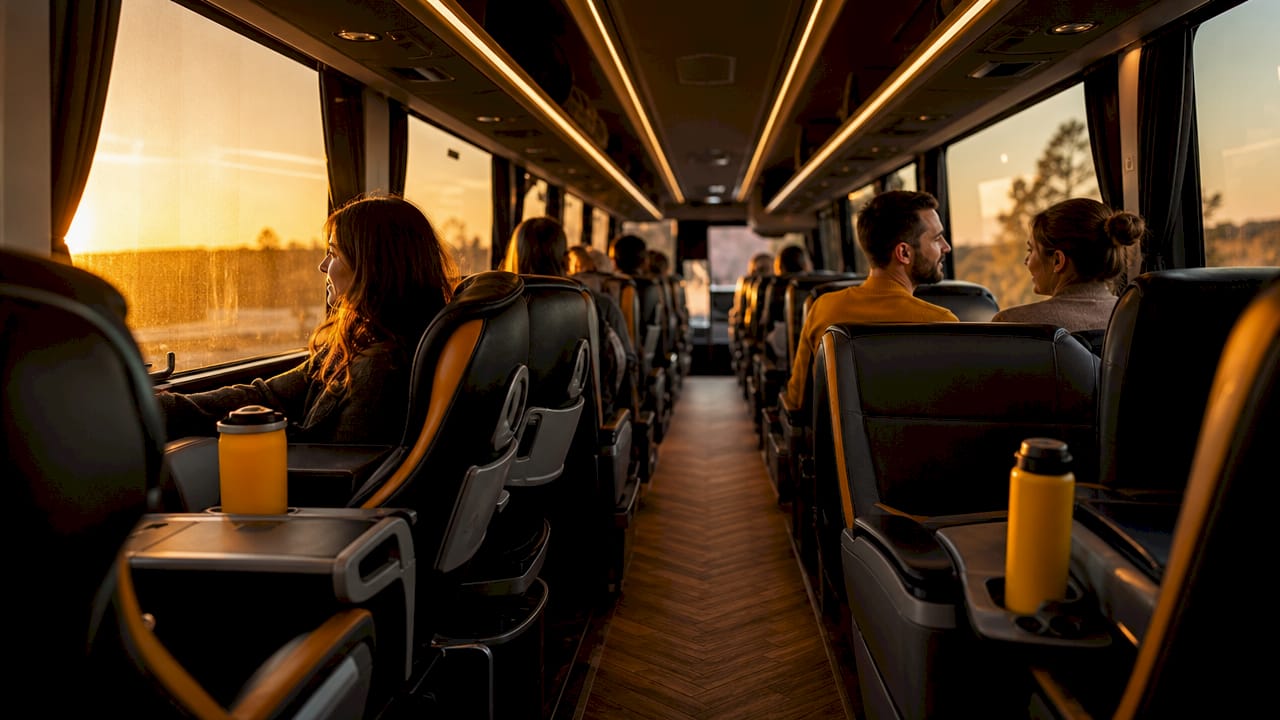
Ergonomic reclining seats with adjustable headrests and footrests are standard across the category. Passengers on a four-hour trip to Niagara Falls or a multi-stop corporate tour through the Greater Toronto Area can adjust their position independently rather than sitting rigid for the duration. This is a practical benefit, not a luxury add-on.
Digital amenities have become equally standard. Modern coach interiors now include personal entertainment screens, onboard Wi-Fi connectivity, USB charging ports at every seat, and climate control systems that can be zoned by section of the coach. For a corporate group that needs to stay connected during transit, or a school group that needs to keep 40 students occupied, these features are functional requirements. You can explore the full range of in-cabin amenities that matter most for group travel before you book.
Ambient LED lighting, noise-reduction insulation, and the use of sustainable interior materials round out the passenger environment. Noise reduction in particular is underappreciated. A quieter cabin reduces fatigue on long routes and makes onboard announcements, presentations, or group conversations far more practical.
| Comfort feature | Practical benefit |
|---|---|
| 32-inch average legroom | Reduces physical fatigue on trips over two hours |
| Ergonomic reclining seats | Passengers adjust independently for long-distance comfort |
| Onboard Wi-Fi and USB ports | Groups stay connected and productive during transit |
| Zoned climate control | Different sections of the coach can be set to different temperatures |
| Noise-reduction insulation | Quieter cabin supports conversation, presentations, and rest |
| Ambient LED lighting | Reduces eye strain and supports varied lighting needs |
Accessibility features are also part of the modern standard. Wheelchair lifts, priority seating, and wide aisle configurations mean that groups with diverse mobility needs can travel together without compromising anyone’s experience. Comfort upgrades are not purely about luxury. They produce measurable improvements in passenger satisfaction and directly influence whether a group chooses to repeat the experience.
How do modern motor coaches improve operational efficiency?
Fleet operators and event organisers both benefit from the operational design philosophy built into modern motor coaches. Consistent components across model years simplify maintenance by reducing the number of unique parts a service team needs to stock and understand. A technician familiar with a 2022 model can service a 2026 model without retraining from scratch. This continuity lowers downtime and keeps vehicles on the road.
Telematics-supported fleet management takes that reliability further. When a coach transmits real-time diagnostic data, maintenance teams can address issues before they become failures. A brake wear alert caught three days before a scheduled trip is a minor repair. The same issue discovered on the morning of departure is a cancelled booking and a frustrated group.
- Telematics monitoring flags maintenance needs before they cause failures
- Consistent platform design reduces parts complexity and technician retraining
- 24/7 support networks provide remote diagnostics and roadside assistance
- Durable construction extends the service life of each vehicle in the fleet
- Evolutionary design means operators can upgrade incrementally without replacing entire fleets
Service networks and parts availability are equally important for organisations managing multi-vehicle fleets. A provider with access to a well-supported parts supply chain can turn around repairs faster than one relying on specialty components. For groups booking sports team travel or recurring corporate shuttles, this reliability is not a secondary concern. It is the foundation of the entire service relationship.
Pro Tip: Ask your motor coach provider how they handle same-day mechanical issues. A provider with a documented backup protocol, whether a replacement vehicle or a partner fleet, is far more dependable than one who handles it case by case.
How are capacity and design choices evolving for group travel?
Modern motor coaches now serve a wider range of group sizes than any previous generation, and the design choices behind that flexibility are worth understanding. Standard full-size coaches seat between 47 and 57 passengers, which covers the majority of corporate outings, school trips, and event transfers. Double-decker configurations push that capacity significantly higher.
The Marcopolo G8 Double Decker 1800 on a Volvo B510R chassis carries up to 80 passengers while maintaining the full suite of safety and comfort features expected of a modern coach. That model includes electronic stability control, lane departure warning, adaptive cruise control, and enhanced multi-deck climate control. The design challenge with double-deckers is passenger flow and luggage management, and the G8 addresses both with dedicated luggage bays and stairwell configurations that minimise boarding time.
| Coach configuration | Capacity | Best suited for |
|---|---|---|
| Standard single-deck | 47 to 57 passengers | Corporate outings, school trips, wedding parties |
| Large single-deck | 55 to 60 passengers | Multi-stop tours, conference transfers |
| Double-decker | Up to 80 passengers | Large events, stadium transfers, high-volume group travel |
High-capacity double-decker models optimise group travel by balancing passenger flow, luggage management, comfort, and safety in a single vehicle. For event organisers moving large groups between venues in Toronto, this means fewer vehicles, simpler logistics, and lower per-passenger cost. The group transportation options available in Toronto reflect this range, from standard coaches for mid-size groups to high-capacity configurations for major events.
Noise reduction between decks, independent climate zones for upper and lower levels, and wide luggage bays beneath the floor are not incidental features. They are the result of deliberate design decisions that make large-group travel genuinely comfortable rather than merely functional.
Key takeaways
Modern motor coaches in 2026 are defined by the integration of driver-assist technology, measurable passenger comfort standards, and fleet-grade operational reliability working together as a system rather than as separate upgrades.
| Point | Details |
|---|---|
| Driver-assist technology | Adaptive cruise control, lane-keeping assist, and telematics are standard safety features, not premium options. |
| Measurable passenger comfort | Average legroom of 32 inches, zoned climate control, and onboard Wi-Fi are baseline expectations in 2026. |
| Operational reliability | Consistent platform design and telematics monitoring reduce downtime and extend fleet service life. |
| Capacity flexibility | Configurations range from 47-passenger standard coaches to 80-passenger double-deckers for large events. |
| Systems integration | The defining characteristic of modern coaches is how safety, comfort, and serviceability work as one connected system. |
Why integrated systems matter more than individual features
I have spent enough time around group travel logistics to know that most buyers focus on the wrong thing when evaluating motor coaches. They ask about seat width or screen size. Those details matter, but they are not what separates a genuinely modern coach from one that simply looks updated.
The real differentiator is systems integration. A coach where the telematics feed connects to the maintenance schedule, the driver-assist systems share data with the fleet manager, and the climate control responds to passenger load is a fundamentally different product from one where each feature operates independently. The former reduces failures, improves driver performance, and creates a consistent passenger experience across every trip. The latter gives you a list of features that may or may not work together under pressure.
I also think the industry underestimates how much passenger expectations have shifted. Groups travelling for corporate events or weddings in 2026 arrive with the same connectivity and comfort expectations they have on any other form of premium transport. A coach that cannot deliver reliable Wi-Fi or maintain a consistent cabin temperature on a two-hour trip will generate complaints regardless of how good the driver is. Comfort is no longer a differentiator. It is a baseline requirement, and the coaches that meet it are the ones worth booking.
For large organisations coordinating multi-stop trips or recurring event transfers, the operational side of this equation is equally significant. A fleet built on consistent platforms with telematics support is one that can scale without proportionally scaling the maintenance burden. That is the kind of long-term thinking that separates a transport partner from a one-time vendor.
The future of motor coach technology points toward greater electrification, more sophisticated driver-assist automation, and deeper integration between vehicle systems and event management software. The organisations that understand what defines a modern coach today will be better positioned to evaluate those advances as they arrive.
— Firoz
Plan your next group trip with Torontobusrentals
Torontobusrentals operates a fleet of modern motor coaches equipped with the safety technology, passenger amenities, and operational reliability described in this article. Whether you are organising a corporate outing, a school trip, a wedding transfer, or a large-scale event in Toronto, the right coach configuration is available for your group size and itinerary.

Every vehicle in the Torontobusrentals fleet is maintained to current motor coach safety standards and operated by professional drivers familiar with Toronto routes and event logistics. For groups of any size, you can explore group travel solutions tailored to your specific needs, or review rental options that cover everything from mid-size corporate groups to high-capacity event transfers. Contact Torontobusrentals directly to discuss your requirements and receive a tailored quote.
FAQ
What are motor coaches and how do they differ from regular buses?
Motor coaches are purpose-built, long-distance passenger vehicles designed for group travel, featuring higher comfort standards, advanced safety systems, and greater luggage capacity than standard transit or school buses. They are engineered for highway and multi-stop routes rather than fixed urban transit loops.
What safety features are standard on modern motor coaches in 2026?
Standard safety features include adaptive cruise control, lane-keeping assist, collision avoidance systems, electronic stability control, 360-degree cameras, and telematics-linked fleet monitoring. These systems work together to reduce driver fatigue and improve response to road hazards.
How many passengers can a modern motor coach carry?
Standard single-deck motor coaches carry between 47 and 57 passengers, while double-decker configurations such as the Marcopolo G8 on a Volvo chassis can carry up to 80 passengers with full safety and comfort features maintained across both decks.
What comfort amenities should I expect in a modern motor coach?
Modern coaches provide approximately 32 inches of legroom, ergonomic reclining seats, onboard Wi-Fi, USB charging ports, personal entertainment screens, zoned climate control, and noise-reduction insulation as standard features rather than premium upgrades.
Why does systems integration matter when choosing a motor coach provider?
A provider whose fleet uses integrated telematics, driver-assist systems, and maintenance monitoring delivers more consistent reliability than one with isolated features. Integrated systems catch mechanical issues before trips, not during them, which directly protects your group’s schedule and safety.
Recommended
- Must-have motor coach amenities for group travel
- Top benefits of hiring a motor coach for your Toronto event
- Luxury vs. standard buses: a guide for Toronto planners