
Covid safety in bus rentals: a 2026 guide for planners
TL;DR:
- Covid safety in bus rentals involves layered protocols like high-efficiency air filtration, surface disinfection, and occupancy limits. These measures significantly reduce airborne transmission risk, especially when combined with mask use and proper ventilation. Planners should verify operators’ safety measures through written plans and demand controls like HEPA filtration, CO2 monitoring, and occupancy caps before booking.
Covid safety in bus rentals is defined as a layered set of protocols covering air filtration, surface disinfection, mask use, and passenger density limits that together reduce the risk of airborne viral transmission in shared coach vehicles. For event planners and group coordinators, these measures are not optional extras. They are the difference between a successful group outing and a public health incident. Research from the UCLA Institute of Transportation Studies confirms that well-ventilated buses with layered safety measures carry infection risk lower than many indoor settings, including restaurants and workplaces. Gilmore Health’s evidence-based guide for transport operators reinforces this finding, noting that no single measure is sufficient. Ventilation, disinfection, masking, and passenger behaviour must all work together.
What are the core covid safety measures in bus rentals?
The foundation of safe bus travel during covid is air quality control. HEPA filters rated at 99.97% efficiency target 6–20 air changes per hour inside the cabin. That rate is significant because it means the entire volume of cabin air is replaced multiple times every hour, sharply reducing the concentration of airborne particles. Operators who add real-time CO₂ monitoring take this further. CO₂ alerts set at 800 ppm give drivers and coordinators a live signal that fresh air exchange is adequate.
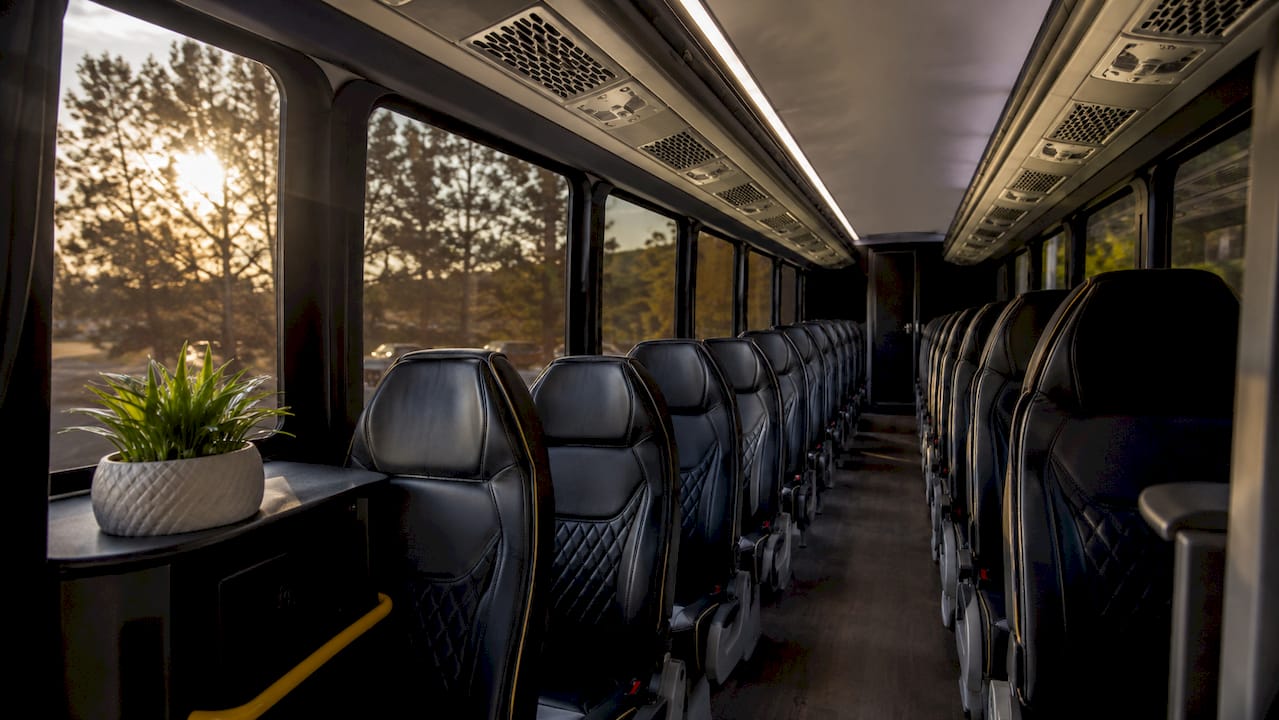
Surface disinfection is the second pillar. Electrostatic sprayers coat high-touch surfaces more evenly than manual wiping because the charged particles wrap around curved surfaces. Electrostatic disinfection with EPA-approved products requires strict contact times of 1–10 minutes to be effective. Skipping dwell time is the most common error operators make, and it renders the entire process ineffective. UV-C disinfection is increasingly used between trips as a supplementary measure, particularly for high-frequency shuttle routes.
Passenger density is the third pillar. During the pandemic, transit operators reduced crowding standards by 69% to 83% to support physical distancing. That level of reduction is rarely practical for private event charters, but planners can still request that operators cap occupancy below the vehicle’s rated maximum. Reviewing bus capacity planning before booking gives you the data to make that call confidently.
Key protocols to confirm with any operator before signing a contract:
- HEPA filtration with documented air change rates
- CO₂ monitoring with cabin alerts
- Electrostatic or UV-C disinfection between trips
- EPA-approved disinfectants with verified dwell times
- Written occupancy limits below the vehicle maximum
- Driver PPE requirements and training records
Pro Tip: Ask the operator for a written log of the last three cleaning cycles, including the disinfectant used and the time the product was left to dwell. If they cannot produce it, that tells you everything you need to know about their standards.
How do bus rentals compare with other group travel options?
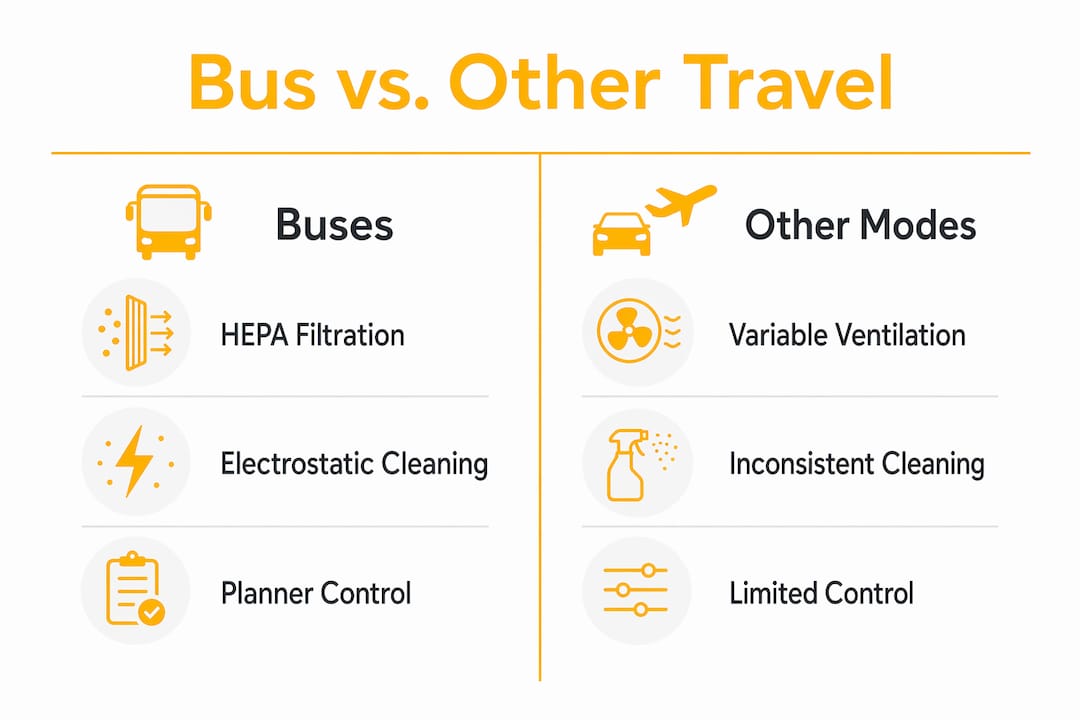
The comparison between buses and other group travel modes is more favourable to buses than most planners expect. Airplanes recirculate cabin air through HEPA filters, but passengers sit in close proximity for extended periods with limited ability to distance. Trains share similar density challenges. Ride-share vehicles have minimal cleaning protocols and no filtration standards. A private charter bus with a verified cleaning protocol and HEPA filtration gives a planner far more control than any of those alternatives.
| Transport mode | Ventilation standard | Cleaning protocol | Density control | Planner control |
|---|---|---|---|---|
| Charter bus | HEPA, 6–20 ACH | Operator-defined, verifiable | High (private booking) | High |
| Commercial flight | HEPA, ~20 ACH | Airline-defined, variable | Low | None |
| Commuter train | Variable, often low | Scheduled, basic | Low | None |
| Ride-share vehicle | None specified | Driver discretion | Very low | None |
| Private car | None specified | Owner discretion | High | Full |
The table makes one thing clear. Charter buses sit in a strong position because the planner controls the booking terms. You can specify cleaning standards, occupancy limits, and mask requirements in the contract. No other group transport mode gives you that level of written accountability.
Layered protection strategies are what separate a low-risk bus journey from a high-risk one. Airflow alone does not eliminate risk. Density alone does not eliminate risk. The combination of good ventilation, reduced occupancy, surface disinfection, and mask compliance is what drives transmission risk down to levels below many indoor venues.
What steps should event planners take before booking?
Planning for covid precautions in group travel starts well before the event date. The most important document to request is the operator’s Contagious Illness Response Plan, often called a CIRS. Bus companies with a formal CIRS include protocols for isolating symptomatic passengers, arranging backup vehicles, and conducting professional sanitisation after a suspected case. Operators without this document are not prepared for a real incident.
A practical pre-booking checklist for planners:
- Request the CIRS in writing. Confirm it includes isolation procedures and backup vehicle arrangements.
- Verify cleaning protocols. Ask for the specific disinfectant product names, application method, and dwell times used between trips.
- Confirm ventilation standards. Ask whether the vehicle uses HEPA filtration and whether CO₂ monitoring is installed.
- Set occupancy in the contract. Specify the maximum number of passengers and confirm it supports adequate spacing between seats.
- Communicate mask requirements to attendees. Send written guidance before the event, not on the day.
- Arrange symptom screening. Decide whether you will conduct a verbal check-in or temperature screening at the boarding point.
- Plan seating assignments. Assigned seats reduce contact tracing complexity if an incident occurs after the event.
Effective covid risk management is a shared responsibility between operators, travellers, and event coordinators. Planners who treat this as the operator’s problem alone will find gaps. The UCLA Institute of Transportation Studies recommends a three-pronged approach: operator hygiene measures, individual passenger responsibility, and broader public health interventions working together.
Pro Tip: Build a one-page rider briefing document that covers mask requirements, hand hygiene stations on the bus, and what to do if a passenger feels unwell mid-journey. Distribute it digitally before the event and post a printed copy at the boarding point.
A bus rental safety checklist tailored to event planners can help you cover all these points systematically before the contract is signed.
How do mask types affect safety on a charter bus?
Mask selection matters more in a confined vehicle than in most indoor settings. N95 and surgical masks reduce airborne virus transmission by up to 70% in shared transport environments. Cloth masks provide meaningful but lower protection, particularly against fine aerosol particles. For high-risk groups or symptomatic passengers, N95 respirators are the standard that public health guidance consistently supports.
Mask effectiveness degrades with time and improper fit. Key points for planners to communicate to attendees:
- Replace masks every 4 hours for maximum filtration efficiency
- Masks must cover both the nose and mouth fully at all times
- Touching the front of the mask and then touching surfaces transfers contamination
- Passengers with symptoms should wear a well-fitted N95, not a cloth mask
- Drivers should wear masks throughout the journey, not only during boarding
Fit is the factor most often overlooked. A mask worn below the nose provides almost no protection. Planners coordinating high-attendance events should consider providing N95 masks at the boarding point rather than relying on attendees to bring their own. The cost per mask is low relative to the risk of a post-event transmission cluster.
Key takeaways
Covid safety in bus rentals requires a layered approach combining HEPA filtration, electrostatic disinfection, reduced occupancy, and consistent mask use to meaningfully reduce transmission risk for group travellers.
| Point | Details |
|---|---|
| HEPA filtration is non-negotiable | Confirm 99.97% efficiency filters and 6–20 air changes per hour before booking. |
| Electrostatic disinfection needs dwell time | EPA-approved disinfectants must remain on surfaces for 1–10 minutes to work. |
| Occupancy limits reduce risk significantly | Operators reduced crowding by 69%–83% during peak pandemic periods. |
| Mask type and fit determine effectiveness | N95 and surgical masks reduce transmission by up to 70%; replace every 4 hours. |
| Planners must request a CIRS | A written Contagious Illness Response Plan confirms the operator is prepared for incidents. |
What I have learned from coordinating covid-safe group transport
Firoz’s perspective:
The single biggest mistake I see planners make is treating covid safety as a checklist to tick off rather than a conversation to have with the operator. A document that says “enhanced cleaning” means nothing without specifics. What product? What dwell time? Who verifies it? When I started asking those questions directly, I quickly learned which operators had genuine protocols and which had marketing language dressed up as policy.
The second thing I have learned is that passenger compliance is harder to manage than operator compliance. You can write mask requirements into the contract and brief attendees in advance, and you will still have people who pull their mask down the moment they settle into their seat. The solution is not enforcement. It is design. Assigned seating, hand sanitiser dispensers at the door, and a brief verbal reminder from the driver at departure all reduce non-compliance without confrontation.
Looking ahead, CO₂ monitoring and UV-C disinfection are becoming standard expectations rather than premium features. Planners who ask about these technologies now are ahead of the curve. The operators who invest in them are signalling something important about their overall approach to passenger safety, and that signal extends well beyond covid.
— Firoz
How Torontobusrentals supports covid-safe group travel in Toronto
Event planners coordinating group transportation in Toronto need a provider who can back up safety claims with specifics, not just assurances.

Torontobusrentals operates a fleet of modern motor coaches equipped for covid-safe group transportation, with professional drivers trained in health and hygiene protocols. Whether you are planning a corporate outing, a conference shuttle, or a multi-stop event programme, Torontobusrentals can confirm cleaning standards, discuss occupancy options, and help you build a transport plan that meets your attendees’ safety expectations. Explore group transportation options or contact the team directly to discuss your event’s specific requirements.
FAQ
What is the most effective covid safety measure in a bus rental?
Layered protection combining HEPA filtration, surface disinfection, reduced occupancy, and consistent mask use is the most effective approach. No single measure alone is sufficient.
How often should a charter bus be cleaned during a multi-day event?
Deep disinfection should occur between each trip or at minimum once daily, with electrostatic spraying and EPA-approved disinfectants applied with full dwell times of 1–10 minutes.
What should I ask a bus rental company about their covid protocols?
Request their Contagious Illness Response Plan, the specific disinfectants they use, their air filtration specifications, and their occupancy limits. Operators with a formal CIRS are significantly better prepared for real incidents.
Are charter buses safer than flights for group travel during covid?
Charter buses give planners direct control over occupancy, cleaning standards, and mask requirements, which commercial flights do not. Well-ventilated buses with layered protocols carry infection risk lower than many indoor venues.
How do I communicate mask requirements to event attendees?
Send written guidance at least 48 hours before the event, specify the mask type required (N95 or surgical), and post a reminder at the boarding point. Providing masks at boarding removes the compliance gap created by attendees who forget or choose not to bring their own.
Recommended
- Bus rental safety checklist for event planners
- Questions to ask bus companies for your 2026 event
- Bus rental safety tips for Toronto events and group travel
- How to assess bus rental quality: a planner’s guide