
Corporate Shuttle Services – Why They Matter in Toronto
Every Toronto event planner has faced the challenge of moving large groups smoothly and safely across the city. Reliable group transportation often becomes a stress point when balancing corporate schedules, attendee comfort, and ever-tightening budgets. A professional corporate shuttle service does more than simply move people—it provides a seamless, comfortable solution that prioritizes passenger safety and efficiency from start to finish.
Table of Contents
- Corporate Shuttle Explained And Common Myths
- Types Of Corporate Shuttle Options Available
- Features, Safety, And Operational Models
- Legal, Insurance, And Compliance Requirements
- Cost Factors, Risks, And Comparison With Alternatives
Key Takeaways
| Point | Details |
|---|---|
| Understanding Corporate Shuttles | Corporate shuttle services are tailored transportation solutions that provide flexibility, comfort, and professional service for businesses, not just simple transit. |
| Debunking Myths | Common misconceptions include the idea that shuttles are only for large corporations or add unnecessary costs; in reality, they benefit events of all sizes while enhancing efficiency and satisfaction. |
| Types of Shuttle Options | Various shuttle types exist, including fixed-route, on-demand, shared, and private services, which can be customized based on event size and budget. |
| Safety and Compliance | Reputable shuttle operators adhere to strict safety protocols and legal requirements, ensuring a safe and reliable transportation experience for passengers. |
Corporate shuttle explained and common myths
A corporate shuttle service is a dedicated transportation solution that moves employees or event attendees between locations on a scheduled or on-demand basis. Unlike traditional transit systems, corporate shuttles cater specifically to business needs, offering flexibility, comfort, and professional service tailored to your event requirements.
Shuttle operators working across Canada transport passengers on set routes and are employed by transit systems and private travel companies. What many people don’t realise is that shuttle operators require extensive training in vehicle operation, passenger safety, and customer service—they’re skilled professionals, not simply drivers.
Understanding What Corporate Shuttles Actually Do
Many event planners assume shuttles only move people from point A to point B. The reality is far broader. Modern corporate shuttle services include:
- Route planning and scheduling tailored to your specific event timeline
- Vehicle maintenance oversight to ensure reliability and safety standards
- Driver training programs covering safety protocols and customer interaction
- Real-time coordination with your event schedule and passenger flow
- Passenger tracking systems for accountability and logistics management
When planning shuttle service for your Toronto corporate events, you’re investing in a comprehensive transportation infrastructure, not just renting a vehicle.
Professional shuttle services extend far beyond simple transit—they handle scheduling, maintenance, training, and safety compliance that keep your corporate event running smoothly.
Common Myths About Corporate Shuttles
Myth 1: Shuttles operate informally without oversight.
This couldn’t be further from the truth. Regulatory frameworks in Canada impose strict obligations on passenger transport including corporate shuttles, focusing on documentation, safety, and compliance standards. Your shuttle service operates under established legal requirements ensuring legitimacy and passenger safety.
Myth 2: Shuttle services are only for large corporations.
Shuttles work for events of any size. Whether you’re transporting 15 people or 150, professional services scale to your needs. Many mid-sized corporate outings benefit significantly from dedicated shuttle arrangements.
Myth 3: You need to hire a shuttle driver as an employee.
Rental services provide fully trained, certified drivers as part of the package. You’re not hiring staff—you’re contracting a complete service solution.
Myth 4: Shuttles add unnecessary cost.
When you factor in parking challenges, employee time savings, and safety improvements, shuttles often reduce overall event costs while boosting attendee satisfaction.
Myth 5: Coordinating shuttles is too complicated.
Professional shuttle services handle coordination entirely. You simply communicate your event details, passenger count, and pickup times. The provider manages routing, scheduling, and driver assignment.
Pro tip: When requesting shuttle quotes, clearly specify your passenger count, pickup locations, timing, and destination—this allows providers to create accurate quotes and logistics plans that actually match your event needs.
Types of corporate shuttle options available
Toronto businesses have multiple shuttle configurations to choose from, each designed for different event scales and transportation needs. The right option depends on your passenger count, distance, frequency, and budget constraints.
Fixed-Route Shuttles
Fixed-route shuttles operate on predetermined paths with scheduled stops, ideal for predictable transportation patterns. These work best for regular commutes or events with consistent passenger locations.
Fixed-route options include:
- Daily employee commutes between office locations
- Campus-to-campus transit for multi-site corporate events
- Airport-to-hotel routes for conference attendees
- Recurring shuttle service between parking areas and event venues
This option provides reliability and cost predictability since routes and schedules remain consistent.
On-Demand Shuttle Services
On-demand shuttles offer flexibility, dispatching vehicles based on real-time passenger requests rather than fixed schedules. Modern shuttle platforms integrate digital booking and automated scheduling to simplify the booking process for employees and event attendees.
On-demand benefits include responsive service, reduced wait times, and the ability to adjust capacity based on actual demand. This works exceptionally well for corporate events where passenger volume fluctuates throughout the day.
Shared Versus Private Shuttle Options
Shared shuttles combine passengers from multiple organisations or events into one vehicle, reducing per-person costs. These suit smaller groups or companies looking to minimise transportation expenses.
Private shuttles dedicate an entire vehicle to your event or organisation exclusively. This option provides complete control over timing, routing, and passenger experience, and works best for larger groups requiring dedicated service.
The choice between shared and private shuttles directly affects both your budget and the level of control you maintain over your transportation logistics.
Vehicle Size Categories
Toronto shuttle services offer various vehicle types to match passenger requirements. Common options include:
- Minibuses (14-22 passengers) for smaller corporate groups and intimate events
- Standard charter buses (35-55 passengers) for mid-sized corporate outings
- Full-size coaches (55+ passengers) for large conferences and major company events
Vehicle selection directly affects pricing, fuel efficiency, and driver requirements. Larger vehicles cost more per rental but reduce per-person transportation costs for sizable groups.
Hybrid Shuttle Models
Many Toronto businesses combine fixed-route and on-demand approaches. Employees might use scheduled morning shuttles to arrive at the office, then request on-demand return trips based on individual schedules.

This hybrid model balances reliability with flexibility, reducing operational complexity whilst accommodating diverse employee preferences.
Here’s a summary comparing key types of corporate shuttle options for business needs:
| Shuttle Type | Best For | Flexibility Level | Typical Passenger Volume |
|---|---|---|---|
| Fixed-route | Daily commutes, large events | Low (set schedule) | High |
| On-demand | Events with shifting needs | High (real-time dispatch) | Medium to High |
| Shared | Budget-focused small groups | Medium (coordinated) | Low to Medium |
| Private | Exclusive corporate events | High (custom routes) | High |
| Hybrid | Mixed office/event patterns | Very High (blended) | Medium to High |
Pro tip: Request quotes from shuttle providers specifying both your minimum and maximum expected passenger counts—this allows providers to recommend the most cost-effective vehicle option and identify opportunities to adjust capacity based on actual attendance.
Features, safety, and operational models
Modern corporate shuttle services combine advanced technology, rigorous safety protocols, and intelligent operational systems to deliver reliable transportation. Understanding these elements helps you evaluate providers and ensure your event receives professional-grade service.
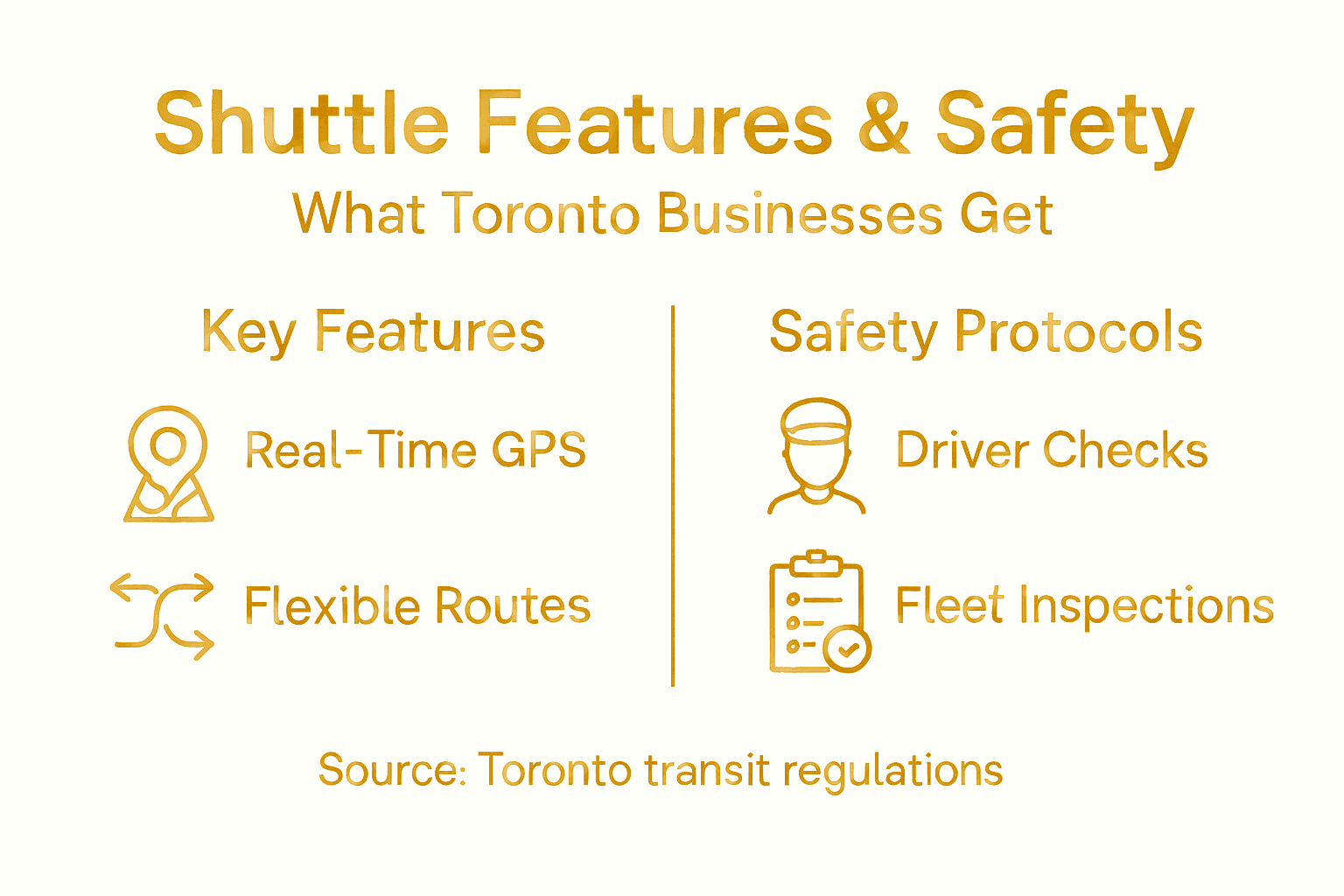
Safety Features and Protocols
Reputable shuttle operators prioritise passenger safety through multiple layers of protection. Driver training programs cover vehicle operation, emergency procedures, and customer service standards. Every driver undergoes background checks and holds current commercial licences.
Key safety features include:
- Real-time vehicle monitoring systems tracking location and performance
- Regular maintenance schedules ensuring mechanical reliability
- Emergency communication systems for immediate incident response
- Passenger restraint systems meeting Canadian safety standards
- Insurance coverage protecting passengers and your organisation
Real-time fleet management and safety protocols form the foundation of successful corporate shuttle operations. These systems enable operators to respond quickly to issues and maintain transparent communication about vehicle status and arrival times.
Operational Models and Technology
Successful shuttle operations rely on precise demand mapping and capacity planning. Operators analyse passenger flow patterns, peak usage times, and route efficiency to optimise schedules and reduce wait times.
Technology integration includes:
- Digital booking platforms for easy passenger reservations
- Automated scheduling systems adjusting routes based on demand
- GPS tracking providing real-time location updates
- Mobile notifications keeping passengers informed
- Data analytics identifying patterns and improvement opportunities
Advanced environmental sensors and monitoring systems enhance both passenger comfort and operational efficiency. These technologies maintain optimal temperature, air quality, and safety conditions throughout each journey.
Passenger Comfort and Accessibility
Modern shuttle services prioritise passenger experience alongside safety and efficiency. Climate control systems maintain comfortable temperatures year-round, critical for Toronto’s variable weather conditions.
Accessibility features ensure all employees and attendees can use shuttle services:
- Wheelchair lifts and securing systems
- Wide aisles accommodating mobility devices
- Accessible seating arrangements
- Audio and visual announcements for route information
- Staff training in passenger assistance
Operational excellence combines safety protocols, technology systems, and passenger comfort into a seamless service experience that builds trust and reliability.
Compliance and Transparency
Toronto shuttle operators maintain compliance with provincial transportation regulations and safety standards. Transparent communication keeps passengers informed about schedules, delays, and service changes.
Operators typically provide:
- Service level agreements defining performance standards
- Regular performance reports tracking reliability metrics
- Feedback channels for passenger concerns and suggestions
- Documentation of maintenance and safety inspections
Pro tip: When evaluating shuttle providers, request their safety certifications, driver training documentation, and real-time tracking capabilities—these demonstrate commitment to operational excellence and passenger protection.
Legal, insurance, and compliance requirements
Corporate shuttle services operate within a regulated framework designed to protect passengers, operators, and organisations. As an event planner, understanding these requirements helps you select compliant providers and mitigate liability risks.
Federal Transportation Regulations
Transport Canada administers federal transportation acts and regulations that govern shuttle operations across Canadian jurisdictions. These regulations mandate compliance with vehicle safety standards, driver licensing requirements, and operational permits.
Key regulatory areas include:
- Vehicle safety inspections and mechanical standards
- Driver licensing and training certifications
- Operational permits for commercial transportation
- Passenger safety protocols and emergency procedures
- Record-keeping and documentation requirements
Reputable shuttle providers stay current with federal requirements and maintain documentation proving compliance. When evaluating providers, ask to see their regulatory certifications and permits.
Insurance Coverage Requirements
Comprehensive insurance protection is non-negotiable in corporate shuttle operations. Operators must carry sufficient coverage to protect passengers, employees, and your organisation from financial liability.
Essential insurance components include:
- Commercial general liability coverage
- Vehicle liability insurance meeting provincial minimums
- Passenger accident and injury protection
- Workers’ compensation for shuttle staff
- Contingency coverage for equipment failure
Insurance compliance requires continuous policy review and regular audits to align with federal and provincial requirements. Safety managers conduct regular reviews ensuring coverage remains adequate and current.
Provincial and Local Compliance
Ontario imposes additional requirements beyond federal regulations. Shuttle operators must register with the appropriate provincial authority and maintain current documentation.
Provincial requirements typically cover:
- Vehicle registration and inspection certificates
- Driver abstract verification from the Ministry of Transportation
- Commercial transportation licensing
- Passenger manifest documentation
- Insurance proof and coverage limits
Toronto municipal bylaws may impose additional restrictions on routes, scheduling, or parking. Professional providers understand these local requirements and plan accordingly.
Compliance isn’t bureaucratic overhead—it’s the foundation ensuring your shuttle service protects passengers legally and financially.
What You Should Request From Providers
Before booking any shuttle service, obtain written confirmation of compliance status. Request documentation including:
- Current operating permits and licences
- Proof of commercial insurance with adequate liability limits
- Driver training and certification records
- Vehicle safety inspection certificates
- Accident history and claims information
- References from other corporate clients
Reputable providers willingly share this documentation. If a provider resists or cannot provide proof of compliance, that’s a major red flag.
Your Organisation’s Liability
Your company has responsibility for ensuring the shuttle provider meets legal and safety standards. Require signed agreements specifying insurance coverage, liability allocation, and safety protocols.
Document all communications, agreements, and provider certifications for your records. This protects your organisation if issues arise during the event.
Pro tip: Request a Certificate of Insurance from your shuttle provider at least two weeks before your event, specifying your organisation as “additional insured”—this formal documentation protects both parties and demonstrates professional compliance.
Cost factors, risks, and comparison with alternatives
Corporate shuttle costs vary significantly based on operational factors, and understanding pricing helps you budget accurately. Comparing shuttles with alternatives reveals trade-offs between cost, reliability, and employee satisfaction.
Understanding Shuttle Pricing
Cost factors for corporate shuttle services include vehicle type, capacity, service frequency, route length, and driver labour costs. Fuel expenses, maintenance, and operational hours directly impact final pricing.
Key pricing variables:
- Vehicle size affects both rental cost and per-person expense
- Service frequency (daily, weekly, or event-based) determines labour costs
- Route length and complexity impact fuel and scheduling
- Driver wages vary by market conditions and experience levels
- Scheduling changes or extended hours typically incur additional fees
Larger vehicles reduce per-person costs but require higher minimum commitments. Efficient route planning and demand management can significantly optimise overall expenses.
Fixed Versus Variable Costs
Fixed costs include vehicle rental, driver salaries, and insurance regardless of actual ridership. These remain constant whether you transport 20 or 50 passengers per trip.
Variable costs fluctuate based on usage including fuel consumption, maintenance frequency, and overtime labour. Understanding this distinction helps you forecast accurate budgets and identify cost-saving opportunities.
Comparing Shuttles With Public Transit
Comparing corporate shuttles with public transit reveals significant trade-offs. Public transit generally costs employers less per capita, but shuttles offer superior reliability and tailored schedules.
Public transit advantages:
- Lower per-person cost structure
- Established routes and infrastructure
- Reduced administrative burden
- No scheduling management required
Shuttle advantages:
Use this table to better understand how corporate shuttles compare to public transit for workplace events:
| Aspect | Corporate Shuttle | Public Transit |
|---|---|---|
| Schedule Control | Full customisation | Pre-set, limited |
| Branding Opportunity | Yes (custom signage) | None |
| Rider Satisfaction | High (tailored service) | Variable |
| Cost Predictability | Consistent, per contract | Variable by ridership |
| Direct-to-Event Venue | Always possible | Rarely possible |
- Predictable, reliable service aligned with your event
- Customised routes matching your specific needs
- Higher employee and attendee satisfaction
- Professional branding and experience
- Direct control over service quality
The choice between shuttles and public transit depends on your priority: minimising cost or maximising control, comfort, and employee experience.
Risks and Hidden Costs
Shuttle programs carry operational risks worth considering. Underutilisation occurs when reserved capacity exceeds actual demand, inflating per-person costs.
Common hidden costs include:
- Premium charges for schedule changes or last-minute requests
- Extended hour surcharges beyond standard operating times
- Parking or toll fees at event venues
- Contingency vehicle rentals if primary shuttle fails
- Staff overtime for event day coordination
Risk mitigation requires accurate passenger forecasting and realistic scheduling. Build contingency into your budget for unexpected changes.
ROI and Value Calculation
Calculate shuttle ROI by measuring time savings, parking expense reduction, and improved employee satisfaction. One hour of shuttle-provided commute time equals two hours of productivity gained (since employees avoid driving stress).
Quantifiable benefits include:
- Reduced parking expenses at event venues
- Employee time savings versus individual transportation
- Lower accident and liability risk
- Improved event logistics and attendee flow
- Enhanced company reputation and brand experience
Pro tip: Request itemised quotes from at least three shuttle providers breaking down costs by vehicle type, fuel, labour, and insurance—this transparency enables accurate comparison and reveals which provider offers genuine value for your specific event requirements.
Discover Reliable Corporate Shuttle Solutions for Your Toronto Event
Managing corporate shuttle services comes with unique challenges like ensuring safety compliance, precise scheduling, and delivering a seamless passenger experience. If you are looking to overcome these hurdles with professional support, our extensive fleet and expertly trained drivers are ready to provide the tailored transportation your business needs. We understand the importance of reliable routing, real-time coordination, and passenger comfort to enhance your corporate events.

Get ahead of event day logistics today by exploring our customized bus rental services at Toronto Bus Rentals. From on-demand to fixed-route shuttle options, you will find flexible solutions that match your group size and schedule. Don’t leave your employee and attendee transportation to chance. Contact us now to secure a safe, efficient, and comfortable shuttle service designed exclusively for Toronto corporations.
Frequently Asked Questions
What are corporate shuttle services?
Corporate shuttle services are dedicated transportation solutions that move employees or event attendees between locations on a scheduled or on-demand basis. They provide flexibility, comfort, and service tailored to business needs.
How do fixed-route shuttles differ from on-demand shuttle services?
Fixed-route shuttles operate on predetermined paths with scheduled stops, making them ideal for predictable transportation patterns, while on-demand shuttles offer flexibility by dispatching vehicles based on real-time passenger requests.
What safety measures do corporate shuttle services implement?
Reputable corporate shuttle operators prioritize passenger safety through rigorous driver training, regular vehicle maintenance, real-time vehicle monitoring, and compliance with safety protocols and insurance coverage requirements.
How can corporate shuttle services benefit my business events?
Corporate shuttle services can enhance employee satisfaction, streamline transportation logistics, reduce parking challenges, and ultimately save costs by efficiently managing transport needs for various event sizes.
Recommended
- Shuttle Service: Enhancing Corporate Events in Toronto
- Wedding Shuttles: Enhancing Toronto Event Logistics
- Master the Wedding Shuttle Booking Process in Toronto
- Group Transportations & Shuttle Services | Toronto Bus Rentals