
How bus rentals save costs for Toronto events: 2026 guide
TL;DR:
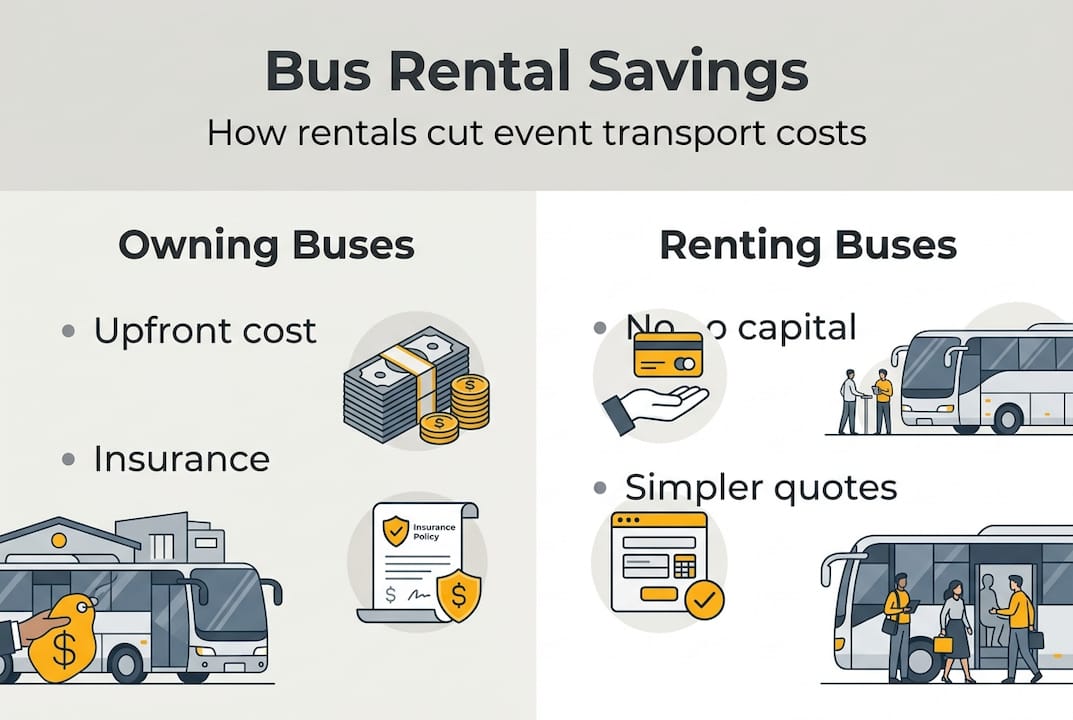
- Owning or managing vehicles can cost over $73,000 annually, while rentals are per-trip only.
- Bus rentals offer the best value for groups of 20 or more, reducing per-person costs significantly.
- Confirm all inclusions and book early to maximize savings and avoid unexpected charges.
When you’re coordinating group transport in Toronto, the real costs are rarely what they appear at first glance. Most event planners, school administrators, and corporate teams focus on the sticker price of a rental quote and miss the full financial picture hiding behind individual car trips, taxi tabs, and self-managed fleets. The truth is that owning or coordinating vehicles separately can quietly drain budgets through insurance, maintenance, driver wages, and downtime. This guide breaks down exactly how bus rentals compare to the alternatives, when they deliver the strongest return, and how you can structure your next booking to get the most value possible.
Table of Contents
- The true costs of owning vs. renting group transportation
- Why bus rentals maximise value for larger groups
- Unpacking what’s included in your rental price
- How to maximise cost savings when renting buses in Toronto
- What most people get wrong about bus rental savings
- Ready to cut group transport costs? See your Toronto bus rental options
- Frequently asked questions
Key Takeaways
| Point | Details |
|---|---|
| Major cost reduction | Bus rentals shift operational expenses like insurance and maintenance to the provider, saving schools and businesses thousands each year. |
| Best for large groups | Rentals become notably more affordable per passenger when moving 20 or more people together in Toronto. |
| All-in-one pricing | Most rental fees in Toronto cover the driver, insurance, fuel, and support, avoiding hidden expenses common with owned fleets. |
| Plan ahead for savings | Booking early, consolidating group size, and checking all inclusions are keys to maximizing cost savings on bus rentals. |
The true costs of owning vs. renting group transportation
Most organisations that manage their own fleet believe they’re saving money. They’re often not. When you add up every cost category tied to owning a single 46-passenger coach, the numbers shift quickly. Purchase or lease payments, routine maintenance, annual insurance premiums, fuel, parking at your facility, and full-time driver wages can combine to reach well over $15,000 per year before you’ve moved a single passenger.
Renting flips this model entirely. As noted in research on bus ownership costs, no upfront capital is required when you rent, and maintenance, insurance, and driver labour all shift to the provider. That single fact changes the entire financial equation for schools and businesses that only need group transport a few times per year.
| Cost category | Annual ownership estimate | Annual rental estimate |
|---|---|---|
| Vehicle purchase/lease | $12,000 | $0 |
| Maintenance and repairs | $4,500 | $0 |
| Insurance | $3,200 | $0 |
| Fuel | $6,000 | Included |
| Driver wages | $45,000+ | Included |
| Parking and storage | $2,400 | $0 |
| Total | $73,000+ | Per-trip fee only |
The contrast is stark. And this table doesn’t even account for unexpected breakdowns, compliance inspections, or the administrative time your staff spends managing logistics.
Hidden ownership costs worth knowing:
- Unplanned repairs that ground your vehicle during a critical event
- Regulatory compliance including emissions testing and safety inspections
- Depreciation that erodes asset value every year
- Liability exposure if your driver is involved in an incident
- Staff time spent scheduling, dispatching, and managing the vehicle
Pro Tip: Before comparing quotes, calculate your true cost per trip by dividing all annual ownership expenses by the number of trips you actually take. Most organisations are shocked to discover bus rental cost savings are far greater than they assumed.
Now that you understand the big picture, let’s look at how group size shapes the value equation.
Why bus rentals maximise value for larger groups
Understanding the cost breakdowns, let’s explore why group size plays a crucial role in your true savings. The per-person cost of transportation drops dramatically as your group grows, and this is where bus rentals genuinely shine.
For a group of eight people, you might comfortably fit into two large vans. The economics are reasonable. But once you’re moving 20 or more people, the calculus changes fast. Coordinating multiple vehicles means multiple drivers, multiple fuel costs, multiple insurance policies, and the very real risk that someone arrives late or gets lost entirely.
| Group size | Bus rental cost per person | Multiple vans/taxis per person |
|---|---|---|
| 8 passengers | $28–$40 | $18–$25 |
| 20 passengers | $14–$22 | $30–$45 |
| 46 passengers | $9–$15 | $38–$60 |
The crossover point is clear. For groups under 15, charter bus rental cost comparisons show that smaller groups save less, while groups of 20 or more consistently see stronger savings even during peak seasons. This is the threshold where a single motor coach becomes the obvious financial choice.
Steps to assess whether a rental makes sense for your group:
- Count confirmed attendees, not estimated ones. Overestimating inflates your per-person cost.
- Price out the alternatives including taxis, rideshare, and van rentals for the same route.
- Factor in coordination time and the risk of stragglers or no-shows affecting multiple vehicles.
- Check seasonal pricing since summer and holiday periods affect availability and rates.
- Request a consolidated quote that includes all fees so you’re comparing apples to apples.
The private bus benefits for school trips and corporate outings go beyond cost too. Keeping your group together improves punctuality, reduces liability, and eliminates the logistical headache of coordinating arrivals across multiple vehicles. For sports teams specifically, the team bus rental benefits include equipment storage and schedule flexibility that no rideshare option can match.

Pro Tip: Book at least six to eight weeks ahead for large events. Peak season demand in Toronto fills up quickly, and early bookings often come with better rate options and guaranteed vehicle availability.
Unpacking what’s included in your rental price
Once you determine if your group size qualifies, it’s vital to understand what you’re really paying for in a bus rental contract. A rental quote isn’t just a number. It represents a bundle of services that would cost you significantly more if you sourced each one independently.
Here’s what a standard Toronto bus rental typically covers and what each element would cost if managed separately:
- Professional driver: Hiring a licensed commercial driver independently costs $25–$45 per hour plus benefits
- Vehicle insurance: Commercial fleet insurance runs $3,000–$6,000 annually per vehicle
- Routine maintenance: Scheduled servicing, tyre checks, and safety inspections average $4,000+ per year
- Fuel: Diesel costs for a full-day coach trip can reach $150–$300 depending on distance
- Dispatch and administrative support: Coordinating routes, timing, and logistics takes staff hours
- Vehicle compliance: Safety certifications and regulatory requirements are handled by the provider
When you add these up, fleet ownership expenses can reach $8,000–$20,000 in annual upkeep per bus before driver wages are even considered. A rental consolidates all of this into one predictable, manageable fee.
Understanding the full scope of rental cost factors helps you evaluate quotes accurately. A lower quote that excludes fuel or driver overtime isn’t actually cheaper. Always read the fine print before signing.
Refer to a solid bus rental event guide to understand what questions to ask before committing to any contract.
Pro Tip: Always confirm in writing whether tolls, venue parking fees, and overtime hours beyond the agreed schedule are included. These three items are the most common sources of surprise charges on final invoices.
How to maximise cost savings when renting buses in Toronto
With a clear understanding of what you’re getting, here’s how to ensure you get the very best value from your Toronto bus rental.
Steps to reduce your total rental cost:
- Consolidate your group into one vehicle wherever possible. Splitting into two smaller buses almost always costs more than one appropriately sized coach.
- Book outside peak periods when you can. Spring graduations, summer festivals, and December holiday parties all drive up demand and pricing.
- Request multiple quotes and compare them line by line, not just the bottom number.
- Clarify every fee upfront including gratuity expectations, overtime rates, and any fuel surcharges.
- Ask about discounts for schools, non-profits, or multi-day bookings. Many providers offer these but don’t advertise them prominently.
Common mistakes that lead to unnecessary costs:
- Booking too late and accepting whatever’s available at a premium rate
- Underestimating your group size and needing to upgrade last minute
- Ignoring the contract details and getting hit with overtime or parking fees
- Choosing the cheapest quote without verifying what’s actually included
- Failing to confirm the route in advance, leading to inefficient detours
Even during peak seasons, charter bus price strategies confirm that group rentals remain economical compared to coordinating multiple vehicles for 20 or more passengers.
Using a detailed bus rental checklist before you book can prevent most of these mistakes. It takes 20 minutes of preparation to avoid hours of frustration and hundreds of dollars in avoidable charges. For a full walkthrough of the planning process, the seamless bus event planning guide covers every stage from initial quote to post-event debrief.
Pro Tip: Schools and registered non-profits should always ask directly about reduced rates. Many Toronto providers offer 10–15% discounts for qualifying organisations that simply never ask.
What most people get wrong about bus rental savings
Let’s step back and look at what many Toronto organisations overlook when it comes to transportation costs. The most common mistake isn’t choosing the wrong vehicle size or booking at the wrong time. It’s treating the cheapest quote as the best value.
A low quote that comes with an unreliable vehicle, an inexperienced driver, or gaps in insurance coverage can cost you far more than the savings suggest. One cancelled trip, one delayed departure during a corporate event, or one incident without proper liability coverage can wipe out months of budget discipline in a single afternoon.
There’s also the hidden cost of administrative burden. When your staff is spending hours coordinating transport logistics, chasing down drivers, and managing last-minute changes, that labour has real dollar value. Professional rental providers absorb all of that. The team rental benefits go well beyond the vehicle itself.
Toronto-specific factors matter too. Downtown traffic patterns, restricted loading zones, and local insurance requirements all affect total cost in ways that out-of-province or inexperienced providers may not account for. Working with a provider who knows the city isn’t a luxury. It’s a practical cost-control measure.
Ready to cut group transport costs? See your Toronto bus rental options
If you want to stop guessing on group transportation costs, here’s where to start. The strategies in this guide only deliver results when you apply them to the right rental partner.

Explore what a motor coach for group events actually includes and how it compares to the alternatives you may be considering. If you’re coordinating a workplace outing, the step-by-step process for renting a bus for a corporate outing makes the booking process straightforward. And if you’re weighing the broader business case, the full breakdown of corporate bus rental benefits gives you the data to make a confident decision. Request a quote today and see exactly what your group’s transport should actually cost.
Frequently asked questions
What costs do bus rentals eliminate?
Bus rentals remove the need for upfront vehicle purchases, ongoing maintenance, insurance, and hiring dedicated drivers, since all these expenses shift to the provider under a standard rental agreement.
Are bus rentals cheaper for small groups?
Bus rentals make the most financial sense for groups of 20 or more; for smaller groups under 15, vans or carpools may offer a lower per-person cost.
What is typically included in a Toronto bus rental quote?
Most quotes cover the driver, fuel, maintenance, and standard insurance, though tolls, venue parking, and overtime hours may be billed separately, so always confirm inclusions before signing.
How can event planners save more when booking bus rentals?
Book early, consolidate all passengers into one vehicle, and ask directly about school or non-profit discounts, since peak season demand in Toronto moves fast and early bookings typically secure better rates.
Recommended
- Bus rental cost factors explained for Toronto events 2026
- Why bus rentals are essential for Toronto events: Cost, ease, safety
- Master bus rentals for seamless event transport in Toronto
- What Is Bus Rental and Why It Matters in Toronto
- How to schedule event shuttles efficiently: step-by-step