
Bus rental safety tips for Toronto events and group travel
TL;DR:
- Choosing a licensed, insured, and well-maintained bus operator is essential for safety.
- Modern buses with safety features like seatbelts and ABS reduce accident risks.
- Confirm driver qualifications, conduct pre-trip checks, and follow contingency plans to ensure safe group travel.
When you’re responsible for moving a group of people safely across Toronto, the pressure is real. Whether you’re coordinating a school field trip, a corporate outing, or a wedding shuttle, the stakes are high and the margin for error is slim. Bus travel is statistically very safe, with motorcoach fatalities representing less than 0.1% of all highway fatalities nationwide, making it one of the most reliable forms of group transport available. But that safety record only holds when you choose the right operator, ask the right questions, and prepare thoroughly before your group boards.
Table of Contents
- How to evaluate bus rental safety for Toronto events
- Must-have safety features for your rental bus
- How to assess driver qualifications and training
- Pre-trip safety checklist for event planners
- Why small details make the difference in group travel safety
- Stay safe and streamline your next event with Toronto Bus Rentals
- Frequently asked questions
Key Takeaways
| Point | Details |
|---|---|
| Safety is the starting point | Check licensing, insurance, and operator references before booking any Toronto bus rental. |
| Request essential features | Insist on seatbelts, inspection reports, and well-trained drivers for every trip. |
| Do a pre-trip check | Walk through emergency equipment and protocols with your group before departure. |
| Plan for the unexpected | Have contact numbers and backup procedures ready to keep group travel stress-free and safe. |
How to evaluate bus rental safety for Toronto events
With safety as your top priority, let’s break down exactly what you should look for when considering a bus rental company. Not all operators are equal, and in a city as busy as Toronto, the range of quality can be wide.
The foundation of any safe bus rental starts with four non-negotiables: valid licensing, documented maintenance records, adequate insurance coverage, and verified driver qualifications. A company that hesitates to share any of these is a company worth avoiding. Public transit and buses present the lowest risk mode of group travel precisely because reputable operators follow strict regulatory frameworks. Your job as a planner is to confirm those frameworks are actually being followed.
Here’s a quick comparison of travel modes to put bus safety in perspective:
| Travel mode | Relative fatality risk | Best suited for |
|---|---|---|
| Motorcoach bus | Very low | Large groups, long distances |
| Private car | Moderate to high | Small groups, short trips |
| Commercial airline | Low | Long-distance travel |
| Rideshare/taxi | Moderate | Individuals, small groups |
| Train | Low | City to city travel |
When screening Toronto bus operators, watch for these red flags:
- No proof of insurance or reluctance to provide a certificate
- Unlicensed vehicles or drivers without a valid commercial licence
- No maintenance records available upon request
- Vague answers about accident history or safety audits
- No written contract or terms of service
Understanding the bus rental benefits for Toronto events goes beyond just convenience. A vetted operator brings regulatory compliance, professional standards, and accountability that private arrangements simply cannot match.
Pro Tip: Call the company directly before booking and ask how recently their fleet was inspected. A confident, specific answer tells you a lot about how seriously they take safety. A vague or defensive response is a warning sign.
Must-have safety features for your rental bus
After understanding the safety standards to look for, the next step is to focus on the specific features that will keep your guests protected. Not every bus is built the same, and the features onboard can make a meaningful difference in an emergency.
Buses account for only 0.6% of total vehicle miles travelled but maintain a remarkably low proportion of highway fatalities. That record is supported by the safety technology built into modern motorcoaches. When evaluating a rental, ask specifically about the following features:
- Seatbelts on every seat: This is non-negotiable for school trips and strongly recommended for all group travel.
- Anti-lock braking system (ABS): Prevents wheel lockup during hard stops, especially critical on wet Toronto roads in autumn and winter.
- GPS tracking: Allows the operator to monitor the vehicle in real time and respond quickly to route changes or emergencies.
- Electronic stability control: Reduces the risk of rollovers, which are the most serious type of bus accident.
- Emergency exits: Must be clearly marked, unobstructed, and functional.
- First aid kit and fire extinguisher: Should be onboard and accessible at all times.
- Accessibility features: Ramps or lifts for guests with mobility needs, and securement systems for wheelchairs.
Here’s a summary of key features and why they matter:
| Safety feature | Why it matters | Ask the operator |
|---|---|---|
| Seatbelts | Reduces injury in collisions | Are all seats equipped? |
| ABS brakes | Improves stopping control | Confirmed on all fleet vehicles? |
| GPS tracking | Real-time monitoring | Live or logged? |
| Emergency exits | Critical evacuation route | When were they last tested? |
| First aid kit | Immediate medical response | Stocked and current? |
| Wheelchair accessibility | Inclusive, safe travel | Available on requested vehicle? |
“A bus with the right safety features is only as safe as the operator who maintains them. Always request a recent inspection report before you commit to a booking.”
Reviewing the bus rental safety features offered by your provider is not an optional step. It is the difference between a smooth event and a liability situation you never want to face. Ask for the most recent mechanical inspection report in writing. Reputable companies will have this ready without hesitation.
How to assess driver qualifications and training
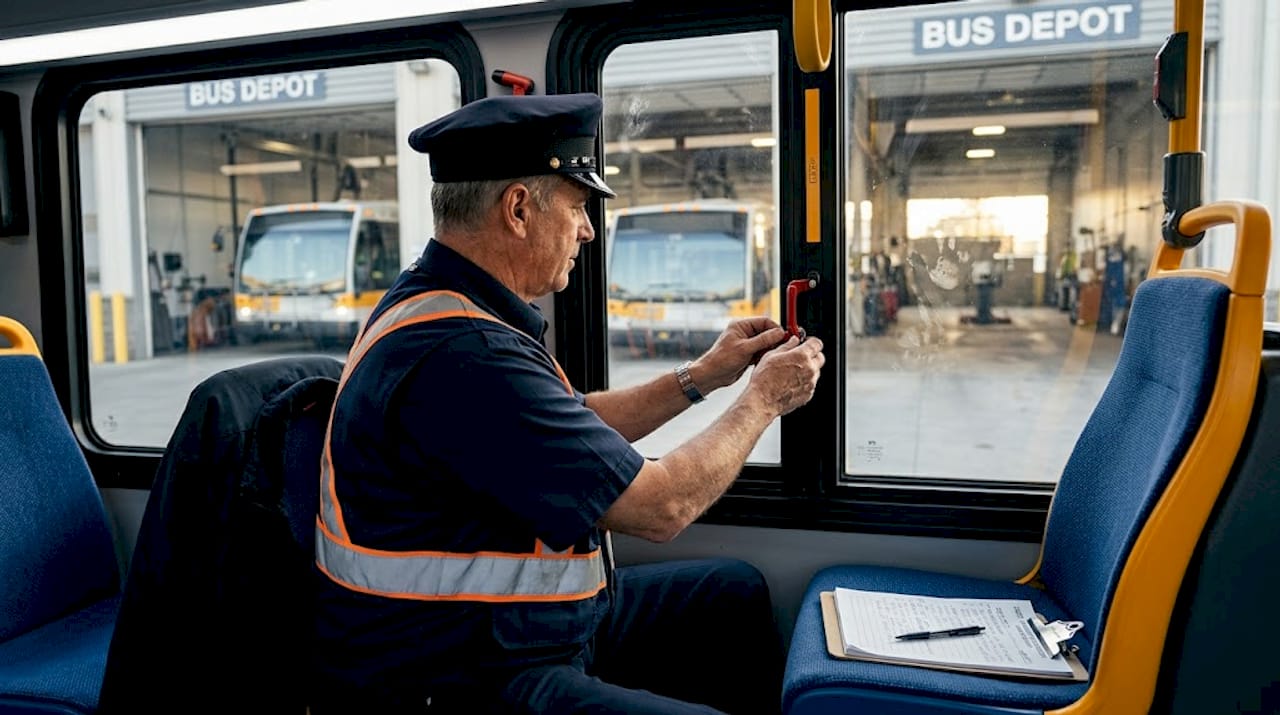
Once you’ve clarified a bus’s safety features, the next layer is the expertise of the person behind the wheel. A well-maintained bus with a poorly trained driver is still a risk. The driver is your most important safety variable.
Professional, licensed bus drivers are critical to maintaining low crash rates across the motorcoach industry. In Ontario, commercial bus drivers must hold a valid Class B or Class C licence depending on the size of the vehicle and the number of passengers. But a licence alone is not enough. You want a driver with recent experience, a clean abstract, and ongoing training.
Here’s how to assess driver qualifications before you book:
- Ask for the driver’s licence class and confirm it matches the vehicle. A Class B licence is required for buses carrying more than 24 passengers. Don’t assume this is automatically in order.
- Request a driver abstract or confirmation that one has been reviewed. This document shows the driver’s history of violations, suspensions, and demerit points.
- Ask about background checks. For school trips especially, drivers should have passed a criminal record check.
- Inquire about ongoing training. The best operators put their drivers through regular safety refreshers, defensive driving courses, and customer service training.
- Confirm the driver’s familiarity with your route. A driver who knows Toronto’s traffic patterns, construction zones, and seasonal road conditions is a genuine asset.
- Get the driver’s contact number. You should be able to reach your driver directly on the day of the event, not just through a dispatcher.
Choosing professional bus drivers for safety is especially important for school field trips, where duty of care is paramount. If you’re comparing providers and want to understand your options more broadly, reviewing driver certification alternatives can help you benchmark what a quality operator looks like.
Pro Tip: Ask the company, “What happens if our assigned driver is unavailable on the day?” A strong operator will have a clear protocol for backup drivers who meet the same qualification standards. If they don’t have an answer, that’s a gap in their operations.
Pre-trip safety checklist for event planners
Knowing what to look for in advance makes for a smooth travel day. Here’s a checklist to follow before your group boards the bus. Even if you’ve worked with a company before, run through this every single time. Complacency is where things go wrong.
Following best practices before group departure enhances overall safety for all passengers, regardless of trip length or group size. A five-minute check before boarding can prevent hours of problems.
- Verify credentials and insurance on the day. Don’t rely solely on documents provided at booking. Confirm the driver has their licence on them and that the vehicle’s insurance and registration are current.
- Inspect the exterior of the bus. Look for visible damage to tyres, lights, mirrors, and the body of the vehicle. If something looks wrong, say so.
- Check emergency exits. Open each emergency exit to confirm it functions. Make sure the path to each exit is clear and unobstructed.
- Locate the first aid kit and fire extinguisher. Know where they are and confirm they are accessible.
- Brief your group on safety rules. Before departure, let passengers know the seatbelt policy, the no-standing rule while moving, and what to do in an emergency.
- Review the evacuation procedure. Point out the exits and give a brief verbal walkthrough. This takes two minutes and can save lives.
- Confirm communication contacts. Have the bus company’s dispatch number, the driver’s mobile number, and local emergency services saved and accessible.
- Do a headcount before departure and after each stop. This sounds basic, but it’s the kind of detail that gets skipped under pressure.
Reviewing the safety checks for rental buses your provider recommends can also give you a sense of how seriously they take pre-trip preparation. A company that has its own checklist is a company that has thought carefully about risk.
Why small details make the difference in group travel safety
Having covered the concrete steps, let’s reflect on where most planners struggle, and how to turn minor checks into major peace of mind.
Here’s an uncomfortable truth: the majority of close calls in group travel don’t happen because of catastrophic mechanical failure or reckless driving. They happen because someone assumed someone else had handled a small detail. The driver assumed the planner had briefed the group. The planner assumed the company had inspected the vehicle. The company assumed the driver had checked the tyres. That chain of assumptions is where risk lives.
Even experienced event coordinators can overlook seemingly minor things, like confirming that seatbelts are actually being worn, not just available. Or knowing the driver’s direct mobile number rather than only having the office line. These are the details that feel trivial until they aren’t.
Overconfidence is genuinely the enemy of safe group travel. The planners who run the smoothest events are almost always the ones who double-check things they’ve checked a hundred times before. They run a dry run of the route when possible. They confirm the pickup location the evening before. They have a backup plan for a late bus, a missed passenger, or a sudden road closure on the Gardiner.
Top-performing events also have contingency plans in place before departure. What happens if the bus breaks down en route? Who contacts the passengers’ families? Is there a backup vehicle arrangement? These aren’t paranoid questions. They are the mark of a meticulous planner who understands that reliability is built on preparation, not luck.
Using a structured bus rental planner checklist is one of the most effective ways to build that preparation into your process. It also builds trust with your clients and guests. When people see that you’ve thought through every detail, they relax. And a relaxed group is a safer, more enjoyable group to transport.
Taking these so-called minor steps doesn’t just protect your passengers. It protects your reputation as a planner who delivers events that go right, every time.
Stay safe and streamline your next event with Toronto Bus Rentals
When you’re ready to make your next event as safe and seamless as possible, our team is here to help. At Toronto Bus Rentals, we’ve built our entire operation around the safety standards and professional practices covered in this article. Every vehicle in our fleet undergoes regular mechanical inspection, and every driver holds the appropriate commercial licence with a verified clean driving record.

Whether you need school bus rentals for a field trip, minibus rental options for a corporate outing or wedding party, or full-scale group transportation services for a large event, we have the right vehicle and the right team for the job. Our staff can assist with route planning, accessibility requirements, and any special considerations your event demands. Reach out today to get a quote and experience what safety-first group travel actually looks like in practice.
Frequently asked questions
How do I verify that a Toronto bus company is properly licensed and insured?
Ask the company to provide their commercial vehicle operator registration, insurance certificate, and references from recent corporate or school clients. Licensing, maintenance, insurance, and driver qualifications are the four pillars of a safe, credible operator.
What emergency measures should I review on the bus before departure?
Confirm working seatbelts, the location and condition of emergency exits, the onboard first aid kit, and review the evacuation procedure with passengers before the bus moves. Safety records and emergency preparedness features should be documented and available from your provider.
Are buses really safer than private cars for group events?
Yes, motorcoaches have much lower crash rates and fatality rates compared to private vehicles and airlines, making them the statistically safest choice for moving groups of people.
Can I request specific safety features like seatbelts or accessible buses?
Yes, reputable providers will outline available safety and accessibility features at the time of booking. Always verify availability when you enquire and ask about any additional charges for specialised equipment like wheelchair ramps or securement systems.
Recommended
- Why rent buses in Toronto for smoother group travel
- Bus rentals for Toronto events: Cost, comfort, reliability
- What Is Bus Rental and Why It Matters in Toronto
- Bus rental safety in Toronto: What event planners need to know