
Bus rental safety in Toronto: What event planners need to know
TL;DR:
- Ontario bus rental safety depends on CVOR ratings, inspections, and safety technology compliance.
- Modern buses are equipped with seatbelts, stability control, ELDs, and accessible features for passenger safety.
- Due diligence includes reviewing operator records, inspecting vehicle safety features, and confirming accessibility and winter readiness.
Most event planners assume that if a bus shows up clean and on time, it must be safe. That assumption can lead you into serious trouble. In Ontario, bus rental regulations are detailed, inspection schedules are strict, and safety technology requirements have grown significantly in recent years. Yet not every operator meets these standards equally. Whether you’re coordinating a corporate outing, a charity gala shuttle, or a multi-stop conference run, understanding what separates a truly safe rental bus from a risky one is essential. This guide walks you through Ontario compliance rules, onboard safety features, accessibility requirements, and practical steps to verify operator quality before you sign any contract.
Table of Contents
- Understanding Ontario bus safety regulations
- Essential safety features on modern rental buses
- Accessibility and special considerations for safe group transport
- How to verify bus operator safety and maintenance in Toronto
- Why focusing on bus safety transforms event outcomes
- Find Toronto bus rentals that put your group’s safety first
- Frequently asked questions
Key Takeaways
| Point | Details |
|---|---|
| Check CVOR ratings | Insist on proof of safety rating for any Toronto bus rental to prioritise group security. |
| Inspect for modern safety gear | Seatbelts, ELDs, and emergency equipment are non-negotiable features for safe group travel. |
| Confirm accessibility features | Ensure every guest can board and ride safely with accessibility-compliant buses. |
| Always verify maintenance | Ask for up-to-date inspection and maintenance records to reduce breakdown risks. |
| Adapt for Toronto weather | Winter group events need buses prepped for snow, including chains or rated tires. |
Understanding Ontario bus safety regulations
The foundation of bus rental safety in Ontario sits in the CVOR system. CVOR registration is mandatory for all commercial bus operators in Ontario, and each company receives a public safety rating based on their collision history, conviction records, and inspection results. Think of a CVOR abstract like a credit score for bus companies. A low score signals patterns of unsafe behaviour or poor maintenance. A strong score indicates a well-run operation.
When you’re planning charter bus planning in Toronto for a major event, checking a company’s CVOR rating takes about five minutes and can tell you more than any polished website or sales pitch. CVOR ratings are publicly available online, so there’s no need to simply take a rental company’s word for their safety record.
Ontario law also sets clear inspection requirements for commercial buses:
- Under-vehicle inspections are required every 30 days or 12,000 km, whichever comes first. These checks cover brakes, suspension, and undercarriage components.
- Semi-annual full inspections are required twice per year and cover all mechanical systems including lighting, steering, and emission controls.
- Driver pre-trip inspections are also required before each journey, covering tyres, mirrors, and safety equipment.
Reputable companies maintain full documentation of every inspection. If you’re researching group travel bus rental options and a company hesitates when you ask for inspection records, that hesitation is your answer.
At the federal bus safety standards level, Transport Canada oversees broader commercial vehicle safety programmes that Ontario regulations align with closely.
“Always request a CVOR abstract and review operator ratings before committing to any bus rental company for your event.”
With regulations serving as the foundation, it’s important to know which onboard safety features are now required and why.
Essential safety features on modern rental buses
Modern motorcoaches in 2026 are meaningfully safer than those from a decade ago. Federal standards mandate seatbelts on all new motorcoaches, along with electronic stability control and electronic logging devices for managing driver hours. Each of these features addresses a specific risk that group travellers face.
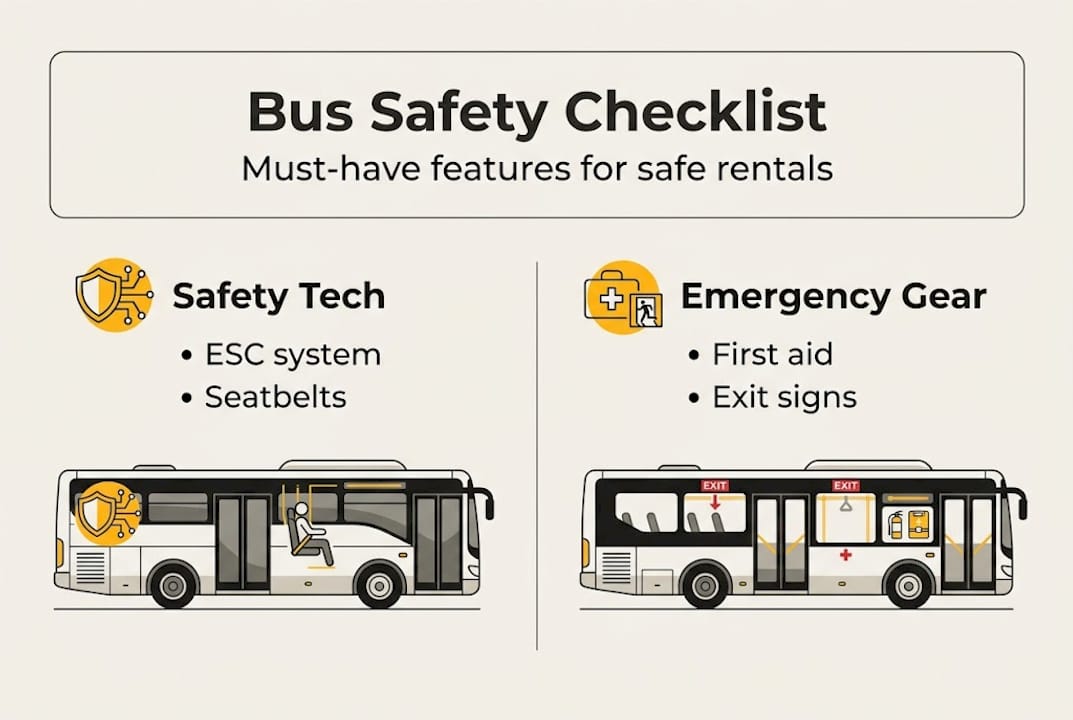
Seatbelts became mandatory on all newly built motorcoaches in Canada in 2020. Every seat must have a lap and shoulder belt properly fitted. When inspecting a bus before your event, check that seatbelts are present at every seat, undamaged, and function smoothly.
Electronic Stability Control (ESC) automatically detects when a bus is beginning to lose control and adjusts braking to individual wheels to stabilise the vehicle. On rainy Toronto highway ramps or slippery winter roads, ESC can be the difference between a routine trip and a serious rollover. Buses without ESC are simply a higher risk.
Electronic Logging Devices (ELDs) track driver hours automatically, preventing operators from pressuring drivers to work beyond safe limits. Fatigued driving is a leading cause of commercial vehicle accidents, and ELDs create a verifiable record that protects both drivers and passengers.
You can compare how these features stack up across different bus categories:
| Safety feature | Required by law | Available on quality charter buses |
|---|---|---|
| Lap and shoulder seatbelts | Yes (2020 onward) | Yes |
| Electronic Stability Control | Yes (new builds) | Yes |
| Electronic Logging Devices | Yes | Yes |
| Emergency roof exit | Yes | Yes |
| First aid kit onboard | Yes | Yes |
| Fire extinguisher | Yes | Yes |
For a closer look at what modern charter bus features look like on current fleets, reviewing the specifications of specific vehicles before booking is time well spent.
Emergency exits must be clearly labelled and operable from both inside and outside. A bus should have at least one rear emergency door and, on larger coaches, roof hatches.
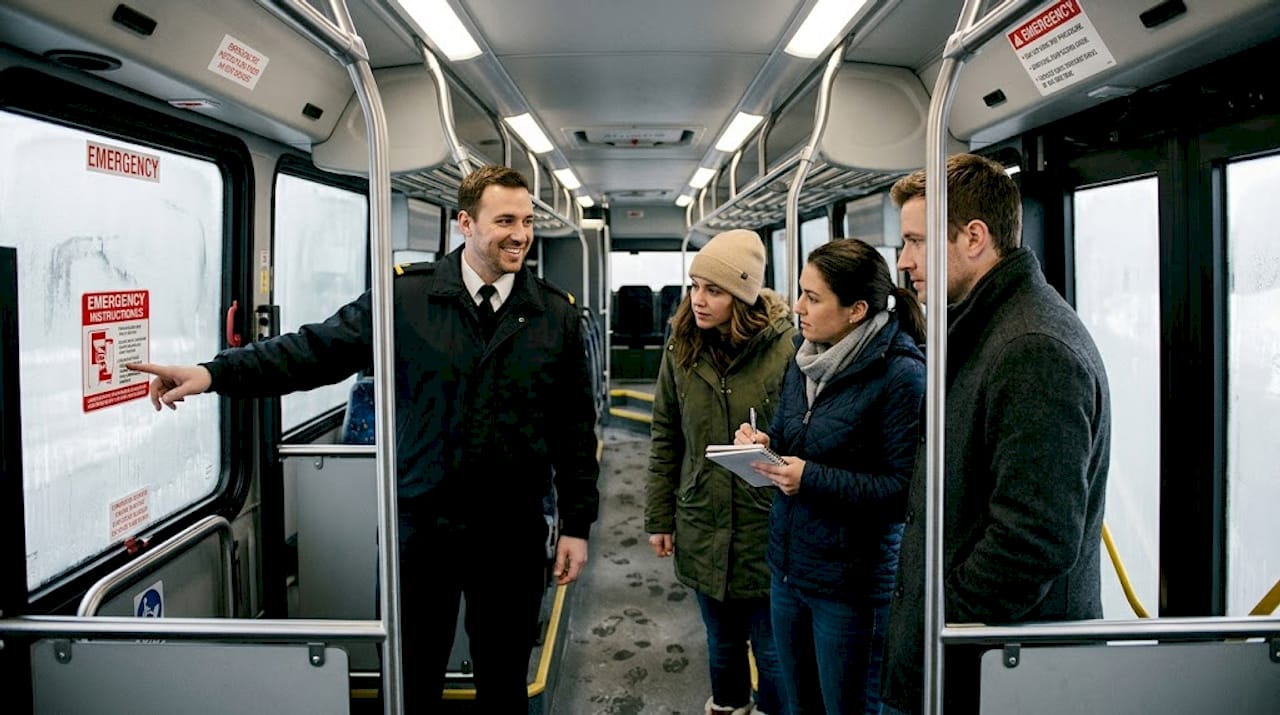
Pro Tip: Before departure, ask the driver to walk your group through emergency exit locations and first aid kit storage. This 90-second walkthrough dramatically improves group readiness and signals that the operator prioritises passenger safety.
Now that key safety features are clear, accessibility is another must for inclusive group transport.
Accessibility and special considerations for safe group transport
Safe group transportation isn’t only about accident prevention. It also means ensuring that every guest in your group can board, travel, and disembark without risk of injury.
Accessibility standards for bus travel include lifts supporting up to 272 kg, slip-resistant step surfaces, and handrails at all boarding points. These features aren’t optional niceties. They represent national accessibility guidance and reflect real risks of falls and injury for guests with mobility challenges.
For Toronto events in particular, winter conditions create additional layers of complexity. Icy steps become genuinely hazardous when a bus lacks slip-resistant surfaces. Check that winter tyres or tyre chains are fitted from November through March, and confirm the driver has been trained for cold-weather boarding protocols.
Here’s a quick reference for accessibility features to verify during booking:
| Accessibility feature | What to check |
|---|---|
| Wheelchair lift | Weight capacity and recent service record |
| Slip-resistant steps | Surface condition and tread integrity |
| Handrails | Height, grip material, and stability |
| Lighting at entry points | Adequate for evening events |
| Securement systems | Wheelchair lock-down points inside the bus |
For detailed accessible bus rental tips specific to Toronto events, understanding these requirements in advance helps you ask the right questions when booking.
Here are the steps event planners should follow to confirm accessibility during the booking process:
- Confirm the lift weight capacity meets your guests’ needs.
- Request photos or a walkthrough video of boarding equipment.
- Ask specifically about winter tyre and chain policy for cold-weather events.
- Verify interior securement points for mobility aids.
- Confirm driver training in accessible boarding assistance.
Beyond regulations and accessible features, verifying a company’s real-world safety record is crucial.
How to verify bus operator safety and maintenance in Toronto
Even if a company’s website looks polished and their sales representative sounds confident, your due diligence shouldn’t stop there. CVOR abstracts are publicly available and provide a straightforward picture of any Ontario operator’s safety rating, collision history, and conviction records.
When you search for a company’s CVOR abstract, pay attention to:
- Safety rating category: Satisfactory, Conditional, or Unsatisfactory. Never book with a Conditional or Unsatisfactory rated operator.
- Inspection out-of-service rate: A high percentage of vehicles being pulled off the road during inspections is a serious warning sign.
- Collision history: Patterns matter more than isolated incidents. One minor incident in five years is very different from three events in one.
- Number of active CVOR-registered vehicles: Helps confirm the company’s actual fleet size matches their marketing claims.
Once you’ve reviewed the CVOR, ask the company directly for their most recent semi-annual inspection report and maintenance log. Reputable operators keep these documents organised and share them without hesitation. If a company can’t produce them promptly, look elsewhere.
Your bus rental checklist for event day physical checks should include:
- Seatbelts at every passenger seat, functioning and undamaged
- Emergency exits clearly labelled and unlocked
- First aid kit visible and stocked
- Fire extinguisher mounted and within inspection date
- Tyres appearing properly inflated with visible tread
- Driver’s daily inspection sheet completed and available
Pro Tip: For winter events, specifically ask whether the bus is fitted with winter-rated tyres and whether chains are carried onboard. This one question has saved many planners from event-day disruptions when a snowstorm rolls through Toronto unexpectedly.
Armed with practical verification steps, event planners can ensure both regulatory and real-world safety for their group.
Why focusing on bus safety transforms event outcomes
After working in group transportation planning, one pattern becomes very clear: organizers who treat bus safety as a checkbox tend to have more stressful events. Organizers who genuinely prioritise it, asking the right questions early, requesting documentation, and communicating safety protocols to guests, tend to run smoother events and build stronger reputations.
There’s also something powerful about visible safety commitment. When guests see a driver perform a pre-boarding safety briefing, or when they notice clean, well-maintained interiors and functioning seatbelts, their confidence in the overall event rises. Charter bus safety insights consistently show that perceived professionalism correlates directly with client satisfaction scores.
A minor safety investment in the planning phase, reviewing CVOR records, confirming inspection histories, and verifying accessible features, can prevent major headaches or worse on event day. Safety isn’t a burden on your planning budget. It’s what makes the rest of your event planning worth doing.
Find Toronto bus rentals that put your group’s safety first
Everything covered in this guide points toward one practical step: choosing a bus rental provider in Toronto who can demonstrate their commitment to safety with real documentation, not just reassuring words.

At Toronto Bus Rentals, we maintain full CVOR compliance, keep our fleet to current inspection standards, and equip our vehicles with all required safety technology. Whether you need to explore the charter bus advantages for your corporate event or you’re comparing options for a group shuttle bus rental with accessible features, our team is ready to walk you through every safety detail. Contact us for a custom quote that prioritises your group’s safety from start to finish.
Frequently asked questions
What does a CVOR safety rating mean for bus rentals in Toronto?
A CVOR rating measures a bus company’s track record across collisions, convictions, and inspection results. Higher ratings indicate better-maintained fleets and more reliable safety practices.
Are seatbelts mandatory on all rented buses in Ontario in 2026?
Yes, federal seatbelt standards require lap and shoulder belts on all new motorcoaches built since 2020, making seatbelts a standard expectation on modern charter buses.
How often must a rental bus in Toronto undergo safety inspections?
Ontario law mandates under-vehicle inspections every 30 days or 12,000 km, plus comprehensive full inspections twice per year.
How can I ensure a bus rental is accessible for all guests?
Confirm the bus includes wheelchair lifts, handrails, and slip-resistant boarding surfaces that meet national accessibility standards before finalising your booking.
What can event planners check on bus pick-up day to confirm safety?
Verify seatbelts at every seat, check that emergency exits are clearly marked, and confirm the driver’s inspection records are current, including winter tyre certifications if conditions require it.
Recommended
- Why rent buses in Toronto for smoother group travel
- What Is Bus Rental and Why It Matters in Toronto
- How to book bus rental in Toronto: step-by-step guide
- Why bus rentals are essential for Toronto events: Cost, ease, safety