
Bus Rental Industry Terminology: Planning Toronto Events
Booking group transportation for a Toronto event often gets complicated without the right knowledge. Event planners juggling multiple details quickly discover that understanding core bus rental terminology can make or break the success of any group transfer. Whether you are organizing a corporate meeting or a private celebration, breaking down key terms like charter bus services, capacity, and booking types gives you the clarity needed to streamline communication and choose options that genuinely fit your group’s needs.
Table of Contents
- Core Concepts In Bus Rental Terminology
- Types Of Buses And Rental Services
- Key Features And Rental Processes
- Legal, Safety, And Insurance Requirements
- Costs, Common Mistakes, And What To Avoid
Key Takeaways
| Point | Details |
|---|---|
| Understanding Charter Services | Charter bus services in Toronto offer flexibility as the entire vehicle is reserved for your group, unlike public transit. |
| Bus Types and Capacities | Choose from minibuses, standard coaches, or full-size motor coaches based on your group size and comfort needs to avoid overpaying. |
| Booking Process Insights | Request quotes from multiple providers and clarify inclusions to prevent hidden costs and ensure a suitable bus for your event. |
| Insurance and Safety Compliance | Always verify the operator’s insurance and safety standards to protect your group during the rental. |
Core concepts in bus rental terminology
Event planners in Toronto need to understand key terms that shape how bus rental companies operate. These concepts form the foundation for making informed decisions about group transportation. Let’s break down what you actually need to know.
Charter bus services form the core of what you’ll encounter when planning events. Unlike transit buses that follow set routes, charter bus services operate without fixed schedules—the entire vehicle is reserved exclusively for your group. This flexibility defines the charter industry across Canada.
When you rent a bus for your Toronto event, you’re paying for the whole vehicle, not individual seats. This is fundamentally different from public transit. Your group controls the stops, timing, and destination.
Capacity and configuration matter more than you might think. Buses come in different sizes:
- Minibuses (20–35 passengers)
- Standard coaches (40–55 passengers)
- Full-size motor coaches (55–70+ passengers)
Your event size and passenger needs determine which option works best. Corporate outings, weddings, and school trips all have different requirements.
Amenities and features significantly impact passenger experience. Modern coaches often include:
- Climate control systems
- Comfortable seating with good legroom
- Onboard restroom facilities
- Audio-visual equipment for presentations
- WiFi connectivity
These features transform a simple journey into a comfortable group experience.
Professional drivers operate these vehicles under strict regulations. Drivers hold commercial licences and receive specialized training. They understand route planning, passenger safety, and transit service operations in Toronto’s complex transportation network.
Booking terminology includes rental periods that planners should recognize:
- Hourly rentals (short events, airport transfers)
- Full-day rentals (eight or ten hours of service)
- Multi-day rentals (extended events or touring)
Understanding when to apply each option saves budget and planning time.
Insurance and liability form crucial aspects of the rental agreement. Professional operators carry comprehensive coverage protecting your group. Always verify what’s included before finalizing your booking.
Understanding these core concepts prevents miscommunication and ensures your event transportation runs smoothly from start to finish.
Pro tip: Clarify your group’s exact passenger count and required amenities before requesting quotes—this matches you with the right bus and eliminates surprise costs or unsuitable vehicles.
Types of buses and rental services
Toronto event planners face choices when selecting the right bus for their group. Different vehicle types serve different purposes, and understanding these distinctions helps you match your event needs to the right transportation option.
Minibuses and shuttle buses handle smaller groups efficiently. These vehicles typically carry 18 to 35 passengers and work well for corporate shuttles, small weddings, or boutique group tours. They manoeuvre easily through Toronto streets and cost less than full-size coaches, making them ideal when your group is modest in size.
Standard coaches represent the most popular choice for mid-sized events. Carrying 40 to 55 passengers, these buses offer excellent balance between capacity and comfort. They include modern amenities like climate control, comfortable seating, and often audio-visual equipment for presentations or entertainment during travel.

Full-size motor coaches accommodate larger groups, typically 55 to 70+ passengers. These vehicles provide maximum comfort for long journeys and include premium features such as onboard restrooms, WiFi connectivity, and spacious seating arrangements. Corporate conferences and major events frequently require this capacity.
Here’s how common bus types differ for Toronto event planners:
| Bus Type | Typical Use Case | Passenger Range | Notable Advantage |
|---|---|---|---|
| Minibus/Shuttle | Corporate shuttles | 18–35 | Maneuvers easily in the city |
| Standard Coach | Weddings, school trips | 40–55 | Best balance of cost/comfort |
| Full-size Motor Coach | Major conferences | 55–70+ | Premium amenities, max capacity |
Charter and sightseeing bus services operate across Canada with distinct business models. Charter buses rent the entire vehicle exclusively for your group’s itinerary. Sightseeing services typically follow predetermined routes and schedules, making them less flexible for custom event planning.
Rental service types break down into practical categories:
- Hourly rentals work for airport pickups or short local transfers
- Half-day rentals suit morning or afternoon events with limited travel
- Full-day rentals provide eight to ten hours of service for comprehensive event coverage
- Multi-day rentals accommodate extended tours or travelling events
Intercity bus services in Canada range from small passenger vans through to large coaches, serving diverse transportation needs including school trips, corporate events, and community services. This variety means options exist for virtually any event type.
Driver expertise varies by service type. Professional charter bus drivers receive specialized training in passenger safety, route planning, and customer service. They hold commercial driving licences and navigate Toronto’s complex transportation network with expertise.
Matching your event size and budget to the correct bus type prevents overpaying for capacity you don’t need or scrambling for upgrades when you underestimate passenger numbers.
Pro tip: Request quotes from multiple providers specifying your exact passenger count, event duration, and required amenities—this comparison reveals which bus type delivers the best value for your Toronto event.
Key features and rental processes
Event planners in Toronto need to understand what modern buses offer and how the booking process actually works. These practical details shape your rental experience from initial inquiry through to event day.
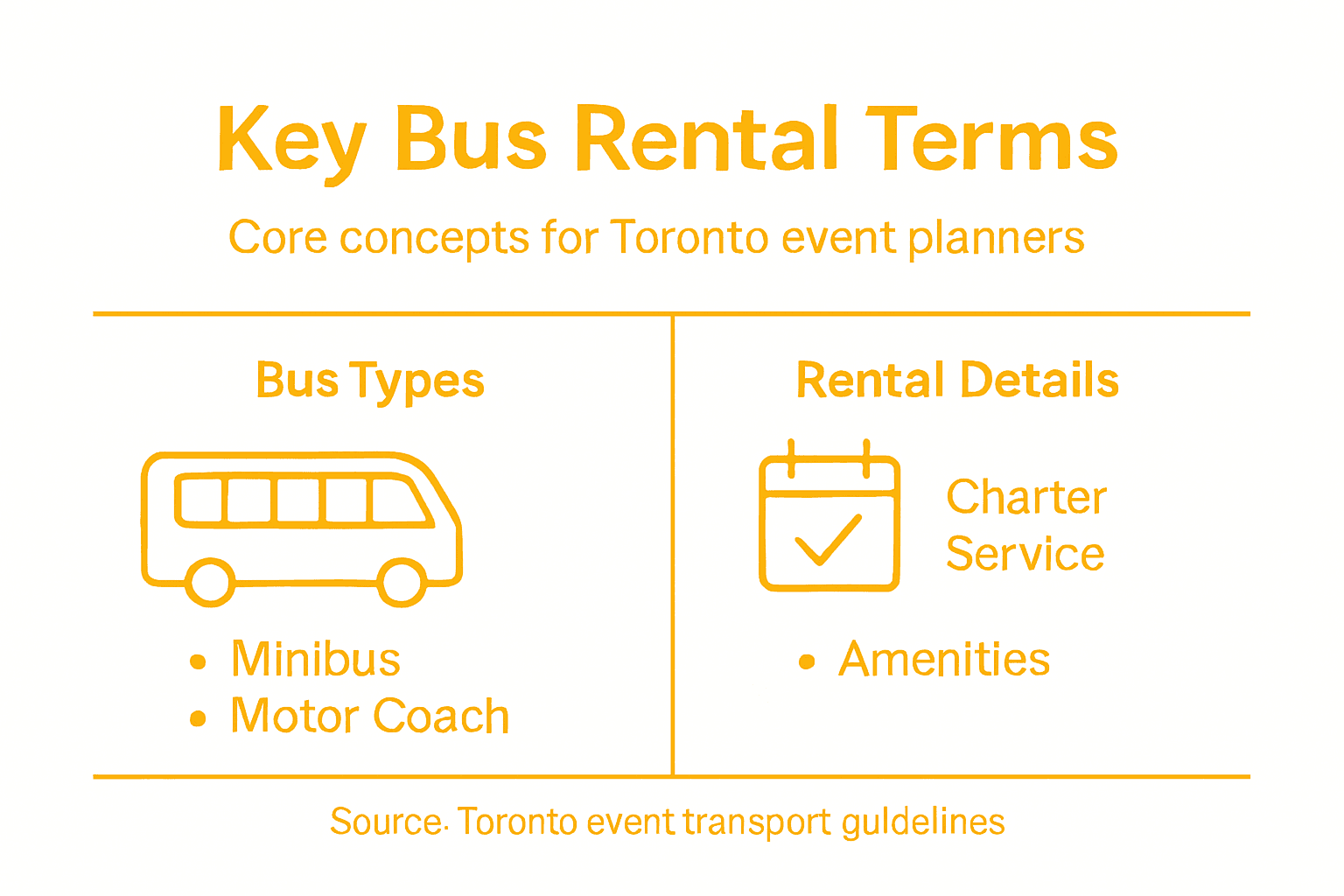
Modern amenities set today’s charter buses apart from older vehicles. Most coaches include air conditioning for year-round comfort, onboard Wi-Fi for business travellers and entertainment, and climate-controlled interiors. Many also feature onboard washroom facilities for long journeys, eliminating unnecessary stops.
Bus rental vehicles in Canada typically offer climate control, connectivity, and washroom facilities as standard features. Premium coaches may include leather seating, USB charging ports, and audio-visual equipment for presentations or entertainment during travel.
The rental booking process follows a straightforward sequence. You start by contacting providers with your event details—date, passenger count, start and end locations, and any special requirements. Providers then send detailed quotes outlining costs, included services, and vehicle specifications.
Here’s what happens next:
- Request quotes from multiple providers to compare pricing and available vehicles
- Review inclusions such as driver costs, fuel, tolls, and parking fees
- Confirm your booking with a signed agreement and deposit payment
- Communicate final details including passenger pickup times and special requests
- Meet your driver on event day and review the itinerary
Driver services form a crucial part of the rental package. Professional drivers typically arrive 15 minutes early, manage route navigation, and handle passenger concerns throughout your journey. Many providers include driver costs in the base rental fee, though clarifying this during quotes prevents surprises.
Customisation options let you tailor your rental to your event. You can request specific routes, schedule multiple stops, arrange refreshments, or add decorative touches for weddings and celebrations. Communicating these preferences upfront ensures everything is prepared before your event begins.
Cancellation and modification policies vary by provider. Most offer flexible rescheduling if you provide adequate notice, though cancellations close to your event date may incur fees. Always review the terms before confirming your booking.
Understanding what amenities come standard versus what costs extra prevents budget surprises and ensures you select a vehicle that genuinely matches your event requirements.
Pro tip: Request a virtual tour or photos of the specific bus you’ll be renting, not just the model type—this confirms the exact condition and amenities you’ll receive for your Toronto event.
Legal, safety, and insurance requirements
When you rent a bus for your Toronto event, legal and safety compliance protects both your group and the rental operator. Understanding these requirements prevents liability issues and ensures passenger protection throughout your journey.
Vehicle safety standards form the foundation of bus rental regulations across Canada. Transport Canada enforces comprehensive safety regulations for buses and motor coaches, including standards for brakes, visibility, emergency exits, and seat belts on new vehicles. These standards apply regardless of whether you rent locally in Toronto or arrange intercity transportation.
Operators must maintain vehicles to these specifications. Regular inspections confirm that brakes function properly, emergency exits remain accessible, and visibility equipment works correctly. When you book with a reputable provider, these safety checks have already been completed.
Driver qualifications matter significantly for passenger safety. Commercial drivers hold specialized licences and receive training in passenger management, route navigation, and emergency procedures. Transport Canada mandates compliance with hours-of-service regulations to prevent driver fatigue, which reduces accident risk during your event.
Insurance coverage protects your group during the rental. Provincial regulations require operators to carry minimum third-party liability and passenger hazard coverage. This insurance covers injuries to passengers and third parties, property damage, and other incident-related costs.
Key insurance considerations include:
- Third-party liability covers damage to other vehicles or property
- Passenger coverage protects your group members in case of accident or injury
- Driver coverage ensures the operator has valid commercial driving insurance
- Additional coverage options may be available for high-value events
Always request proof of insurance before finalizing your booking. Commercial motor vehicle operators must file certificates of insurance with provincial authorities, demonstrating compliance with legal requirements.
Your responsibilities as a renter include providing accurate passenger information and notifying the operator of any special circumstances. If passengers have mobility issues or require accommodations, communicate this upfront so the operator can prepare appropriately.
Event-specific concerns sometimes require additional consideration. If your event involves alcohol, confirm the operator’s policies regarding intoxicated passengers. For events with minors, verify that the provider has proper supervision protocols.
Verifying that your bus rental operator maintains current insurance and meets Transport Canada safety standards protects your group and eliminates legal complications.
Pro tip: Request a copy of the operator’s safety inspection certificate and current insurance documentation before signing your rental agreement—this confirmation takes minutes and provides crucial peace of mind for your Toronto event.
Costs, common mistakes, and what to avoid
Bus rental pricing varies significantly based on vehicle type, rental duration, and distance travelled. Toronto event planners often underestimate total costs or make preventable errors that inflate budgets. Understanding pricing structure and avoiding common pitfalls keeps your event on track financially.
Base rental costs depend on several factors. Minibuses typically cost less per hour than full-size coaches, but larger groups spread costs across more passengers, potentially lowering per-person expense. Multi-day rentals often offer better hourly rates than single-day bookings.
Common cost components include:
- Hourly or daily rental fee for vehicle use
- Driver gratuity (often 15-20 percent, though some include this in quotes)
- Fuel surcharges if prices spike unexpectedly
- Tolls and parking fees for designated routes
- Waiting time charges if the bus sits idle during your event
- Mileage overages if you exceed included distance limits
Hidden costs catch many planners off guard. Always ask providers to itemize every expense in writing. Some quotes omit gratuities, parking, or fuel surcharges, then add them later. Request all-inclusive quotes that specify exactly what’s covered.
Below is a quick summary of hidden costs and how to avoid them:
| Cost Type | How It Arises | Prevention Tip |
|---|---|---|
| Fuel surcharge | Fluctuating gas prices | Request all-inclusive quotes |
| Waiting charges | Delays at pickup/drop-off | Provide clear, detailed info |
| Extra mileage fees | Exceeding agreed distance | Estimate distance accurately |
| Driver gratuity | Not itemized in quote | Ask if included before booking |
Common mistake number one: underestimating passenger count. You book for 40 people but 52 show up. Now you’re scrambling to find additional transportation or cramming everyone onto one bus. Count your guest list twice, then add 10 percent buffer.
Mistake number two: booking too close to your event date. Popular providers fill up weeks in advance, especially during wedding season or corporate retreat periods. Reserve buses at least three to four weeks prior, ideally six weeks for large events.
Mistake number three: failing to confirm final details. You book in March for a September event, then forget to reconfirm in August. Providers may have vehicle changes or scheduling conflicts. Always reconfirm final details one week before your event.
Mistake number four: not specifying pickup and drop-off locations clearly. Vague addresses waste time and money. Provide complete addresses with building names, lot numbers, or gate information. Late pickups due to confusion generate additional charges.
Payment terms and cancellation policies deserve careful attention. Some providers require deposits upfront, typically 25 to 50 percent. Understand what happens if you need to cancel or reschedule—some offer full refunds with notice, others apply cancellation fees.
Requesting detailed, itemised quotes from multiple providers and confirming all details in writing prevents cost surprises and ensures transparent pricing for your Toronto event.
Pro tip: Build a 10 to 15 percent contingency buffer into your bus rental budget for unexpected expenses, fuel surcharges, or last-minute passenger changes—this safety net prevents budget crises on event day.
Make Your Toronto Event Travel Seamless and Stress Free
Navigating the bus rental terminology and understanding key concepts like charter services, bus capacities, and rental options can feel overwhelming. You want to avoid common pitfalls such as underestimating passenger count or hidden fees that disrupt your event day. At Toronto Bus Rentals, we specialise in turning these challenges into smooth, reliable transportation experiences tailored for corporate outings, weddings, school trips, and more.

Benefit from professional drivers, modern motor coaches equipped with the amenities your group needs, and transparent pricing with no surprise charges. With clear communication and expert support through every step of the booking process, you can confidently plan knowing all safety, insurance, and legal requirements are met. Start simplifying your group travel now by visiting Toronto Bus Rentals, requesting your quotes early, and securing a flawless ride for your event.
Frequently Asked Questions
What is the difference between charter buses and public transit buses?
Charter buses are reserved exclusively for your group and operate without fixed schedules, while public transit buses follow set routes and schedules.
How do I determine the right bus size for my event?
Consider your group size and the type of event. Options include minibuses for small groups (20-35 passengers), standard coaches for mid-sized groups (40-55 passengers), and full-size motor coaches for larger groups (55-70+ passengers).
What amenities should I expect on a modern charter bus?
Modern charter buses commonly include climate control, comfortable seating, Wi-Fi, onboard restroom facilities, and audio-visual equipment for presentations or entertainment.
What are the typical rental periods for bus services?
Rental periods can vary, including hourly rentals for short trips, full-day rentals for comprehensive coverage, and multi-day rentals for extended events or tours.
Recommended
- Blog – Toronto Bus Rentals
- Guide to Chartering Buses for Toronto Events
- How to Book Charter Buses for Events in Toronto
- What Is Luxury Bus Rental for Toronto Events?