
Bus rental cost factors explained for Toronto events 2026
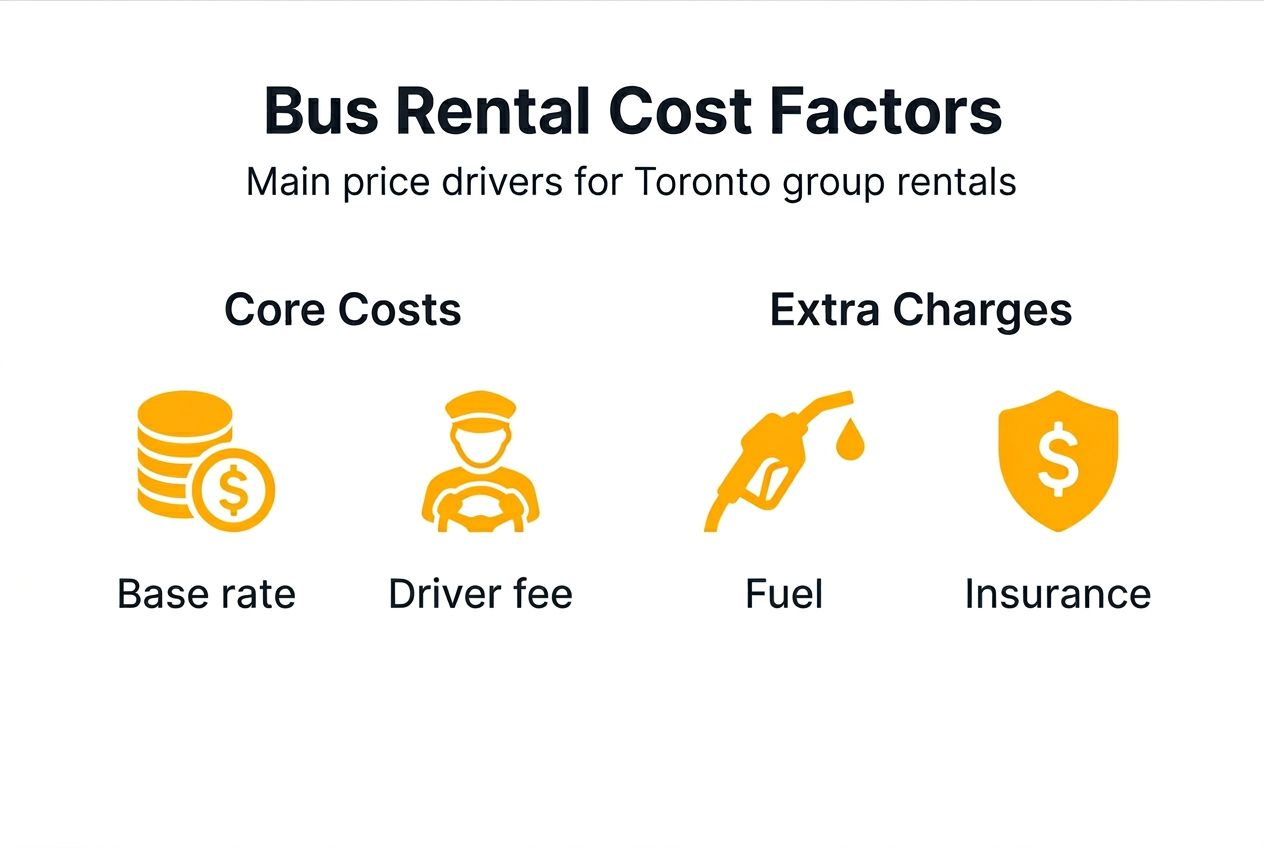
Most event organisers think the cheapest base rate saves money, but hidden fees increase total costs by 30% in Toronto bus rentals. Understanding how base fees, driver costs, fuel surcharges, and insurance work together determines your actual budget. Toronto’s regulatory landscape and seasonal demand create unique pricing challenges that catch first-time renters off guard. This guide breaks down every cost component so you can negotiate confidently and avoid expensive surprises.
Table of Contents
- Introduction To Bus Rental Costs In Toronto
- Core Components Of Bus Rental Pricing
- How Bus Size, Type, And Amenities Influence Price
- Effect Of Rental Duration And Scheduling On Costs
- Common Misconceptions About Bus Rental Costs
- Framework For Evaluating And Negotiating Bus Rental Quotes
- Conclusion And Actionable Tips For Toronto Event Organisers
- Get Cost-Effective Bus Rentals For Your Toronto Event
Key takeaways
| Point | Details |
|---|---|
| Base fees vary widely | Hourly rates depend on bus size, type, and amenities, with luxury coaches costing 50% more than standard options. |
| Driver costs are mandatory | Professional driver fees represent 25-40% of your total rental cost and cannot be excluded from quotes. |
| Hidden charges add up fast | Fuel surcharges, overtime fees, and regulatory costs can increase your budget by 15-30% beyond the base rate. |
| Rental duration affects pricing | Longer bookings may unlock tiered discounts, but driver overtime rules can eliminate savings on irregular schedules. |
| Transparent quotes prevent surprises | Itemised pricing that lists fuel, insurance, and surcharges upfront helps you compare providers accurately. |
Introduction to bus rental costs in Toronto
Bus rental costs in Toronto represent the total price you pay to hire a motor coach for group transportation at your event. This includes base hourly or daily rates, driver fees, fuel surcharges, insurance, and regulatory compliance charges. Toronto’s transit market operates under specific municipal regulations that add roughly 5-8% to total costs for legal operations.
Understanding these components matters because opaque pricing leads to budget overruns. Many providers advertise low base rates but bury mandatory fees in fine print. Toronto’s competitive market means pricing varies significantly between operators, making transparent cost breakdowns essential for accurate comparisons.
Key terminology shapes how you evaluate quotes. Base cost refers to the hourly or daily rate for the vehicle itself. Surcharges cover variable expenses like fuel price fluctuations and seasonal demand spikes. Add-ons include optional amenities such as Wi-Fi, restrooms, or entertainment systems that enhance passenger comfort.
Toronto’s regulations impact cost components in specific ways. Municipal licensing requirements, commercial vehicle insurance mandates, and driver certification standards all add overhead that providers must pass to clients. These aren’t negotiable extras but legal necessities for safe, compliant operations.
Transparent pricing lets you budget confidently. When providers itemise every charge upfront, you can identify which costs are fixed versus variable, where negotiation opportunities exist, and how different rental lengths affect your total spend. This clarity prevents the sticker shock that derails event planning.
- Base rates exclude driver fees, fuel, and insurance in most initial quotes
- Toronto’s commercial vehicle standards require specific insurance coverage levels
- Seasonal demand peaks during wedding season and corporate event periods drive prices up
- Regulatory compliance costs are fixed and apply to every rental regardless of duration
Familiarising yourself with bus rental terminology helps you ask the right questions when requesting quotes. For specialised needs like educational trips, reviewing a school bus rental guide clarifies which cost factors apply to your specific use case.
Core components of bus rental pricing
Base hourly rates form the foundation of your rental cost and vary dramatically by bus size and quality. Standard 47-passenger coaches typically range from $120 to $180 per hour in Toronto, while luxury models with premium seating and amenities command $180 to $280 per hour. Smaller minibuses seating 20-25 passengers cost $90 to $140 per hour.

Driver fees represent a mandatory component that many first-time renters underestimate. Professional drivers add 25-40% to your base rate, covering wages, training certifications, and benefits. Toronto regulations require licensed commercial drivers for all passenger transport, making this cost non-negotiable. Extended trips triggering overtime rates can push driver costs even higher.
Fuel surcharges fluctuate based on diesel prices and distance travelled. These charges account for 15-20% of total rental cost and vary seasonally. Summer months typically see higher fuel costs due to increased demand and air conditioning use. Providers calculate surcharges differently, using fixed percentage rates or per-kilometre formulas.
Insurance and safety compliance fees cover commercial vehicle liability coverage and regulatory adherence. Toronto’s commercial insurance requirements exceed standard auto policies, protecting passengers and third parties. These fees are fixed costs that apply regardless of rental duration, typically adding $50 to $150 per rental.
| Cost Component | Standard Coach | Luxury Coach | Minibus |
|---|---|---|---|
| Base hourly rate | $120-$180 | $180-$280 | $90-$140 |
| Driver fee (per hour) | $35-$50 | $45-$65 | $30-$45 |
| Fuel surcharge (estimated %) | 15-18% | 18-22% | 12-16% |
| Insurance/compliance (per rental) | $75-$120 | $100-$150 | $50-$90 |
Pro Tip: Request fuel surcharge calculations based on current diesel prices rather than accepting outdated percentage rates. This ensures you’re not overpaying when fuel costs drop.
- Base rates increase by 30-50% during peak demand periods like June weddings
- Driver gratuity is customary but separate from mandatory driver fees
- Multi-day rentals may include discounted overnight driver accommodation rates
- Some providers bundle insurance into base rates while others itemise separately
Understanding why you should rent buses for Toronto group travel helps contextualise these costs against alternatives like multiple cars or ride-sharing services. Comparing Coachliners alternatives reveals how different providers structure these core pricing components.
How bus size, type, and amenities influence price
Standard coaches offer basic comfort at lower price points, while luxury coaches deliver premium experiences at higher costs. Standard models include reclining seats, overhead storage, and climate control. Luxury versions add leather seating, extra legroom, onboard restrooms, Wi-Fi, power outlets, and entertainment systems. This feature gap justifies why luxury coaches cost up to 50% more than standard equivalents.
Seating capacity directly impacts hourly rates and total costs. Larger buses cost more per hour but reduce per-passenger expenses for big groups. A 47-passenger coach at $150/hour costs $3.19 per person hourly, while a 25-passenger minibus at $110/hour costs $4.40 per person. This economy of scale makes full-size coaches better value for maximum capacity events.
Amenities affect pricing through both equipment costs and maintenance requirements. Wi-Fi systems add $25 to $50 to hourly rates due to hardware investment and data plans. Restrooms increase cleaning costs and insurance premiums. Entertainment systems require technical maintenance that providers factor into luxury tier pricing.
| Feature | Standard Coach | Luxury Coach | Cost Impact |
|---|---|---|---|
| Seating material | Cloth reclining | Leather reclining | +$30-$50/hour |
| Wi-Fi connectivity | Not included | Included | +$25-$40/hour |
| Restroom | Not available | Private restroom | +$20-$35/hour |
| Entertainment | Basic PA system | HD screens, premium audio | +$35-$60/hour |
| Power outlets | Limited/none | Individual USB/AC outlets | +$15-$25/hour |
Pro Tip: Book standard coaches for short local trips under three hours where passengers won’t fully utilise luxury amenities. Reserve luxury models for longer journeys where comfort features justify the premium.
- Climate-controlled storage compartments add minimal cost but significant convenience
- ADA-accessible lifts increase minibus rates by $20 to $40 per hour
- Premium sound systems matter for party buses but add unnecessary cost for corporate shuttles
- Tinted windows and privacy features typically come standard on both coach types
Exploring 47-passenger school bus rentals shows how purpose-built vehicles balance capacity and cost for educational groups. For smaller parties, minibus rental options demonstrate how right-sizing your vehicle choice controls expenses without sacrificing service quality.
Effect of rental duration and scheduling on costs
Tiered pricing rewards longer bookings with discounted hourly rates. A four-hour rental might cost $150 per hour, while an eight-hour booking drops to $130 per hour due to guaranteed revenue for the provider. Full-day rates typically offer better value than half-day options, and multi-day rentals unlock the deepest discounts. However, minimum rental periods of four to six hours apply regardless of actual usage.
Driver overtime fees kick in after standard shift limits, significantly increasing costs for extended events. Ontario labour regulations cap driver shifts at specific hours before mandatory breaks or overtime rates apply. Driver overtime and tiered pricing structures can substantially increase costs for longer or irregular rentals. Overtime typically adds 50% to standard driver fees, making careful schedule planning essential.
Scheduling factors affect both availability and pricing. Weekend and evening rentals command premium rates due to high demand and driver shift differentials. Holiday periods like Victoria Day, Canada Day, and Thanksgiving see prices increase by 20-40%. Last-minute bookings within two weeks of your event date often carry surcharges as providers prioritise confirmed advance reservations.
- Book at least four to six weeks ahead to secure standard rates and vehicle availability
- Structure your event schedule to fit within standard driver shift limits
- Consider weekday bookings for non-peak pricing when your event allows flexibility
- Combine multiple short trips into single longer rentals to qualify for tiered discounts
- Determine your exact pickup and dropoff times including buffer periods
- Calculate total hours needed including wait time at venues
- Verify if your duration crosses standard shift limits triggering overtime
- Request quotes for slightly longer standard periods versus custom durations
- Compare per-hour costs across different rental length tiers
Applying bus rental tips for successful group transport helps you structure bookings that maximise tiered pricing benefits while avoiding costly overtime scenarios.
Common misconceptions about bus rental costs
The lowest base rate rarely delivers the best value. Providers advertising rock-bottom hourly rates often exclude driver fees, fuel surcharges, and insurance from initial quotes. When these mandatory costs appear later, your total cost increases by up to 30% beyond the advertised rate. Budget operators may also cut corners on vehicle maintenance or driver training, creating safety and reliability risks.
Driver fees are never optional despite some quotes suggesting otherwise. Ontario commercial vehicle regulations mandate licensed, professionally trained drivers for all passenger transport. Attempts to exclude driver costs or use unlicensed operators violate provincial law and void insurance coverage. Legitimate providers always include driver fees, whether itemised separately or bundled into base rates.
Seating capacity alone doesn’t determine pricing. Two 47-passenger coaches can have vastly different rates based on vehicle age, amenity levels, and maintenance standards. A newer luxury coach with premium features justifies higher pricing than an older standard model, even with identical passenger capacity. Maintenance quality and vehicle condition also influence reliability, affecting the true value proposition.
Fuel surcharges impact budgets more than most renters expect. Many assume fuel is a minor variable cost, but at 15-20% of total rental expenses, surcharges represent a substantial budget item. Seasonal diesel price fluctuations and route distances create significant variability. Failing to account for fuel costs in initial budgets leads to shortfalls when final invoices arrive.
“We chose the cheapest quote thinking we’d save $400, but hidden overtime fees and fuel surcharges added $650 to our final bill. The mid-range provider with transparent pricing would have cost less overall.”
- Extremely low quotes often signal outdated vehicles or inexperienced drivers
- All-inclusive pricing appears higher initially but prevents budget surprises
- Per-kilometre fuel charges sometimes cost less than percentage-based surcharges for short trips
- Providers offering free amenities usually increase base rates to compensate
Understanding what bus rental actually includes clarifies which costs are standard versus optional, helping you spot unrealistic quotes that omit mandatory components.
Framework for evaluating and negotiating bus rental quotes
Systematic quote evaluation prevents costly oversights and reveals true value. Start by requesting itemised quotes that break down every cost component separately. This transparency lets you compare providers accurately and identify where each allocates expenses.
- Verify base hourly or daily rates match your required vehicle type and capacity
- Confirm driver fees are explicitly included with hourly breakdown
- Check fuel surcharge calculation method and current rate percentage
- Review insurance and compliance fees to ensure commercial coverage
- Identify any additional charges for amenities, tolls, or parking
- Calculate total cost including all components for accurate comparison
Hidden charges often appear as vague line items or undisclosed fees. Question any costs labelled as service charges, administrative fees, or processing fees without clear justification. Ask providers to explain what each charge covers and whether it’s negotiable. Legitimate operators willingly clarify their pricing structure.
- Request written confirmation that quotes include all mandatory costs
- Compare at least three providers using identical trip parameters
- Verify if gratuity expectations are separate from driver fees
- Check cancellation policies and associated fees before committing
- Ask about seasonal rate variations affecting your event date
Practical negotiation targets major cost drivers where providers have flexibility. Base rates often have minimal wiggle room due to fixed operating costs, but fuel surcharges, amenity packages, and multi-day rates present opportunities. Booking during off-peak periods or committing to longer rentals strengthens your negotiating position.
Pro Tip: Mention you’re comparing multiple quotes and ask if providers can match competitor pricing on specific components. Many operators adjust fuel surcharges or waive minor fees to secure bookings.
- Gather three to five detailed quotes for identical specifications
- Create comparison spreadsheet listing all cost components side by side
- Identify the true lowest total cost after all fees
- Contact top two providers to discuss flexibility on highest cost items
- Request final written quotes with all negotiated terms confirmed
- Review cancellation terms and deposit requirements carefully
- Book with provider offering best value-to-service ratio
Exploring private bus hire options demonstrates how tailored quotes address specific event needs while maintaining transparent pricing structures.
Conclusion and actionable tips for Toronto event organisers
Bus rental costs in Toronto stem from interconnected factors that work together to determine your final price. Base rates set the foundation, but driver fees, fuel surcharges, insurance, and vehicle specifications create the complete cost picture. Understanding how rental duration, scheduling, and amenities influence pricing empowers you to make informed decisions.
Avoid common pitfalls that inflate budgets unnecessarily. Don’t chase the lowest base rate without verifying included components. Remember that driver fees are mandatory, luxury coaches cost significantly more than standard options, and fuel surcharges represent substantial expenses. Factor in overtime possibilities when planning extended events.
Practical tips maximise value while controlling costs. Request itemised quotes from multiple providers, verify all mandatory fees upfront, and negotiate on flexible components like fuel calculation methods. Book well in advance to secure standard rates and desired vehicles. Structure your event schedule to avoid driver overtime triggers.
- Communicate exact pickup times, passenger counts, and route details to get accurate quotes
- Ask providers about their newest vehicles to balance cost with reliability
- Confirm insurance coverage levels meet your event requirements
- Review provider safety records and driver training programmes before booking
- Build 10-15% contingency into your budget for unexpected surcharges or timing changes
Applying insights from this comprehensive guide to chartering buses ensures your Toronto event benefits from cost-effective, reliable group transportation.
Get cost-effective bus rentals for your Toronto event
Now that you understand the cost factors shaping bus rental pricing, you can make confident decisions for your Toronto event. Our fleet includes everything from 47-passenger school buses for large groups to flexible minibus options for smaller parties.

We provide transparent, itemised quotes that break down base rates, driver fees, fuel surcharges, and insurance costs upfront. No hidden charges, no surprises when your final invoice arrives. Our professional drivers come included in every rental, meeting Ontario’s commercial vehicle standards for your safety and peace of mind. Explore our complete group transportation services to find the perfect match for your corporate outing, wedding, school trip, or special event.
Frequently asked questions
What are the main factors that affect bus rental costs in Toronto?
Base hourly rates, driver fees, fuel surcharges, and insurance represent the core cost components. Vehicle size, amenity levels, rental duration, and scheduling also significantly impact your total price. Toronto’s regulatory compliance requirements add 5-8% to ensure legal operations.
Are driver fees always included in bus rental quotes?
Driver fees are mandatory for all Toronto bus rentals and typically represent 25-40% of your base cost. Ontario law requires licensed commercial drivers for passenger transport, making exclusion legally impossible. Some providers itemise driver fees separately while others bundle them into hourly rates.
How can I avoid hidden fees when renting a bus in Toronto?
Request detailed, itemised quotes that list every cost component including fuel, insurance, overtime, and surcharges. Ask providers to explain any vague charges before booking. Compare multiple quotes using identical trip parameters to identify providers with transparent pricing structures.
Does bus rental duration impact the overall price?
Longer rentals often qualify for tiered pricing with lower hourly rates, but driver overtime fees apply after standard shift limits. Full-day and multi-day bookings typically offer better per-hour value than minimum four-to-six-hour rentals. Careful schedule planning maximises tiered discounts while avoiding costly overtime charges.
Recommended
- What Is Bus Rental and Why It Matters in Toronto
- Why rent buses in Toronto for smoother group travel
- Blog – Toronto Bus Rentals
- Bus Rental Industry Terminology: Planning Toronto Events