
Bus rental checklist for events: guide for Toronto planners
One overlooked detail in your group transportation plan can throw an entire event schedule into chaos. Whether you’re coordinating a corporate retreat, a wedding, or a conference with hundreds of attendees, the logistics of moving people safely and on time carry real weight. Corporate events contribute $33B to the Canadian economy, which means the stakes for getting transport right are higher than most planners realise. This checklist walks you through every critical step, from choosing a provider to communicating with drivers, so nothing slips through the cracks.
Table of Contents
- Key criteria for choosing a bus rental service
- The essential event bus rental checklist
- Comparing vehicle options for event size and type
- Due diligence: reviewing contracts, credentials, and communication
- Tailoring the checklist for specific events
- Partner with Toronto specialists for seamless execution
- Frequently asked questions
Key Takeaways
| Point | Details |
|---|---|
| Start with legal and safety checks | Always verify licensing, insurance, and safety records before choosing a provider. |
| Match vehicle to event needs | Choose bus types and amenities that align with passenger comfort and event style. |
| Document all transport arrangements | Have all details, routes, and contacts in writing to avoid last-minute issues. |
| Adapt your checklist | Tailor bus rental steps for the unique challenges of each event type. |
Key criteria for choosing a bus rental service
Before you start comparing quotes or browsing fleet catalogues, you need a clear evaluation framework. Rushing straight to price comparisons without setting your criteria first is one of the most common mistakes event planners make. Knowing what matters most to your event saves time and prevents costly surprises later.
Here are the core criteria every planner should assess:
- Passenger safety and legal compliance: Verify that the provider holds all required operating licences and carries adequate insurance. Legal compliance and safety are the top priorities in any reputable bus charter evaluation.
- Service reliability: Ask about on-time performance records and what contingency plans exist if a vehicle breaks down.
- Fleet variety: Confirm the provider offers group transport options that match your event’s size and style.
- Customisation: Look for flexibility in pick-up points, scheduling, and route adjustments.
- Transparent pricing: Request itemised quotes so you can spot hidden fees before signing anything.
- Accessibility options: Ask specifically whether accessible vehicles are available if any guests require them.
Pro Tip: Before your first call with a provider, write down your non-negotiables. If safety documentation and on-time guarantees are must-haves, say so upfront. It filters out unsuitable vendors quickly.
“A provider that hesitates to share licensing or insurance documentation is a provider worth avoiding.”
Doing your rental due diligence at this stage protects your event and your reputation as a planner.
The essential event bus rental checklist
Armed with your evaluation framework, you’re ready for the detailed, step-by-step process. Follow these steps in order and document each one as you go.
- Assess your group size and special requirements. Count confirmed attendees, note any mobility or accessibility needs, and identify whether you need luggage storage or equipment space.
- Research local providers and verify credentials. Search for Toronto-based companies, check reviews, and confirm licences and insurance before going further.
- Request and compare written quotes. Get at least three quotes in writing. Compare not just price but what’s included, such as driver gratuity, fuel surcharges, and overtime rates.
- Review fleet condition and amenities. Ask to see photos or inspect vehicles in person. Confirm air conditioning, Wi-Fi, seating comfort, and any other amenities your group expects.
- Confirm pick-up, route, and drop-off details. Map out every stop, account for Toronto traffic patterns, and build buffer time into the schedule.
- Finalise and document contract details. Confirm all booking details in writing before any deposit changes hands. This is non-negotiable best practice.
- Communicate logistics with drivers and attendees. Share the full route plan with your driver and send clear schedule information to all guests well in advance.
- Have a backup contact plan. Keep the dispatcher’s number and a secondary contact on hand for day-of issues.
Pro Tip: Create a shared document or spreadsheet that tracks each checklist item, the responsible person, and its completion status. It turns a mental checklist into an accountable system.
For more detailed guidance, the bus rental tips resource covers common pitfalls, and the chartering buses guide walks through the full booking process step by step.
Comparing vehicle options for event size and type
With your steps established, choosing the right vehicle is the next decision. Event scale determines vehicle class, whether that’s a school bus, minibus, or luxury motor coach. Picking the wrong size wastes money or leaves guests uncomfortable.
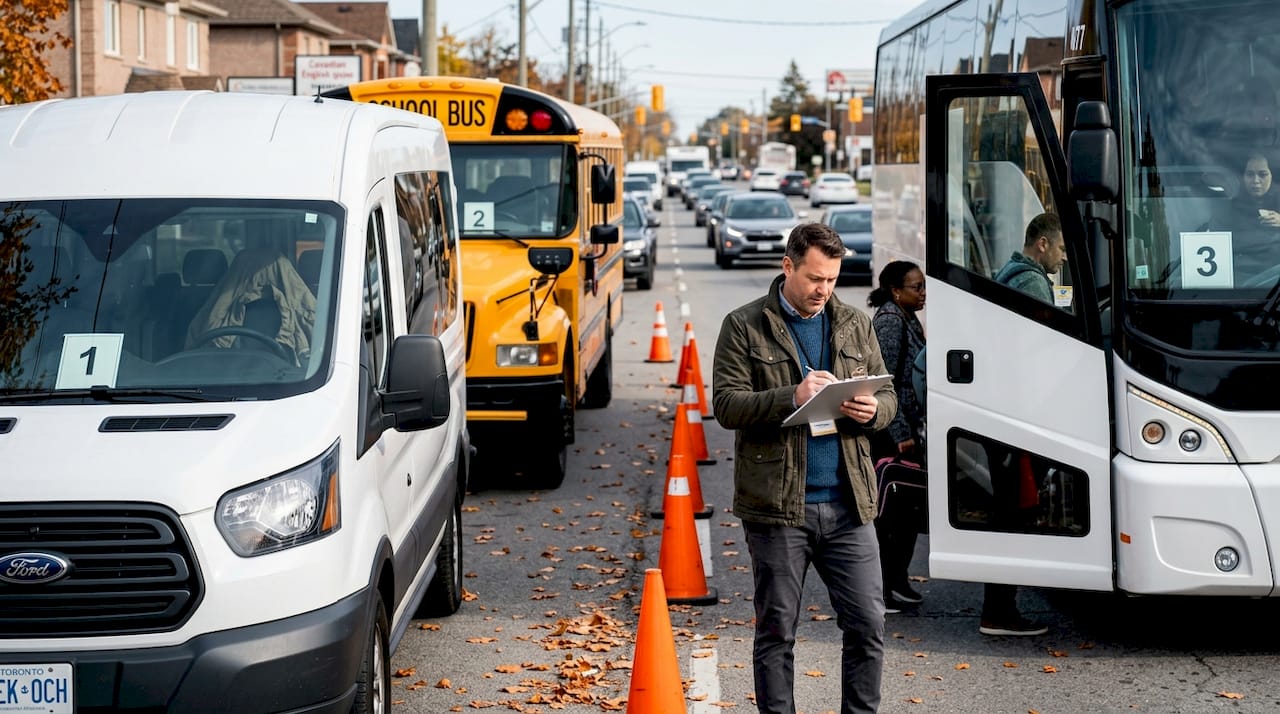
| Vehicle type | Capacity | Best for | Key amenities |
|---|---|---|---|
| Minibus | 15 to 25 passengers | Small corporate groups, airport transfers | Climate control, comfortable seating |
| Standard coach | 40 to 55 passengers | Conferences, school trips, sports teams | Luggage storage, Wi-Fi, washroom |
| Luxury motor coach | 40 to 55 passengers | Weddings, executive retreats | Premium seating, entertainment, climate zones |
| School bus | 48 to 72 passengers | Large school or community events | Cost-effective, high capacity |
Here’s a quick guide to matching vehicle type with event style:
- Weddings: A luxury motor coach creates the right atmosphere and accommodates formal attire comfortably. Explore wedding bus options for packages designed around ceremony timing.
- Corporate outings: A standard or luxury coach with Wi-Fi keeps professionals connected during transit.
- Sports teams: A standard coach with generous luggage bays handles equipment without issue.
- Small group transfers: A minibus rental is cost-effective and manoeuvrable in urban Toronto traffic.
- Accessible needs: Request low-floor or lift-equipped vehicles when booking for guests with mobility requirements.
Always confirm the exact passenger count before finalising your vehicle choice. Overestimating capacity means paying for empty seats; underestimating means leaving guests behind.
Due diligence: reviewing contracts, credentials, and communication
Once the vehicle and provider are confirmed, the contract and communication phase is where many planners lose focus. This is a mistake. The details you lock in writing now protect you if anything goes wrong on event day.
Key items to verify before signing:
- Licensing and insurance: Confirm the provider holds a valid commercial vehicle operating licence and carries passenger liability insurance.
- Cancellation and refund policy: Understand exactly what happens if you need to cancel or reschedule, and get it in writing.
- Cleaning and hygiene protocols: If your event has specific health requirements, confirm the provider’s cleaning procedures in advance.
- Driver contact information: Get the assigned driver’s direct number and confirm they have the full route plan before the event.
- Overtime and waiting time fees: Clarify what happens if your event runs long. Surprise charges are avoidable with clear contract language.
“Written contracts protect both planners and transportation providers.”
Legal checks and clear communication are emphasised by every major event planning framework, and for good reason. With corporate events contributing $33 billion to the Canadian economy, the financial and reputational risk of a poorly documented transport arrangement is significant.
The Toronto bus rental guide covers the full rental process in detail, and reviewing bus contract terminology before you sign ensures you understand every clause.
Tailoring the checklist for specific events
With the general steps covered, adapting your checklist to the specific nature of your event makes the difference between a smooth experience and a stressful one. Event planners consistently customise transport templates per event type, and you should too.
Here’s how to adjust your approach by event style:
- Weddings: Coordinate guest lists carefully to avoid confusion at pick-up. Confirm timing with the venue and ceremony schedule. Review wedding bus planning resources for Toronto-specific considerations.
- Conferences and conventions: Plan for multiple pick-up and drop-off points across the city. Stagger departure times to avoid bottlenecks at hotel lobbies or convention centres.
- Sports teams: Prioritise vehicles with large luggage bays for equipment. Build flexible timing into the schedule to accommodate game delays or overtime.
- Business retreats: Choose discreet, executive-level vehicles and confirm amenities like Wi-Fi and privacy screens. The corporate shuttle considerations guide covers what executives typically expect.
- Accessible events: Always ask about lift-equipped or low-floor buses at the initial inquiry stage, not as an afterthought.
The key is to treat each event type as its own transport project. A wedding and a conference may both need 50-passenger coaches, but the coordination, timing, and guest communication look completely different.
Partner with Toronto specialists for seamless execution
Every item on this checklist becomes easier when you work with a provider who already knows Toronto’s streets, traffic patterns, and event venues. Local specialists bring experience that a generic national provider simply cannot match.

At Toronto Bus Rentals, we’ve built our service around the exact needs event planners face: flexible scheduling, a well-maintained fleet, professional drivers, and transparent pricing. Whether you’re renting a bus for a corporate outing, exploring school bus rental options for a large group, or need full group transport solutions for a multi-stop event, we make the booking process straightforward. Reach out for a custom quote and let us handle the logistics while you focus on delivering a great event.
Frequently asked questions
How far in advance should I book a bus for my event in Toronto?
Advance booking is best practice for major events. Ideally, secure your booking at least two to three months ahead, particularly during peak seasons like spring and autumn when demand is highest.
What licences and insurance should my bus rental provider have?
Providers should hold a valid commercial vehicle operating licence and carry proof of passenger liability insurance. Safety and compliance are the top criteria when evaluating any charter company.
Can I book accessible buses for guests with mobility needs?
Yes, most reputable rental companies offer lift-equipped or low-floor accessible vehicles. Accessibility is a key criterion to raise at the very first inquiry so the right vehicle is reserved.
What’s the best way to communicate pick-up and drop-off details to guests?
Send route and schedule information via email and include it in your event materials. Clear communication for group transport means providing a direct contact number for last-minute questions on the day of the event.
Recommended
- Guide to Chartering Buses for Toronto Events
- What Is Bus Rental and Why It Matters in Toronto
- Why rent buses in Toronto for smoother group travel
- 7 Essential Bus Rental Tips for Successful Events