
Benefits of bus transportation for Toronto group travel planners
TL;DR:
- Bus transportation offers greater efficiency, safety, and environmental benefits for group travel than private vehicles in Toronto. Reliable operators utilize pre-arranged routes, all-door boarding, and safety protocols, including intersection-specific driver training, to ensure smooth trips. Transitioning to electric fleets requires careful planning of fleet size and charging strategies, which impacts availability and operational reliability.
Most event planners and corporate travel managers assume that private cars or taxis offer more convenience than buses for group travel. The reality is the opposite. The benefits of bus transportation become clear the moment you calculate the cost per seat, the time spent coordinating multiple vehicles, and the environmental toll of sending a dozen cars to the same destination. Whether you are organising a corporate outing, a school trip, or a special event in Toronto, buses offer measurable advantages in efficiency, safety, and sustainability that individual vehicles simply cannot match. This guide breaks down what the research actually shows.
Table of Contents
- How bus transportation improves efficiency and reliability for group travel
- Safety benefits and risk management in bus transportation
- Environmental advantages of electrified bus fleets for group travel
- Key service qualities to look for when selecting bus transportation
- Why understanding bus fleet electrification logistics is key for planners
- Plan your next group event with reliable bus transportation in Toronto
- Frequently asked questions
Key Takeaways
| Point | Details |
|---|---|
| Increased travel efficiency | Buses reduce boarding and stopping time, speeding group journeys by up to 12%. |
| Enhanced safety protocols | Focused intersection safety and risk management reduce accidents during group travel. |
| Environmental sustainability | Electric bus fleets cut greenhouse gas emissions by over 90%, supporting green travel goals. |
| Service quality matters | Access, speed, and rider experience shape reliable and satisfying group bus transportation. |
| Logistics and planning importance | Understanding electric bus charging and operations prevents surprises and ensures smooth service. |
How bus transportation improves efficiency and reliability for group travel
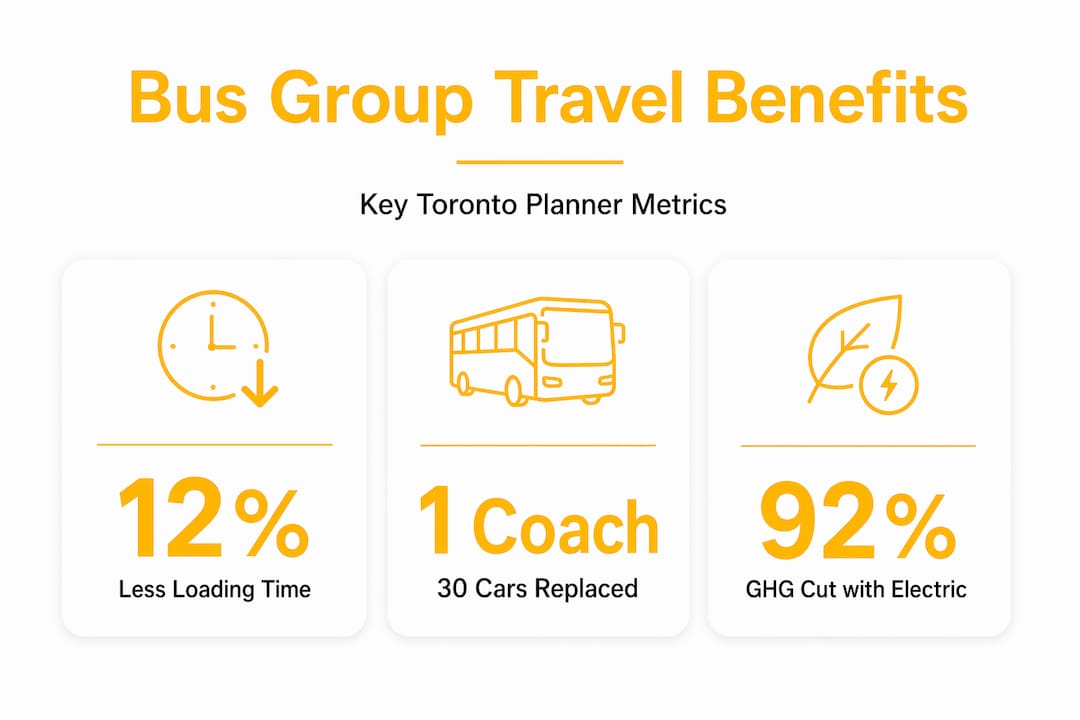
When you are moving thirty or fifty people to the same venue, every minute of loading time matters. One of the most underappreciated advantages of bus travel is how much faster the boarding process becomes when you remove friction. Eliminating on-board fare collection can reduce dwell time by 12%, which translates directly into faster trips and stronger schedule adherence for your group.
For event planners, that 12% is not a small detail. If your group has a venue call time, a ceremony start, or a corporate session that cannot wait, every delay compounds. Charter buses sidestep this entirely because fare payment is handled upfront through the bus rental booking process, and boarding happens through multiple doors at once.
Reliability improves further when operators use bus priority lanes and coordinate with traffic signal systems. Toronto’s downtown core is notoriously congested, and experienced operators know which routes to avoid and when. The result is a more predictable arrival time for your guests or delegates than any ride-share convoy could deliver.
Key efficiency benefits for group planners include:
- Centralised boarding: One location, one departure time, zero coordination chaos across multiple vehicles
- Pre-arranged routes: Professional operators map routes in advance based on traffic patterns and event timing
- All-door boarding: Faster loading reduces the window for late arrivals to disrupt the schedule
- Single point of accountability: One driver and one vehicle means one person handles logistics, not twelve
Pro Tip: When booking a charter for a time-sensitive event, confirm with your operator whether they use GPS-based traffic monitoring. Operators who actively track conditions in real time can reroute mid-journey and keep your group on schedule even during unexpected congestion.
The broader bus rentals benefits extend well beyond speed. Predictability and single-vehicle coordination reduce the mental load on the organiser significantly. With these efficiency gains in mind, it is equally important to understand how buses protect your group once they are on the road.
Safety benefits and risk management in bus transportation
Safety is not just a checkbox for event planners. If something goes wrong during group transport, the liability and reputational consequences fall on the organiser. This is one area where the advantages of bus travel over private vehicles are most compelling.
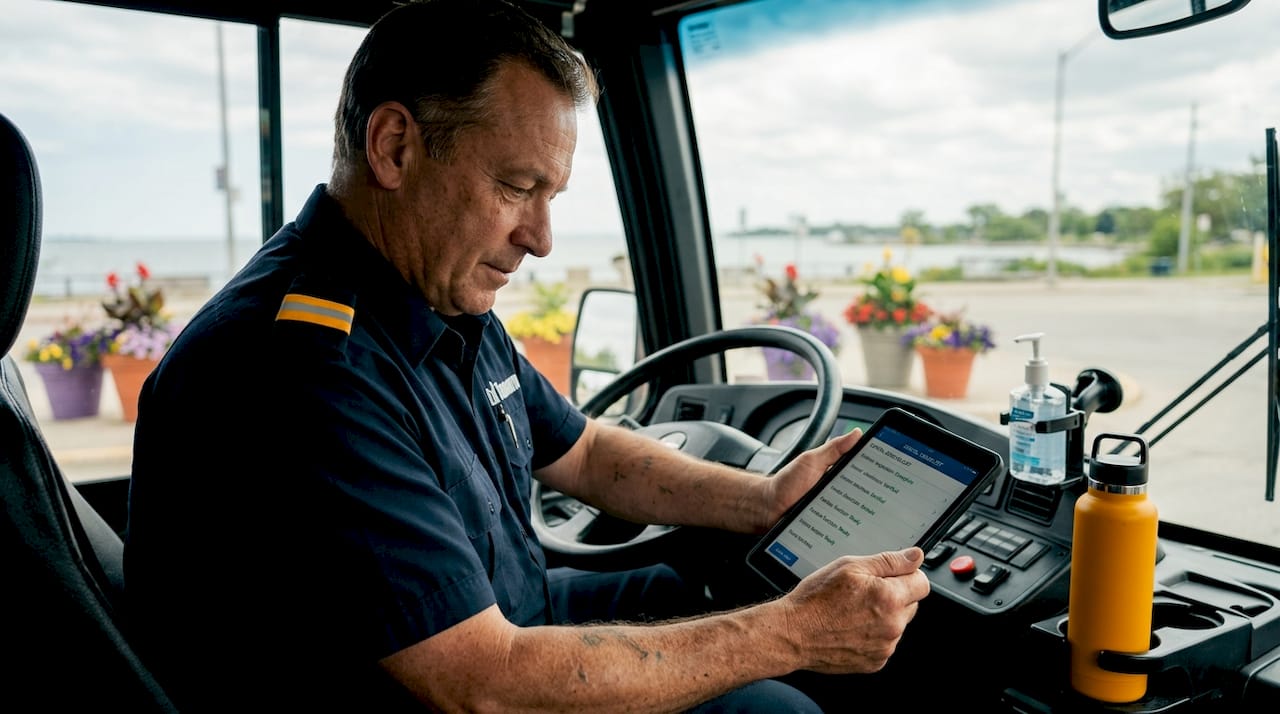
Research shows that 27% of fatalities and injuries from bus-to-person collisions occur at intersections, particularly during left turns. Reputable operators address this directly through driver training programmes that focus specifically on intersection behaviour.
Knowing that intersection management is the single highest-risk factor in bus safety changes how you evaluate a provider. Ask whether drivers undergo intersection-specific training and whether the company runs safety risk assessments on a scheduled basis. These are not standard questions most planners think to ask, but they are the ones that separate reliable operators from the rest.
Professional bus companies implement safety assurance systems that track incident data, monitor driver behaviour, and document mitigation outcomes. This continuous improvement approach means each trip benefits from lessons learned across the entire fleet. You are not just hiring a driver. You are accessing an operational safety culture.
For groups like school trips or corporate events where duty of care is paramount, this formalised approach matters enormously. Group tours safety is built into the service model of professional charter operators in a way that casual transportation options cannot replicate.
Beyond safe and efficient operations, bus transportation also supports sustainability goals that are increasingly important to corporate planners and educational institutions alike.
Environmental advantages of electrified bus fleets for group travel
Sustainability is no longer an optional consideration for event planners. Corporate clients expect it. School boards require it. And Toronto’s growing network of eco-friendly bus options makes it genuinely achievable.
The numbers behind electric bus adoption are striking. Full electrification of Canada’s bus fleet could reduce greenhouse gas emissions by over 92%, though it requires roughly a 17% increase in fleet size to accommodate charging schedules and operational constraints. That fleet size detail is one that planners often overlook, and it has practical implications for availability and booking lead times.
Reducing unnecessary traffic stops improves bus speed and decreases energy demand, and opportunity flash charging at stops can keep electric buses operational throughout dense urban routes without requiring depot returns mid-day. For a Toronto group event running across multiple pickups and drop-offs, this matters.
| Factor | Traditional diesel bus | Electric bus |
|---|---|---|
| Greenhouse gas output | High | Reduced by up to 92% |
| Fuel cost per kilometre | Moderate to high | Significantly lower |
| Fleet size requirement | Baseline | Up to 17% larger |
| Charging logistics | No requirement | Depot and opportunity charging needed |
| Urban route suitability | Proven | Strong with proper planning |
Pro Tip: When evaluating a bus rental company’s environmental credentials, ask specifically whether their electric vehicles use en-route opportunity charging or are limited to overnight depot charging. The answer tells you whether their electric fleet is genuinely operationally ready or simply a marketing point.
The environmental case for buses over private vehicles is not close. A single motor coach replacing thirty private cars removes an enormous volume of emissions from one journey. The private bus benefits extend from reducing your event’s carbon footprint to simplifying logistics at the venue. Understanding environmental impacts deepens the case for buses, but practical selection criteria also matter for group travel success.
Key service qualities to look for when selecting bus transportation
Not all bus services are equal, and knowing what separates good from adequate will save you from costly mistakes. Strong bus systems focus on three core qualities: access, speed and reliability, and rider experience. These principles apply directly to evaluating charter and rental providers.
Access means your group can board and disembark at locations that make practical sense for your event, not locations that are convenient only for the operator. Confirm that the provider offers flexible pick-up and drop-off points suited to your venue.
Speed and reliability depend on how well the operator manages timetabling, traffic conditions, and contingency planning. Ask about their on-time performance record and what protocols they use during unexpected delays.
Rider experience covers vehicle comfort, cleanliness, onboard amenities, and how the driver handles the group. For corporate clients and school trips alike, this is what passengers remember.
How to evaluate bus transportation providers step by step:
- Confirm fleet condition: Ask for the age and maintenance schedule of the specific vehicle assigned to your booking
- Review safety credentials: Request proof of driver training programmes and safety audit history
- Assess route familiarity: Ask whether drivers are familiar with your specific Toronto routes and venues
- Check communication protocols: Understand how the operator will contact you if conditions change on the day
- Evaluate customer support: Test responsiveness before booking by asking a few detailed questions and noting how quickly and thoroughly they respond
| Quality area | Questions to ask your provider | Why it matters |
|---|---|---|
| Access | Can you accommodate our specific venues? | Avoids boarding and drop-off complications |
| Speed | What is your average on-time arrival rate? | Critical for time-sensitive events |
| Reliability | What is your contingency if a vehicle breaks down? | Protects against last-minute disruptions |
| Rider experience | What amenities are included? | Affects group comfort and satisfaction |
| Safety | Are drivers intersection-safety trained? | Reduces accident risk at key collision points |
The corporate bus benefits for Toronto-based companies become most visible when providers can answer all five of these areas confidently. Private buses for Toronto events also vary widely on these dimensions, so using this framework protects your event from providers who look good on paper but fall short in practice.
Why understanding bus fleet electrification logistics is key for planners
Here is something very few event planners account for when booking eco-friendly bus options: the shift to electric fleets is not just an environmental decision, it is a logistics decision that directly affects your booking availability.
Fully electrified bus fleets require up to 17% more vehicles to accommodate charging and operational constraints. That means a company transitioning to electric is simultaneously expanding its fleet requirements while managing charging infrastructure. If they have not planned this carefully, it affects the vehicles available for your date.
Most planners ask whether a company has electric buses. Almost none ask what their charging strategy looks like. There is a significant operational difference between a company that charges exclusively overnight at the depot and one that uses opportunity flash charging at stops to extend operational range mid-route. The latter can handle a full-day event programme reliably. The former may have range limitations for complex itineraries.
This matters specifically for group transportation services in Toronto where itineraries often involve multiple stops across the city, sometimes spanning six to eight hours. An electric bus without en-route charging support may not complete your full programme on a single charge.
The practical advice is simple: treat the charging question the same way you would treat a venue’s catering capacity. It is a logistical specification that determines whether the service can actually deliver what your event requires. Operators who answer this question fluently are the ones genuinely ready for electric operations. Those who respond vaguely are likely still working through the transition.
What this means in practice is that the most responsible and operationally competent bus providers are those who have thought through both the environmental case and the operational mechanics of how does bus transport help their clients in real-world conditions. That kind of preparation separates a provider worth booking from one worth avoiding.
Plan your next group event with reliable bus transportation in Toronto
The benefits of bus transportation are clear on paper. Getting them in practice depends entirely on who you book.

Toronto Bus Rentals offers a modern fleet of motor coaches tailored to corporate outings, school trips, group tours, weddings, and special events across Toronto and beyond. Our experienced drivers, flexible vehicle options, and strong safety protocols make the advantages of charter buses tangible for every group we serve. Whether you need a single coach or a coordinated fleet, we help you maximise group travel efficiency without the coordination headaches. Explore our full range of group transportation and shuttle services and get in touch to discuss the right fit for your event size, timeline, and budget.
Frequently asked questions
How does bus transportation help reduce travel time for groups?
Buses reduce group travel time by using all-door boarding and eliminating on-board fare payments. Dwell time drops by up to 12% with pre-paid fares, making each stop faster and overall journeys more reliable for groups with firm arrival requirements.
What safety measures reduce bus-related accidents during group travel?
Safety planning focused on intersection behaviour, particularly during left turns, combined with continuous risk assessments, addresses the highest-risk collision scenarios. 27% of bus-to-person collisions occur at intersections, making driver training in this area a non-negotiable credential to verify.
Are electric buses reliable for group transportation in busy urban settings?
Yes, when the operator has planned for fleet size and charging logistics correctly. Electric fleets require 17% more vehicles to handle charging constraints, and operators using opportunity flash charging can maintain reliable urban service without returning to the depot mid-route.
What should event planners consider when selecting a bus transportation provider?
Planners should assess access flexibility, on-time reliability, rider experience, safety training credentials, and contingency planning. Effective bus systems prioritise access, speed, and rider experience as the foundations of dependable group transport.
Recommended
- Bus rentals for Toronto events: Cost, comfort, reliability
- Master the role of buses in corporate travel for Toronto events
- Top benefits of bus rentals for Toronto events in 2026
- Why rent buses in Toronto for smoother group travel